
Ever wondered if frogs stick with one partner forever? The answer might catch you off guard. Unlike animals that form lifelong bonds, frogs usually don’t mate for life.
Most frogs find multiple partners during each breeding season and move on after fertilizing eggs.
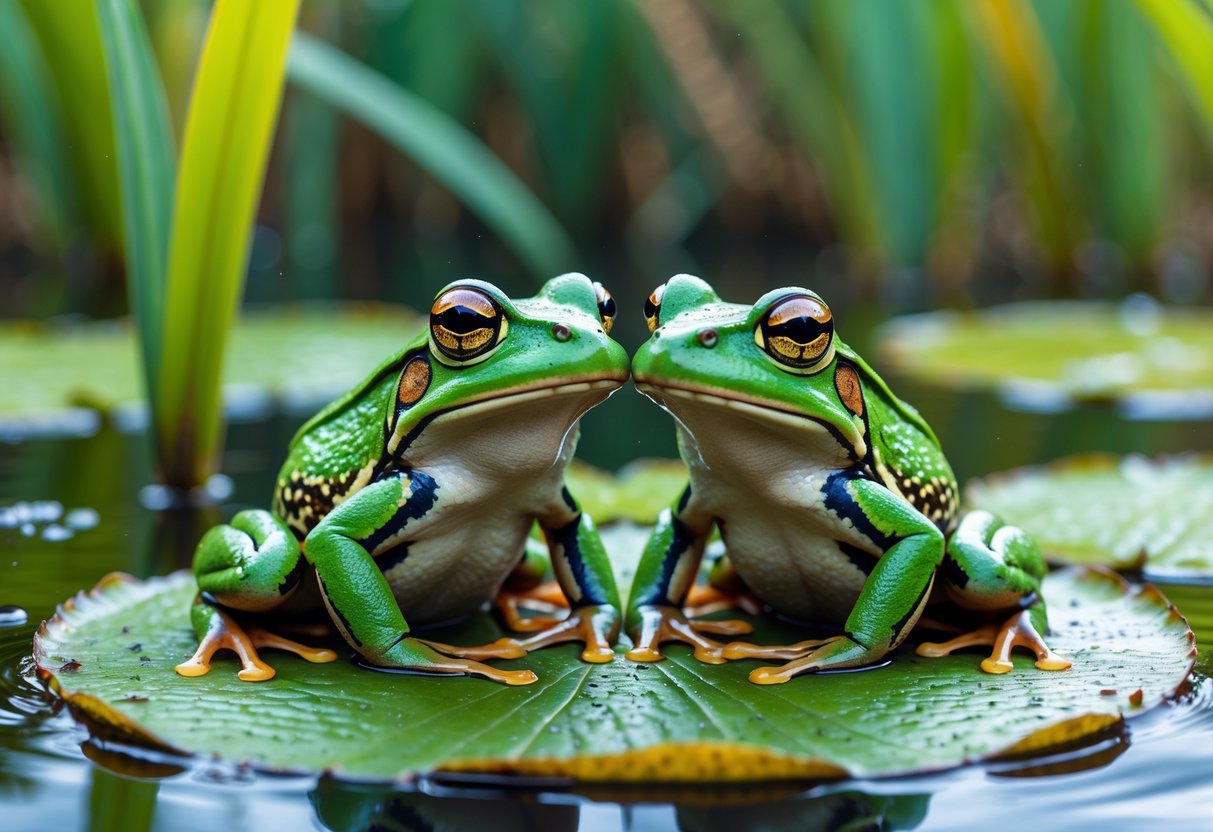
Frogs have a pretty unique way of reproducing. The male holds onto the female in a position called amplexus while she lays eggs.
Afterward, the parents don’t stick around to raise their young. Still, a few species show a bit more loyalty.
If you’re curious about why frogs act this way, you’re not alone. Let’s dig into their world and see what makes their mating habits so interesting.
Mating Behavior in Frogs

Frogs have all sorts of ways to mate, depending on their species and where they live. You’ll find out how their relationships work, the odd positions they use, and what male frogs do with their special body parts.
Do Frogs Form Lifelong Bonds?
Most frogs don’t stick with one mate for life.
After mating, males and females usually head off on their own. They don’t team up to care for eggs or tadpoles.
Frogs use external fertilization, so the female lays eggs and the male fertilizes them outside her body.
A few species, like the mimic poison frog, actually pair up and share some parenting. But honestly, most frogs don’t bother with long-term partnerships.
Types of Amplexus and Mating Positions
Amplexus is what we call it when the male frog grabs the female to mate.
Different species use different types:
- Axillary amplexus: The male holds her under the front legs. This one’s the most common.
- Inguinal amplexus: The male grabs her near the waist.
- Cephalic amplexus: The male holds onto her head (not something you see every day).
This position helps the male release sperm right as the female lays eggs. Fertilization happens at just the right moment.
The type and length of amplexus really depend on the frog species and their environment.
Role of Male Frogs and Nuptial Pads
Male frogs do more than just fertilize eggs.
They use their vocal sacs to make loud calls that attract females during breeding season.
Males also grow nuptial pads—these rough, dark spots on their thumbs or forearms. The pads let them grip females firmly during amplexus, especially if things get slippery.
The size and strength of those pads can make a big difference. If a male can hold on longer, he’s more likely to fertilize eggs.
So, both the calls and the pads help males compete for mates and actually get the job done.
Frog Reproduction and Life Cycle

When frogs reproduce, they follow a fascinating process. It starts with laying eggs and ends with a wild transformation.
Egg fertilization and tadpole development are key to understanding how frogs grow up.
Egg Laying and External Fertilization
Frogs lay eggs in water or damp places.
Most species use external fertilization. The female releases eggs into the water, and the male releases sperm over them at the same time.
The sperm fertilizes the eggs right there, outside the female’s body.
You’ll often spot frogs doing this during breeding season. The male usually clings to the female in amplexus, guiding the eggs as they’re laid.
Most frogs don’t stick around to care for their eggs. Some species, though, guard the eggs and keep them safe until they hatch.
The eggs develop quickly. Depending on the species and environment, they hatch in just days or weeks.
Development from Tadpoles to Adults
Once the eggs hatch, tadpoles emerge and start their lives in the water. They breathe through gills, kind of like little fish.
You’ll spot them darting around, nibbling on algae or whatever plant bits they can find. At first, that’s pretty much all they do—swim, eat, and grow.
As time passes, tadpoles begin to change. They sprout legs, their gills slowly get swapped out for lungs, and their tails shrink away.
This transformation—metamorphosis—lets them leave the water behind and start hopping around on land as adult frogs. It’s honestly pretty wild to watch if you ever get the chance.
Not every frog species does this in exactly the same way. Some tadpoles munch on different foods, and a few rare frogs skip the tadpole phase altogether, hatching straight out as tiny frogs.
Most frogs, though, stick to this classic cycle as they grow up.
Curious about the details? You can dive deeper into frog reproduction and their life cycle at Frog Reproduction and Growth: Insights into Their Complex Life Cycle.


