
So, you’ve spotted a frog in your UK garden. Honestly, there’s usually no need to panic or rush to move it. Frogs actually love hanging out in gardens, and they’ll look after themselves as long as they’re safe and not in some obvious danger.
They spend much of their time on land. Gardens offer a natural habitat, and frogs seem to make themselves right at home.
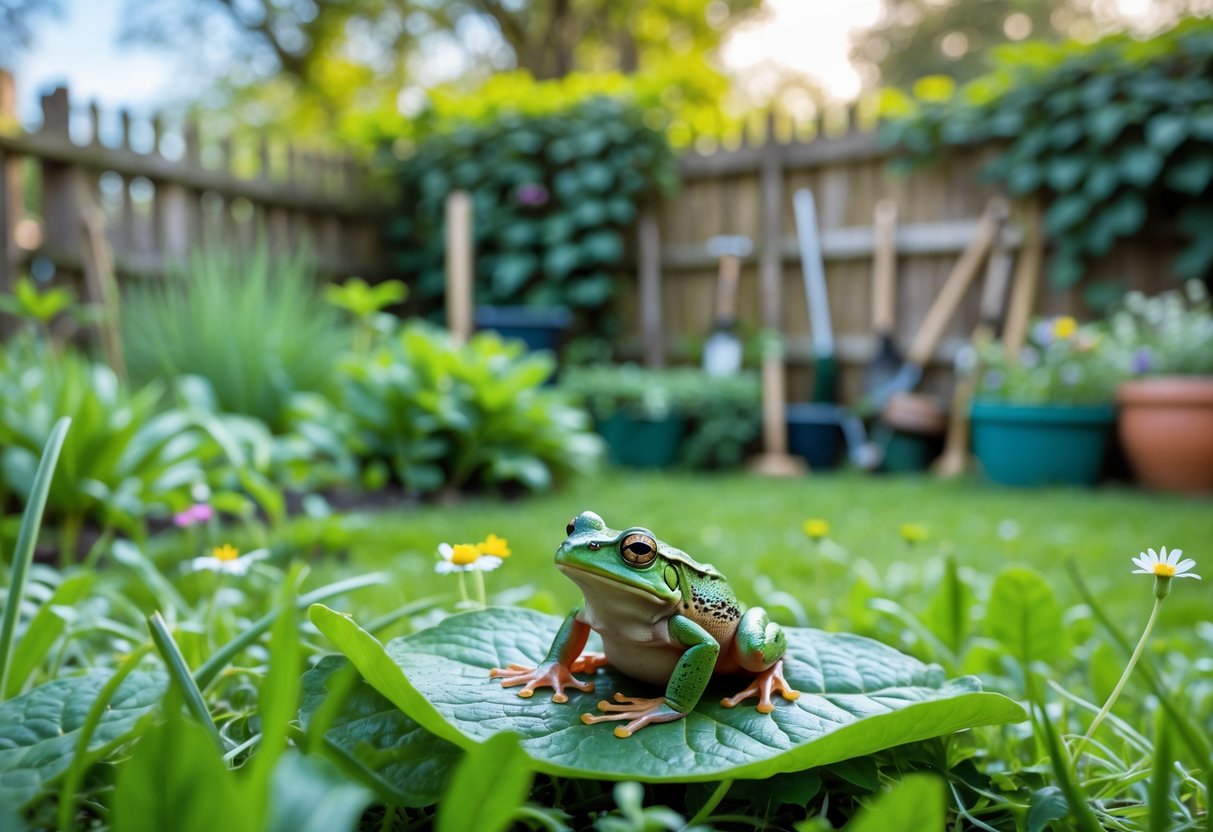
If you see a frog in a risky spot—maybe right by a road or where you’re about to mow the lawn—just gently move it to a safer spot nearby. Try placing it under a shed or in a compost heap, somewhere with a bit of cover where it can hide from predators and bad weather.
Frogs don’t need to be close to water unless they’re breeding. Your garden’s probably a fine home for them most of the year.
If you want to help frogs thrive, keep your garden frog-friendly. Leave places for them to hide and, if possible, add a pond.
You can find more tips and details in this guide on frogs and toads in UK gardens.
What to Do When You Find a Frog in Your Garden

Finding a frog in your garden can be a surprise. Luckily, it’s pretty easy to handle in a way that keeps both you and the frog happy.
If you know when to step in and how to keep your garden safe, you’ll make it a great spot for all sorts of wildlife.
Observe and Leave the Frog Alone
When you notice a frog, try not to touch it. Their skin is super sensitive, and the oils or dryness from your hands can harm them.
Just watch the frog quietly. If you’ve got pets—dogs or cats—gently keep them away so the frog doesn’t get stressed or injured.
Most frogs in the UK, like the common frog, do just fine without help. Even without a pond, they’ll find hiding spots in long grass or under bushes.
If you want to encourage more frogs, make natural shelters like log piles or leave a bit of your garden wild.
When Intervention Is Needed
Move a frog only if it’s in real danger, like sitting near a busy road or where a pet might find it. If you need to move it, scoop it up gently in a container with some damp leaves or moss to keep it moist.
Release it in a shady spot close by. Don’t go far—just enough to get it out of harm’s way.
Be extra careful with tiny amphibians like tadpoles or newts. They’re fragile and need specific habitats.
Don’t put frogs or toads straight into water if you find them on land. They usually head to ponds only to breed or cool off, not to live there all the time.
Common UK Amphibians You Might Encounter
In a UK garden, you might come across a few different amphibians:
| Amphibian | Appearance | Notes |
|---|---|---|
| Common Frog | Smooth, greenish skin, long legs | Often seen in gardens in spring, near ponds |
| Common Toad | Bumpy brown skin, shorter legs | Not as tied to water; hides in leaf litter |
| Smooth Newt | Small, slender, smooth skin | Lives on land and in water |
| Great Crested Newt | Larger, dark, warty skin | Protected species; don’t handle or move them |
Each species adds something to your garden’s wildlife. The great crested newt, for example, is protected by law—so best to just leave them be.
Potential Risks: Amphibian Diseases and Safety
Some amphibians carry diseases like ranavirus, which can harm wild populations. Try not to handle frogs or newts so you don’t accidentally spread diseases between ponds or gardens.
If you have to move or care for amphibians, say for pond maintenance, wash your hands and use different containers for each pond. Keep them in moist, quiet spots to lower stress.
These little steps help your garden’s wildlife stay healthy.
How to Create a Frog and Wildlife-Friendly UK Garden

To make your garden inviting for frogs and other wildlife, add safe water sources, create good shelters, and avoid nasty chemicals. These changes give frogs places to live, breed, and find food.
They also help keep your garden balanced and healthy.
Wildlife Ponds and Water Features
A garden pond is probably the best way to attract frogs and breeding amphibians like great crested newts. Build your pond about 60cm deep, with a shallow sloping side so frogs and newts can easily get in and out.
Use a pond liner to hold the water. Skip invasive pond plants—they can mess up the pond’s balance.
Mix in some pond plants: underwater ones for tadpoles to hide, floating plants for resting, and tall plants for insects like dragonflies. Keep the pond partly sunny and partly shaded to keep algae under control.
Don’t add fish, since they’ll eat frog spawn and newt larvae.
Regular pond maintenance helps keep the habitat safe. Clear dead plants and check the water quality now and then.
Don’t bring in frogs or spawn from somewhere else, as this can spread disease. Building or improving a wildlife pond supports your garden’s ecosystem and even helps reverse pond loss in the UK.
Shelter: Compost Heaps, Log Piles, and Long Grass
Frogs and toads love damp, shady places for hiding. Make shelters by piling up logs, leaving a compost heap, or letting some grass grow longer.
These spots give frogs places to rest, hide from predators, and hunt for insects.
A compost heap attracts insects that frogs like to eat. Log piles create cool, moist spaces for frogs and even hedgehogs.
Long grass offers more cover and food for garden pests, which in turn support frogs as natural pest controllers.
Try to connect these shelters so frogs can move easily around your garden. Don’t worry about keeping everything too tidy—a bit of mess in the right places really helps wildlife thrive.
Managing Garden Pests Without Harmful Chemicals
Frogs love to snack on slugs, snails, and all sorts of insects, so you can skip the harsh pesticides. If you use chemicals, you might accidentally harm frogs through their sensitive skin or wipe out their food.
Try natural pest control instead. Go out and hand-pick pests, invite birds and other helpful predators, and plant flowers that pull in beneficial insects.
When you keep your garden free from chemicals, you make it a safer place for frogs, toads, and even great crested newts. It’s a small effort, but it really does help.
Curious about making your garden even more inviting? Check out this guide on building a wildlife pond and see how you can attract frogs to your space.


