
Ever spotted a frog hopping through your garden or maybe on a damp path somewhere in the UK? You might ask yourself—can I touch it? Is it safe, or even legal?
Honestly, it’s best not to handle frogs with your bare hands. Their skin’s super sensitive and can get hurt by the oils or chemicals on your skin. Plus, a few frogs can carry bacteria or mild toxins that might irritate you.
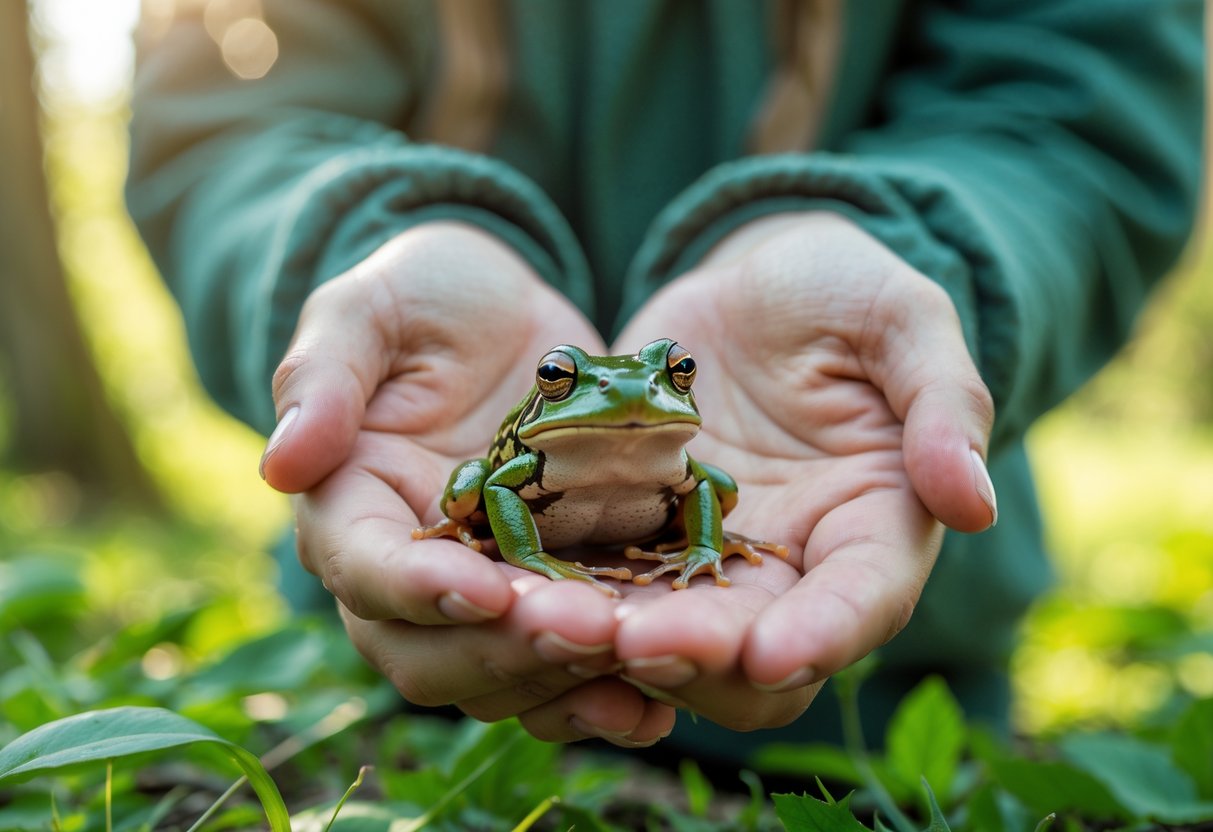
Still, you can totally enjoy watching them up close or just marvel at their odd little habits. If you really do need to pick one up, grab a pair of gloves and make sure your hands are wet.
That way, you’ll help both yourself and the frog stay safe. Learning how to handle frogs the right way keeps these little guys healthy and cuts down on any risk to you.
Curious about why frogs are so delicate, when it’s okay to touch them, and how to treat UK frogs kindly if you find one? Let’s dive in.
Is It Safe and Legal to Touch Frogs in the UK?
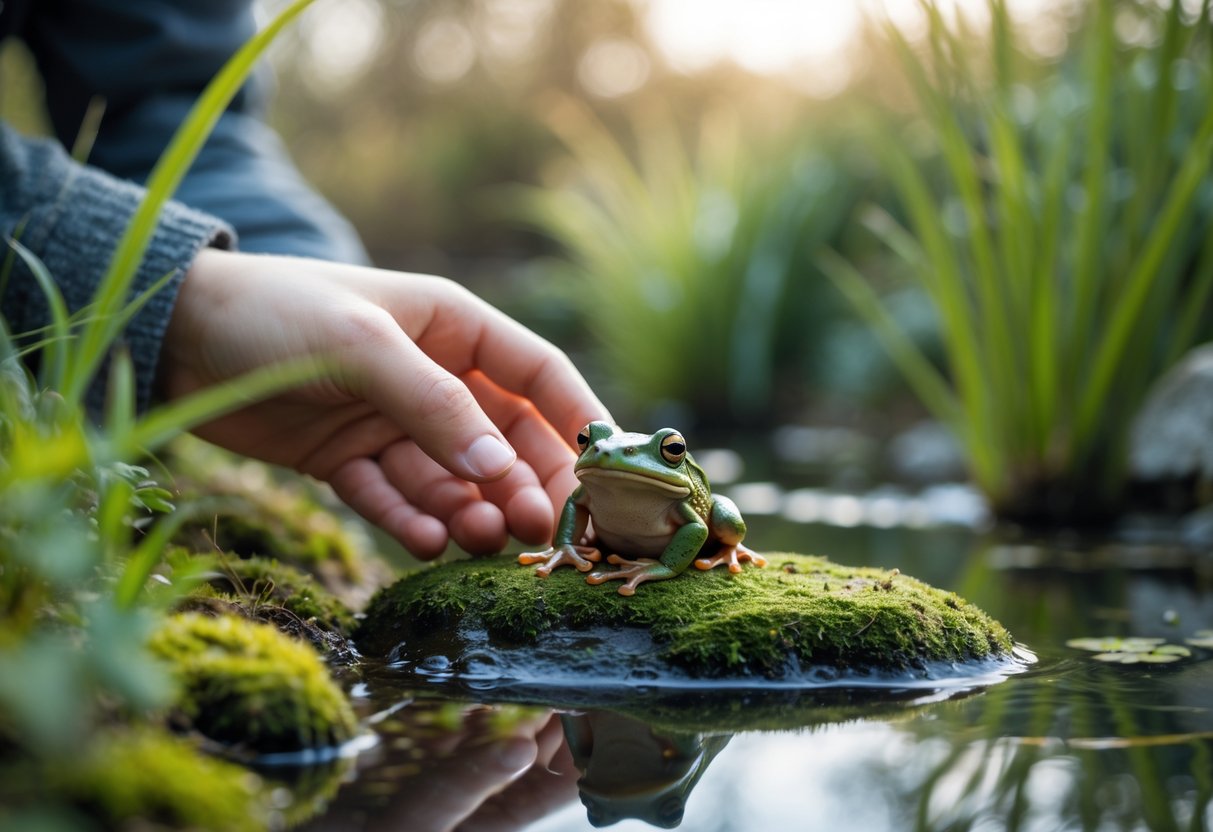
If you meet a frog or toad in the UK, you might wonder if you’re allowed to touch it. Laws do protect some species, and your hands can affect their health.
When you handle amphibians, you need to be careful for your sake and theirs.
UK Animal Welfare Laws and Handling
The common frog and common toad have some legal protections. You can’t sell, trade, or advertise them, but touching them usually isn’t illegal.
On the other hand, the great crested newt is totally protected. If you disturb, harm, or catch one without a license, you’re breaking the law.
People who keep or breed frogs like dart frogs have to stick to strict rules. These laws help keep wild frogs safe and make sure pet frogs get proper care.
It’s important to know what species you’ve found and whether it’s protected.
Risks to Frogs from Human Contact
Frogs soak up moisture and chemicals through their skin, which makes them really sensitive. Oils, lotions, or even a bit of dirt on your hands can hurt them.
If you handle them a lot, you might stress them out or damage their skin. Common toads have tougher, bumpier skin, but they’re still better off left alone.
If you have to pick up a frog, use clean, damp gloves or wash your hands with dechlorinated water. Never use soap or chemicals right before.
Try to touch them as little as possible to keep them safe.
Safety for People Handling Amphibians
Frogs and toads sometimes carry bacteria like Salmonella. That can make people sick, especially kids.
Always wash your hands well after you touch any amphibian. If you’ve got cuts or open wounds, don’t touch frogs—germs can get in too easily.
If you need to move a frog, use a container instead of your hands. That’s less stressful for the frog and lowers the risk of spreading bacteria.
These simple steps help keep both you and the frogs healthy.
For more details on frog care and legal handling in the UK, check out the RSPCA’s advice on frogs and toads.
Best Practices for Encountering Frogs and Other Amphibians

If you come across frogs, toads, or newts, you’ll want to be gentle and cautious. Knowing how to spot these animals and what to do next can really help protect them and their homes.
What To Do if You Find a Frog in Your Garden
Spot a frog in your garden? Try to keep your distance. Don’t pick it up unless you really need to.
Their skin’s so delicate that even sunscreen or lotion on your hands can harm them.
If you absolutely have to move a frog, wet your hands with water from the same garden pond first. That helps protect their skin.
Handle the frog gently and for as little time as possible. Never use dry or dirty hands.
Keep pets and kids from disturbing tadpoles or frogs. If you see frog eggs in your pond, just leave them be.
You can help frogs by giving them a shallow water spot and keeping your garden free from pesticides.
Distinguishing Between Frogs, Toads, and Newts
Frogs usually have smooth, moist skin. They also have long legs that make jumping look effortless.
Toads, like the common toad, show up with dry, bumpy skin. Their legs are shorter, so they tend to walk instead of hopping everywhere.
Newts, like the great crested newt, split their time between water and land. They’re more slender than frogs or toads, and their skin stays smooth.
You’ll spot a tail on a newt, and in water, they move with this odd, wiggly swimming motion. It’s pretty different from how frogs and toads get around.
If you can tell these creatures apart, you’ll have a better shot at understanding what they need. That knowledge goes a long way if you’re hoping to help them out in your garden or around your neighborhood.


