
You’ve probably heard rumors that some frogs can survive being frozen. Sounds wild, right? Turns out, it’s actually true for certain species like wood frogs. These little survivors can freeze solid in winter and then thaw out, alive and kicking, when things warm up.
Wood frogs pull off this trick by stopping their hearts and breathing, flooding their bodies with natural antifreeze chemicals, and somehow keeping their cells from getting wrecked by ice.
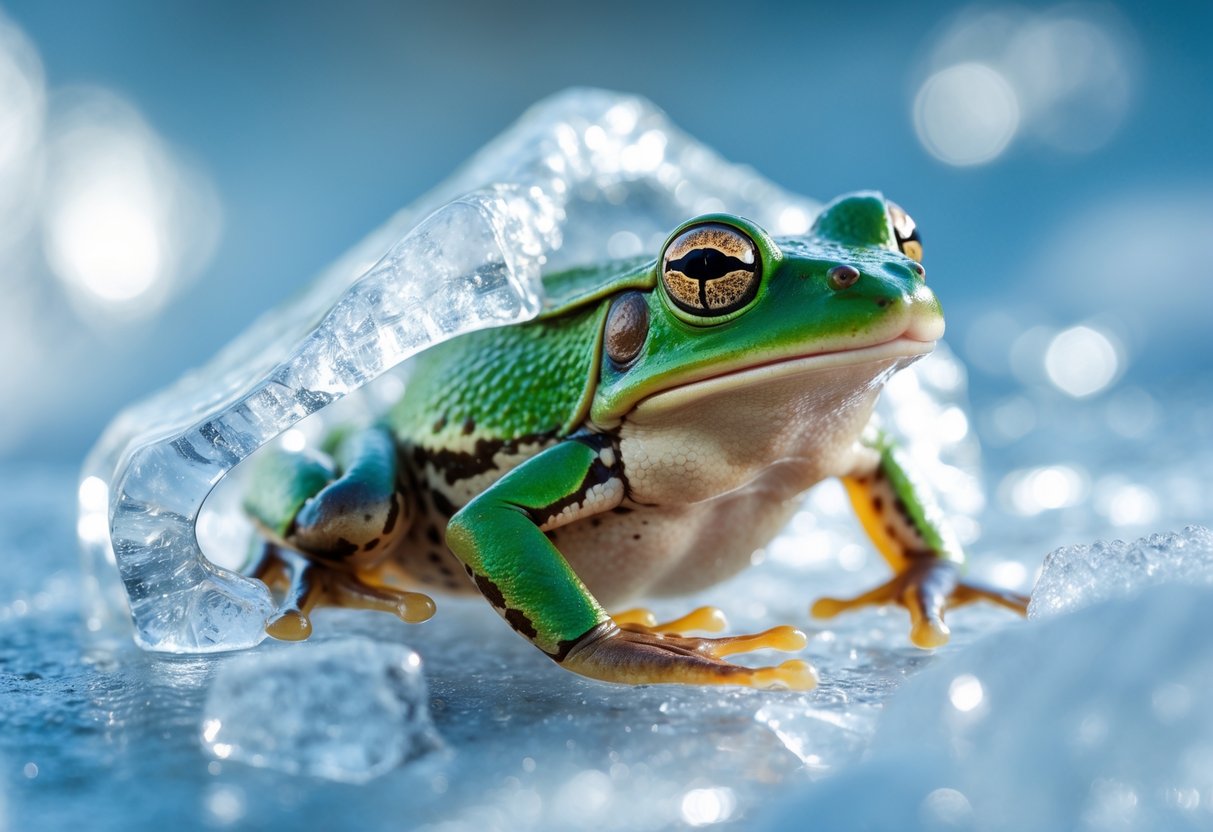
But here’s the thing—not all frogs can handle freezing. Most frogs dodge the cold by hiding out in mud or water where it stays a bit warmer. The freeze-tolerant ones? They stick around and use their own body hacks to pull through.
It’s honestly fascinating to see how animals adapt to brutal environments.
If you’re curious about how frogs manage this icy stunt and why it matters, stick around. There’s some weird science behind their freeze-proof bodies, and it might even have some big implications for medicine.
How Frogs Survive Freezing Temperatures

Frogs have a pretty wild way of dealing with freezing winters. Their bodies use a mix of special chemicals and clever tricks to survive—even when they freeze solid.
They can go through freeze-thaw cycles multiple times and somehow avoid lasting damage.
Freeze Tolerance in Amphibians
Some frogs, like the wood frog, actually let their bodies freeze when temperatures drop below 32°F. While most animals dodge freezing by hibernating, these frogs just go for it and freeze solid.
Their heart stops. All their organs pause. Honestly, the frog looks dead at this point.
But inside, the frog’s body is ready. Ice forms mostly outside the cells, which stops them from bursting. Frogs that live in colder places can survive even lower temperatures, sometimes down to 24°F or below.
This freeze tolerance lets them wait out winter safely under leaves or a thin layer of soil.
The Role of Cryoprotectants and Antifreeze
Frogs create cryoprotectants like glucose to keep ice from wrecking their cells. When ice starts forming, the frog’s liver jumps into action, turning stored glycogen into glucose and flooding the blood and cells.
This glucose works like antifreeze, stopping the cells from shrinking too much or drying out. It’s actually pretty genius.
Other chemicals, like urea and some special proteins, also step in to protect the cells during freezing. These help shield both the inside and outside of cells from damage.
Cryoprotectants keep tissues safe through those long, freezing winters.
Freeze-Thaw Cycles and Cellular Adaptations
Frogs don’t freeze just once. They go through lots of freeze-thaw cycles as the weather flips back and forth. Their bodies handle water turning to ice and then melting again, over and over.
Their cells are somehow built to take this stress. When spring finally rolls around, frogs thaw out slowly.
Organs “wake up” and start fixing any damage from freezing. Some cells look dried out but manage to bounce back.
That’s why you might spot frogs hopping around after what seems like an impossible winter.
If you want to dig deeper, check out Animals Around The Globe for more on how frogs freeze and thaw.
Freeze-Tolerant Frog Species

Some frogs survive being frozen by making special chemicals and using unique strategies. Different species have their own ways of handling freezing, depending on where they live.
You’ll get a better sense of these frogs as you learn about their range, the key species, and how some manage to live in places as cold as Alaska.
Wood Frog (Rana sylvatica) and Its Range
The wood frog, or Rana sylvatica, is probably the most famous freeze-tolerant frog out there. You’ll find them all over Canada, Alaska, and the northeastern United States.
They stick to moist forests and nearby spots. When things get cold, wood frogs don’t dig deep enough to avoid freezing.
Instead, their bodies start pumping out glucose, acting as a natural antifreeze. This sugar shields their cells as ice forms around them.
Their heart and breathing stop. Their bodies freeze solid—basically a frog popsicle. But when spring comes, they thaw out and go right back to life.
They can survive temperatures as low as 24°F (-4°C). That means these frogs can live in places where most other frogs just can’t make it.
Spring Peeper and Other Notable Species
Spring peepers are another kind of frog that can freeze and thaw without a problem. You’ll hear their loud calls in the spring across eastern North America.
Other freeze-tolerant frogs include Cope’s gray tree frog, the eastern gray tree frog, and the western chorus frog. Like wood frogs, they load up on chemicals like glucose and urea to keep their cells safe during freezing.
These frogs bury themselves under leaves or shallow soil in the fall. Instead of dodging ice, they let their body fluids partially freeze on purpose.
This controlled freezing keeps their vital organs safe—even as ice forms all around them.
Adaptations in Alaskan and Arctic Populations
Frogs in Alaska and other northern spots deal with brutal winters. They’ve managed to develop a much stronger freeze tolerance than their southern relatives.
Take Alaskan wood frogs, for instance. Some of them can actually survive when up to 70 percent of their body water freezes—pretty wild, right?
These frogs ramp up the production of protective sugars and unique proteins. Those proteins step in to keep cells from shrinking or tearing when everything freezes up.
Sometimes, these northern frogs last through colder temperatures for longer stretches. It’s honestly impressive to see how frogs figure out ways to get through icy winters in places as extreme as Alaska.
Learn more about these amazing adaptations from Meet the Frog That Can Survive Being Frozen Solid.


