
Ever wondered if frogs go to bed at night like we do? Frogs don’t have cozy beds or tuck themselves in, but they do rest by staying still and closing their eyes—though they’re always a bit on guard. It’s not really the deep sleep we’re used to.
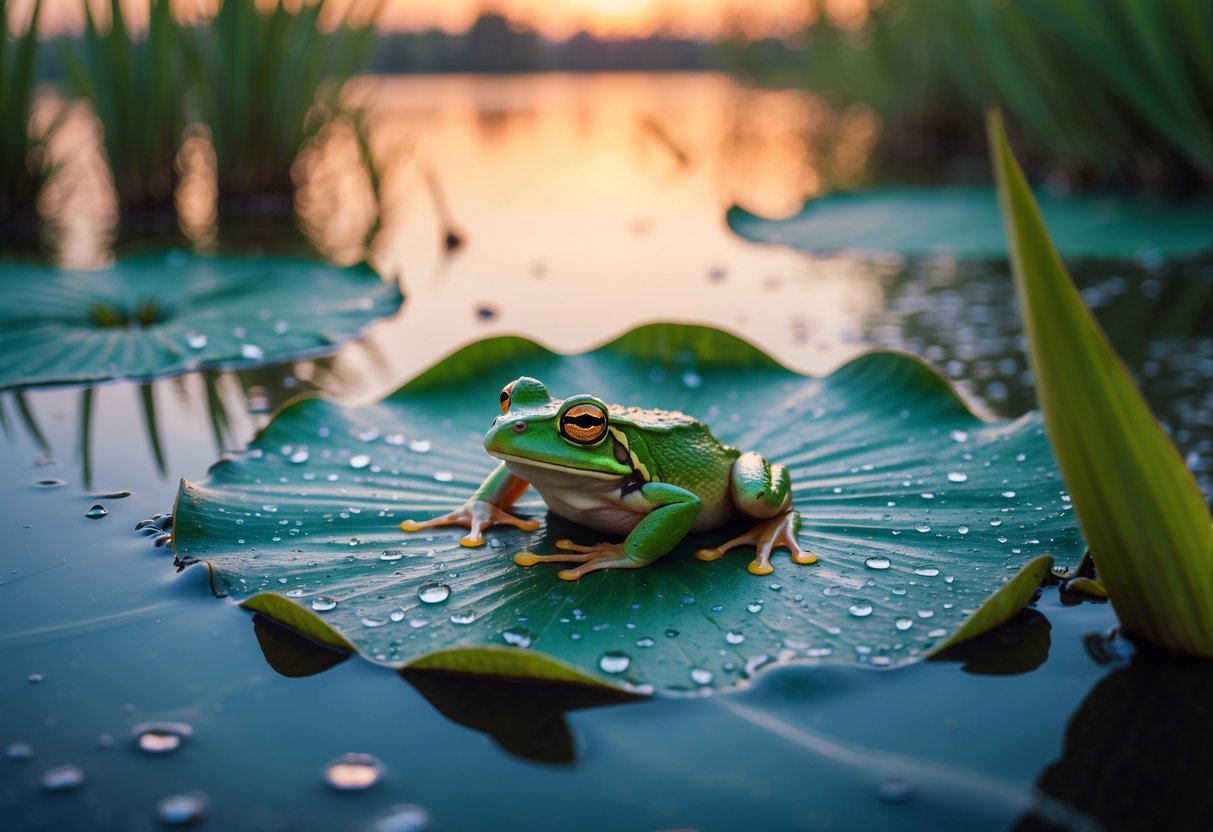
Frogs usually take their quiet breaks during the day since they’re mostly night owls. When they rest, their bodies slow down, but their brains don’t completely switch off. They’re always ready to jump away from trouble.
It’s kind of fascinating, right? If you’ve ever spotted a frog just sitting with its eyes half-closed, you’ve seen their version of recharging. There’s more to it, though, and honestly, it’s pretty interesting once you dig in.
Do Frogs Go to Bed? Understanding Frog Sleep

Frogs don’t crawl into bed like we do, but they definitely have their own version of downtime. Their bodies and lifestyles shape how they rest.
You might be curious—how do they stay alert but still get some rest? Their bodies have some clever tricks for that.
Do Frogs Sleep Like Humans?
Frogs don’t sleep the same way humans do. We go through deep, long stretches of sleep with REM cycles, but frogs only have lighter, shorter rest periods.
Even when frogs are resting, their brains keep humming along. This helps them stay aware of what’s going on around them, which is pretty important if you’re a small animal with lots of predators.
You’ll sometimes see frogs with their eyes closed, but they’re not fully out cold. Frogs soak up warmth from their surroundings, so things like temperature and light really affect when and how they rest.
Non-REM Sleep in Frogs
Frogs mostly get a kind of Non-REM sleep. Their brains slow down, but they don’t just shut off.
During these times, frogs react less and their metabolism drops. Their bodies get a break, but their brains still send out some signals.
Scientists noticed that frogs’ brains show small voltage signals during rest. They’re not totally zonked out. This alertness helps frogs survive—they need to be ready to leap away at a moment’s notice.
Nictitating Membrane and Eye Protection
Frogs have a neat feature called the nictitating membrane. It’s a clear eyelid that slides over their eyes, letting them see a bit while protecting their eyes from dirt and water.
When frogs rest, this membrane acts like a built-in shield. They don’t have eyelids that close all the way like we do, so this membrane keeps their eyes moist and safe.
It’s almost like a sleeping mask that still lets them peek. Frogs can spot danger fast, even when they’re chilling.
If you want to read more about how frogs rest, check out Vet Reviewed Frog Sleep Facts.
Frog Sleep Patterns Across Different Species

Frog sleep habits can look really different depending on where they live and what kind of frog they are. Some are night creatures, others are more active during the day.
How and where they rest changes a lot, too. You’ll find some in trees, others in water, and some just hanging out on land.
Nocturnal Creatures and Daytime Rest
A lot of frogs are nocturnal, so they get busy at night. You’ll usually find them resting or hiding during the day to avoid getting too hot or spotted by predators.
During the day, these frogs hide under leaves, rocks, or burrow down to stay safe and cool. Their rest is pretty light—they’re always sort of listening for trouble.
This light sleeping style lets them react fast if anything comes near. Nocturnal frogs usually don’t get long stretches of sleep like daytime animals do.
Tree Frogs and Aquatic Frogs: Unique Approaches
Tree frogs and aquatic frogs have their own ways of catching some rest. Tree frogs sleep on leaves or branches, gripping tightly so they don’t fall.
Aquatic frogs rest in or near water. Some float at the surface, while others settle on the bottom.
They can even sleep with their eyes partly open, always watching for predators. Their environment really shapes how they rest, and you can see it in their different sleep habits.
Variations Among Frog Species
Frog species really do differ a lot when it comes to how much and when they sleep. Some of them might snooze for up to 16 hours, but others barely catch a few hours of rest.
Temperature, humidity, and whether they feel safe play a big part in these sleep patterns. Some frogs even change their sleep habits with the seasons.
When it gets cooler, their bodies slow down, and they tend to sleep more. You’ll notice that each species has its own way of cycling through sleep stages like slow-wave or REM sleep.
These differences actually help frogs survive in all sorts of habitats and climates. If you want to dive deeper, check out frog sleep patterns.


