
Ever wondered if frogs actually have a favorite food? You’re not the only one who’s curious. Frogs munch on all sorts of insects, worms, and tiny critters, but let’s be honest—some foods seem to get them way more excited than others.
Frogs can technically eat almost anything they catch, but a lot of them seem to go wild for things like super worms.
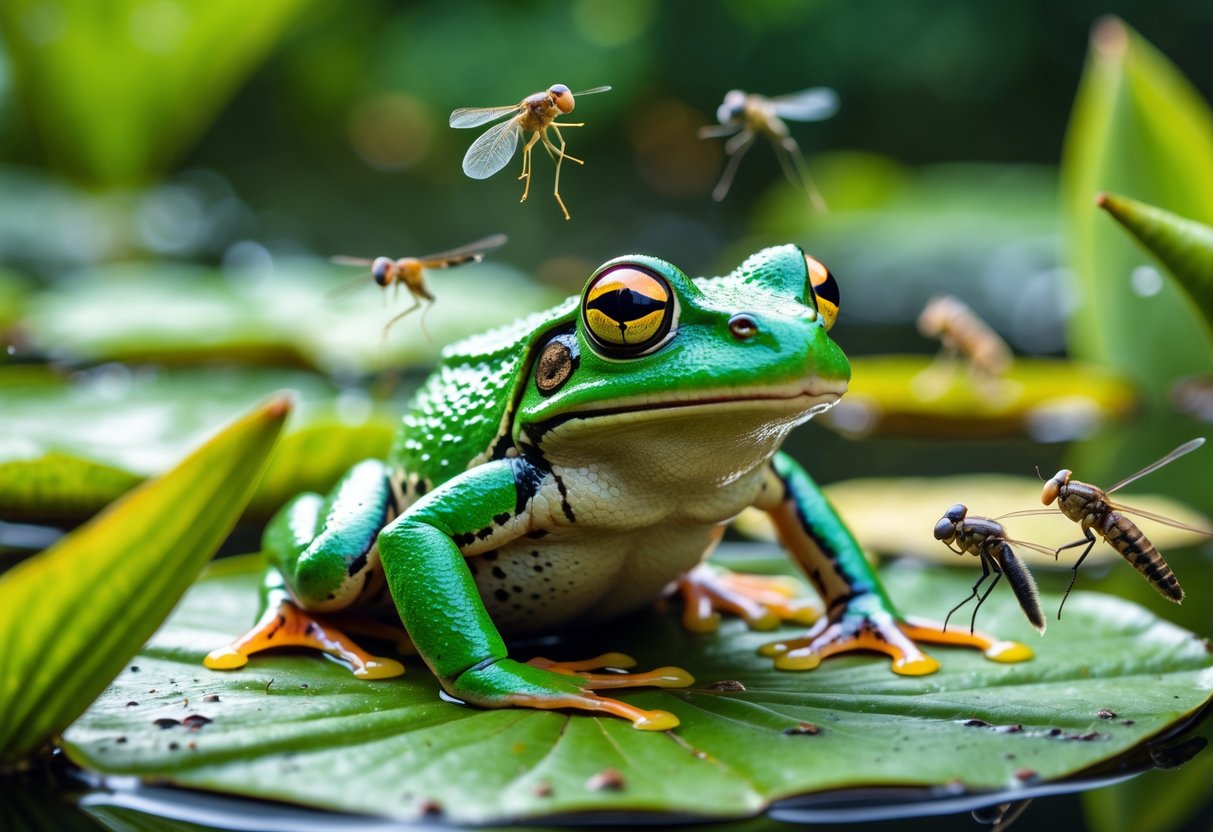
Your frog’s food picks really depend on its species, size, and whatever’s around in its environment. For example, maybe your frog ignores silk worms but can’t resist super worms or crickets.
Figuring out what your frog really likes can make a big difference in keeping it healthy—and honestly, it’s just kind of fun.
Getting a handle on these food preferences isn’t just interesting trivia. It helps you give your frog the nutrients it actually needs.
Plus, once you know what your frog loves to eat, feeding time gets a lot less stressful. Curious about what makes a frog’s favorite food? Let’s dig in.
Do Frogs Have a Favorite Food?
Frogs don’t just stick to one snack. Their diet depends on where they live and what’s around.
Some frogs pick certain insects over others, while some just eat whatever they find. If you’ve got a pet frog, try to match their meals to what they’d eat in the wild.
Food Preferences in Wild Frogs
Wild frogs usually go for live prey like insects and other small animals. Lots of species prefer crickets, grasshoppers, worms, spiders, and snails.
These foods pack in the protein and nutrients frogs need to grow and stay healthy.
Big frogs, like African Bullfrogs, sometimes eat small mammals or even other frogs. Smaller frogs usually stick to tiny insects, snatching them up with their super quick, sticky tongues.
A lot of frogs will eat whatever they can catch, but some definitely have favorites. Tree frogs often go after flying insects like flies and moths.
In wetter areas, frogs might snack on snails or aquatic bugs.
Food Choices of Pet Frogs
When you’re feeding a pet frog, it’s best to copy what they’d eat in nature. Most people use crickets and mealworms since they’re easy to get and pretty nutritious.
If your frog likes variety, you can also try small worms or grasshoppers.
Pet frogs usually want live food to trigger their hunting instincts. Frogs tend to ignore frozen or dead insects since they just don’t move.
Always check that the food isn’t too big—big pieces can make your frog choke. If it’s too small, your frog might not get enough energy.
You can dust live bugs with vitamins and minerals to keep your frog in good shape.
Feeding schedules aren’t the same for every frog. Most eat every day or two.
Watch your frog for hunger cues and adjust how much you give them.
Factors Influencing Frog Food Selection
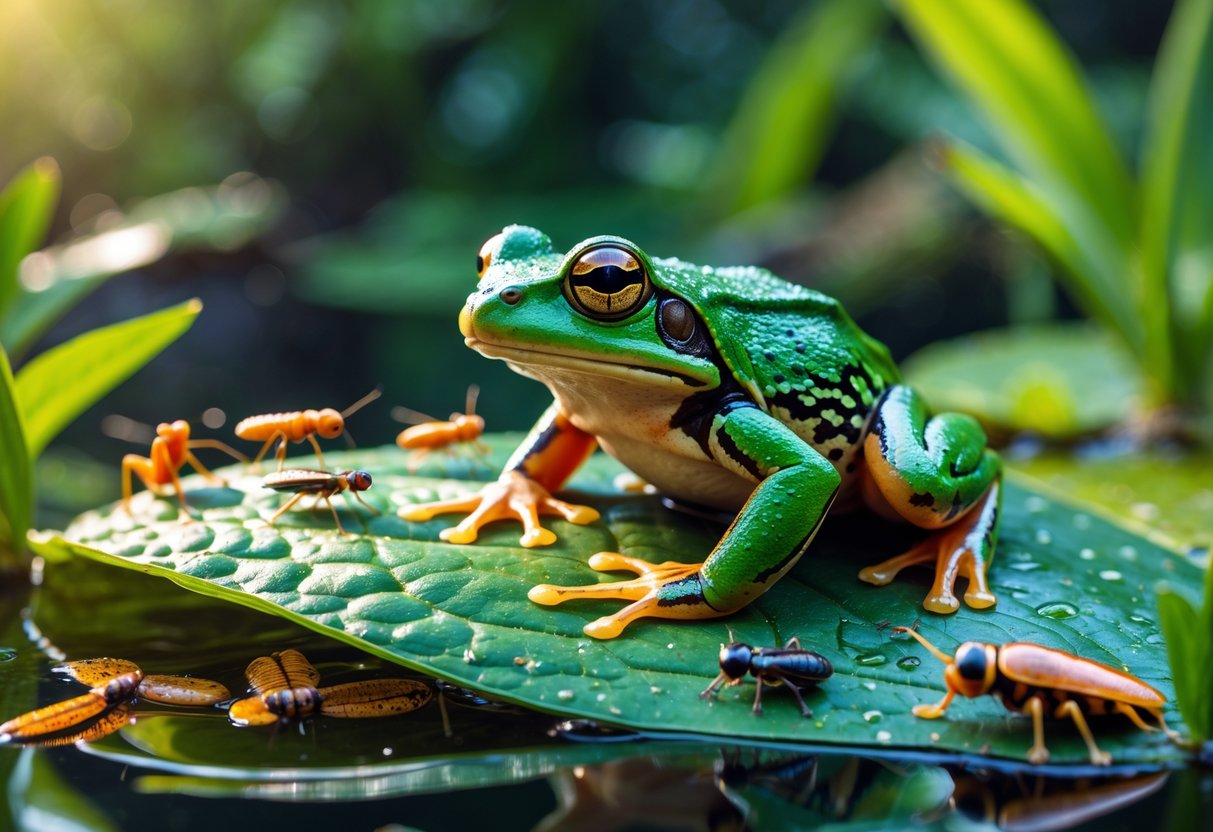
Frogs don’t just eat at random; a bunch of things shape what they like. Where they live, what food is around, and how they catch it all matter.
These factors can change a lot depending on the frog and its environment.
Effect of Habitat and Species
Your frog’s habitat really shapes what it wants to eat. Aquatic frogs usually eat water creatures like tiny fish, bloodworms, brine shrimp, and sometimes algae.
On land, frogs like the African bullfrog go for bigger prey—think earthworms or even small mammals if they can find them.
Different species have their own favorite diets. Some frogs do best on insects like crickets or waxworms.
Others eat a mix of bugs and water animals. If you have a pet frog, knowing its natural home helps you pick out the right food.
Gut-loading insects before feeding them to your frog can also boost nutrition.
Impact of Food Availability and Nutrition
What your frog eats often just depends on what’s around and what gives the most nutrients. If insects get scarce in the wild, frogs might switch to earthworms or even algae.
If you keep frogs as pets, you can add commercial frog food along with live insects to keep their diet balanced.
Food quality really matters. Make sure the insects you feed are healthy and well-fed (gut-loaded), so your frog stays strong.
For aquatic frogs, try giving bloodworms or brine shrimp to mimic what they’d eat in nature. This helps them get the nutrients they might not find in regular pet food.
Role of Feeding Techniques and Prey Movement
How your frog hunts really shapes what it’ll eat. Frogs snap up moving prey with their tongues, so they’re drawn to live insects and wriggling worms.
If food just sits there and doesn’t move, most frogs won’t bother with it. Some frogs act like little ninjas and wait for food to wander close, so slower prey like waxworms tend to work better.
Others, like the African bullfrog, get pretty bold and can handle bigger, faster prey. If you pay attention to your frog’s hunting style, you’ll have a much easier time picking food that matches what they’d go for in the wild.


