
So, you’ve spotted a frog in your yard or even inside your house. Should you move it? Honestly, unless the frog’s in danger or causing trouble, you probably don’t need to do anything.
Frogs usually do just fine in gardens and natural areas near water. Most of the time, it’s better to leave them be.

Now and then, frogs end up somewhere risky—like a pool or a busy street. In those cases, moving them to a nearby pond or wetland with good cover and water feels like the kindest thing you can do.
Just try to pick a spot that’s as close as possible to their original home and matches the kind of place they’re used to.
Moving a frog isn’t just about scooping it up and dropping it somewhere else. You’ve got to be gentle and careful so you don’t stress the little guy out.
Knowing the right way and time to move a frog helps protect them and keeps your home peaceful too.
If you want some step-by-step advice, check out this helpful guide.
Is It Safe or Recommended to Move a Frog?
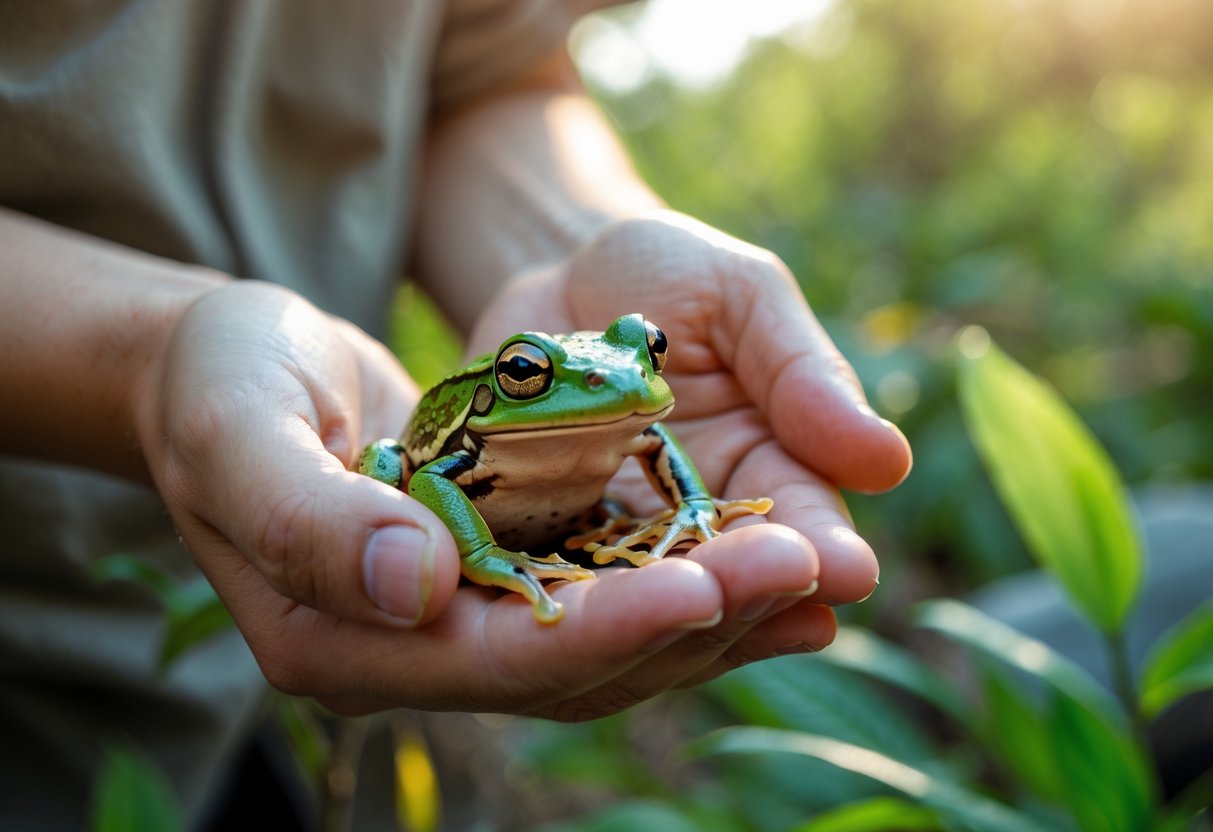
Moving a frog might sound easy, but it can affect the frog’s health, the local wildlife, and even the environment. Before you do anything, ask yourself why you want to move it, what could go wrong, and whether there are any local rules about it.
When Might Moving a Frog Be Necessary?
Sometimes, you really do need to move frogs because their home isn’t safe anymore. For example, maybe a garden pond is drying out, getting polluted, or someone plans to drain it. In those cases, moving the frogs to a healthier pond nearby can save them.
Frogs also wander into places where they could get hurt, like busy gardens or right next to roads. If that happens, you can carefully move them to a safer spot—ideally a natural wetland within 100 meters of where you found them.
Try not to move frogs during their breeding season. Stress might mess up their ability to reproduce. Only move them from one pond to another if you really have to—either to keep them safe or to prevent property damage.
Risks of Spreading Diseases and Invasive Species
Moving frogs comes with a big risk: you could spread diseases like chytrid fungus, which can devastate amphibian populations. Frogs can also carry bacteria that infect other animals, or even people.
If you’re not careful, you might also spread invasive plants or animals stuck to the frog. Just a bit of mud or a few pond weeds can introduce nasty invaders into a new area, putting native amphibians like smooth newts at risk.
To lower the risks:
- Release frogs somewhere with similar conditions to where you found them.
- Don’t move frogs long distances or across different regions.
- Use clean containers and skip transferring pond water.
Legal and Conservation Issues
Lots of places have laws protecting frogs and other amphibians. Some species, like the great crested newt, are strictly protected, and you can’t move them without permission.
Always check your local rules before you relocate any frog or toad. You might need a permit or advice from wildlife authorities.
If you’re not sure what to do, reach out to local wildlife experts. They can help you figure out what’s safe and legal.
Caring for Frogs and Amphibians in Your Garden
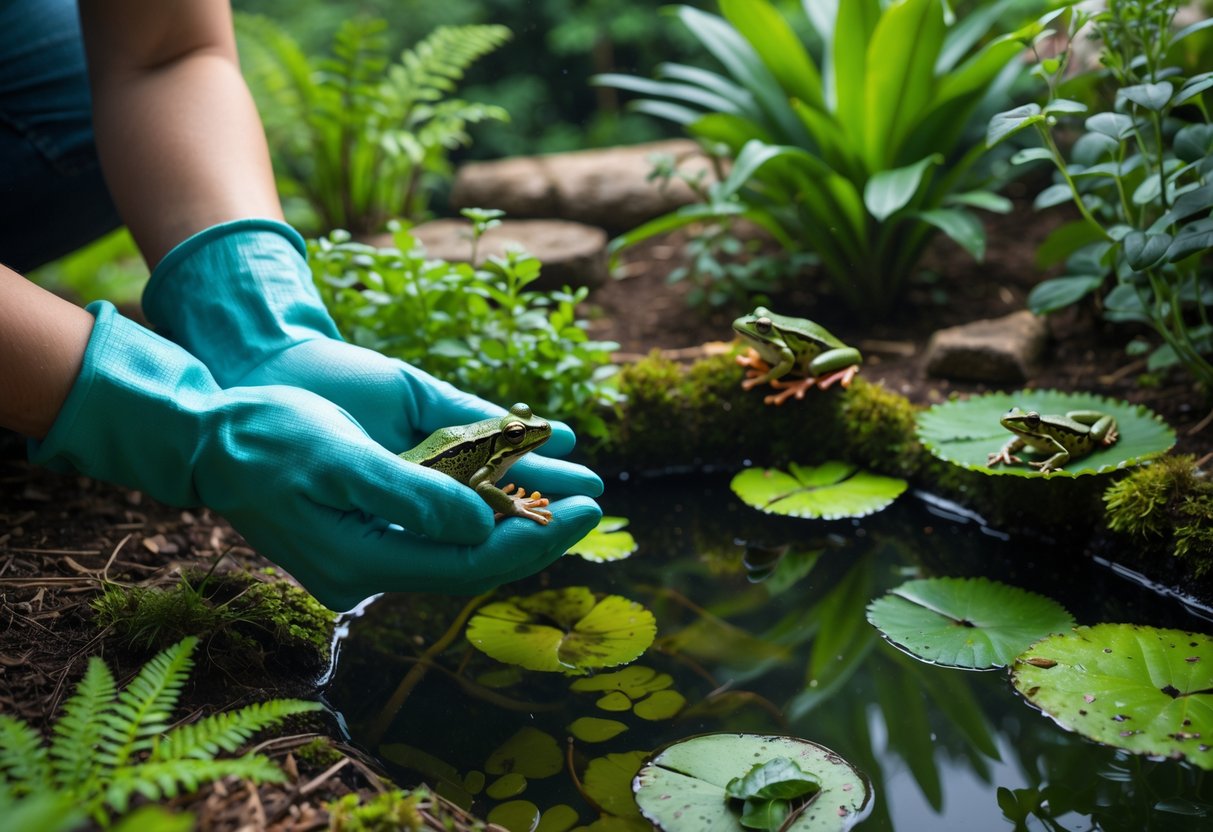
If you want frogs and other amphibians to thrive in your garden, focus on making it a safe place with shelter, food, and clean water. Try not to disturb them unless you absolutely have to, and use natural methods to support their life cycle.
Best Practices for Creating a Safe Habitat
A good garden for frogs, toads, and newts needs the right features. A pond without fish works best, since fish eat frog eggs and tadpoles.
Make sure your pond has shallow sides or gentle slopes so amphibians can get in and out easily.
Add log piles, compost heaps, and thick plants around the pond. These give frogs places to hide from predators and stay moist.
Skip the pesticides and chemicals—they’re bad news for frogs and the insects they eat. Keep paths clear so frogs can safely move between water and land.
Alternatives to Relocating Frogs
If you spot a frog in real danger—like near a road or where you’re digging—move it gently to a safer, nearby spot with cover. Otherwise, it’s best not to move frogs or their eggs.
Instead, work on making your garden a welcoming place with plenty of small shelters and damp areas. Over time, frogs will find their way in if your garden feels safe and inviting.
Managing Froglets, Tadpoles, and Spawn
Froglets and tadpoles love to spread out after they leave the pond. That’s just part of how they live.
At first, it might look like there are way too many of them. But honestly, they’ll wander off within a few weeks.
Don’t try to gather them up or move them somewhere else. Doing that could harm local populations or even spread diseases you don’t want.
Frog spawn needs clean, still water. It also needs a few pond plants to cling to.
Try not to clear out the whole pond if you see spawn or tadpoles hanging around. If you have to clean up, wait until late autumn.
Most amphibians will have left the pond by then, so it’s safer for the young frogs and toads.
If your pond dries up or disappears, local amphibians lose a breeding spot. Their numbers can really take a hit.
Putting in a new pond or just keeping water features topped up can help. That way, your garden stays a safe place for these little creatures.
Want to dig deeper? Check out Froglife on Frogs and Toads for more about safe frog care and gardening.


