
Frogs might look tiny and kind of unassuming, but wow, their muscles pack a punch. They’re so muscular because strong muscles let them jump far, swim fast, and adapt to all sorts of wild environments. Those muscles give frogs the power and agility they need to dodge predators and grab a meal.
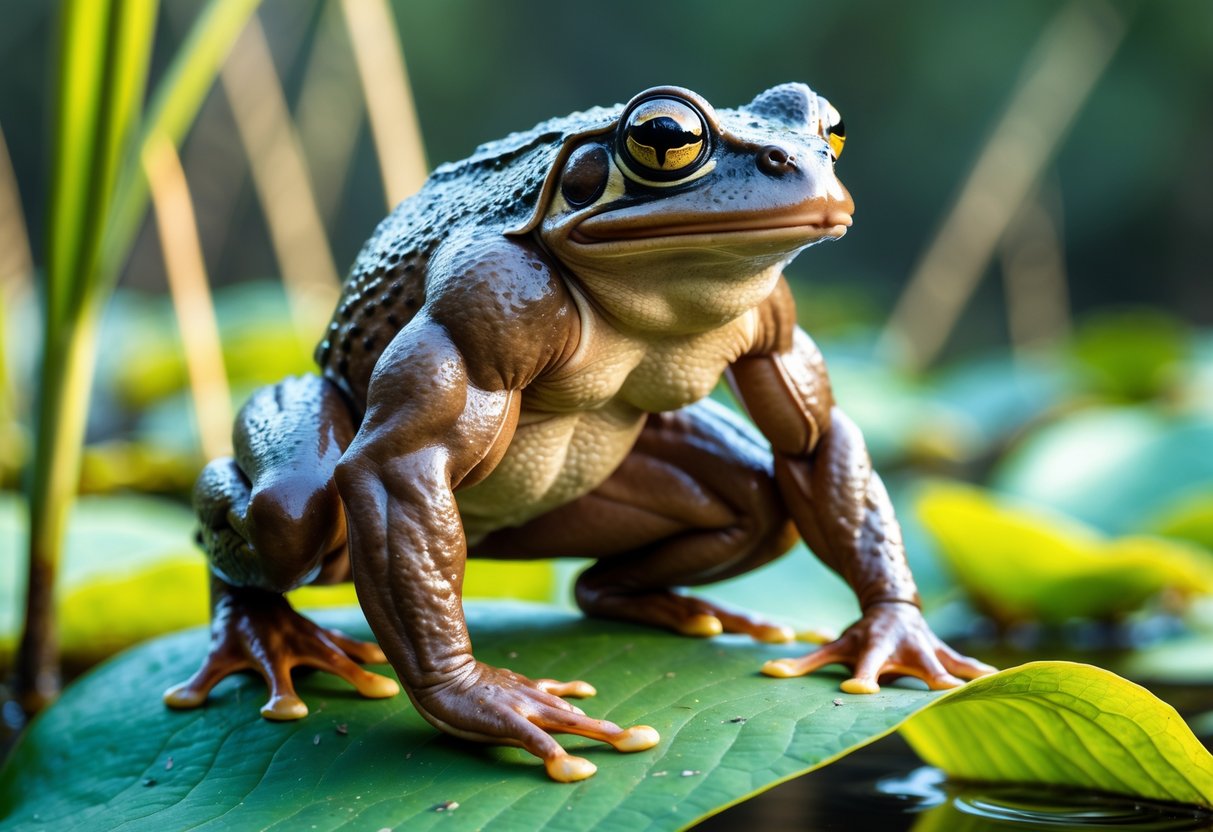
If you take a closer look, you’ll notice frogs have muscles that fit what they do best. Frogs that jump a lot grow bigger leg and shank muscles, while burrowers or climbers develop strong muscles for those jobs.
Learning why frogs are so muscular gives you a cool glimpse into how nature shapes animals for their homes.
Curious about what makes frog muscles tick and how they all work together? Let’s get into it.
Muscle Anatomy And Power In Frogs

Frog muscles produce a ton of power, and they do it fast. Their leg muscles work like springs, letting frogs jump high and far.
The tiny structures inside those muscles, and how the muscles are arranged, really affect how well frogs move.
Specialized Muscular System For Jumping
A frog’s muscles are basically built for quick, powerful jumps. The leg muscles are big and strong, so they can produce a lot of force in a short burst.
They contract over long distances—up to about 30% of their resting length. That lets the frog push off the ground at lightning speed.
Special muscles like the gastrocnemius and triceps femoris do most of the heavy lifting. These muscles are set up to generate both force and speed.
When a frog jumps, its muscles fire in a precise pattern. That’s what lets it launch itself with such explosive power.
If you want to geek out on the details, check out this frog muscular system.
Structure Of Frog Muscle Fibers
Inside those strong legs, frog muscle fibers are built for power and speed. Frogs have mostly fast-twitch fibers, which contract super quickly and hit high power, though they tire out fast.
This fiber setup is perfect for short, intense actions—like leaping. The fibers are long and packed with repeating units called sarcomeres.
Sarcomeres let muscles shorten and generate force efficiently. The whole structure is meant to balance force and quick movement, so frogs can launch themselves faster and farther than you’d think.
Want more details? Here’s a handy Frog Skeletal and Muscular Anatomy Overview.
Role Of Sarcomere Length And Myosin
A lot of frog muscle power comes down to sarcomeres and myosin. Sarcomeres are the basic units that let muscles contract, and their length really affects how much force the muscle can make.
Frogs fine-tune sarcomere length so their muscles contract just right for jumping. Myosin proteins inside sarcomeres pull on actin filaments, shortening the muscle.
When sarcomeres hit the right length, the muscle can crank out maximum power. This balance lets frogs reach near-max force super quickly during a jump.
If you’re curious, here’s more on muscle force during frog jumps.
Hindlimb Muscles: Key To Power And Performance
A frog’s hindlimbs are the real secret behind its jumping skills. The size and setup of muscles in the hips, thighs, and shanks matter a lot.
Bigger, faster-contracting muscles mean more power at takeoff. Different leg muscles handle different jobs.
Some give strong force, while others help speed things up. For example:
- Hip muscles keep things stable and add power.
- Thigh muscles do most of the pushing.
- Shank muscles help extend the foot at takeoff.
The way these hindlimb muscles work together turns frogs into top-notch jumpers. Differences in muscle size and arrangement explain why some frog species can out-jump others.
You can check out more from this frog muscle anatomy and movement study.
How Frogs Generate Exceptional Strength

Frogs mix muscle power, perfect timing, and even body temperature to jump far and fast. Their muscles work together to get the most force and speed out of every leap.
Jumping And Mechanical Power Generation
When a frog jumps, its leg muscles fire off huge bursts of power. Frogs can generate over 500 watts per kilogram of muscle, letting them leap more than nine times their own body length.
That’s pretty wild if you think about it. This power comes from muscles that contract quickly and stretch about 30% of their resting length.
Frogs have a cool system where tendons act like springs. These tendons store and release energy, giving the jump an extra boost without needing more muscle energy.
The quick build-up and release of force helps frogs jump high and far, all while staying efficient.
Activation Pattern And Muscle Contraction
Frog muscles don’t just work hard—they work smart. The timing of muscle activation is everything.
Muscles fire on and off in a quick, coordinated pattern that matches the jump. The fibers shorten fast, but it’s all controlled to get the most power.
Force happens at just the right length and speed for those muscle fibers, especially the sarcomeres inside. This tight contraction pattern makes sure frogs get the most power right when they need it—mid-jump, every time.
Muscle Temperature And Performance Optimization
Muscle temperature really changes how well muscles contract and create power. When muscles get warmer, they contract faster and hit harder.
Frogs usually keep their muscle temperature in a sweet spot before they leap. At that ideal temperature, the contractile proteins inside your frog’s muscles do their job better, making those sarcomeres shorten more quickly.
So, your frog’s muscles end up firing stronger and faster. It’s kind of like tuning up a machine—temperature just matters a lot for how powerfully frogs can jump.
Curious about the details? Check out how frogs produce mechanical power during jumping and how their muscle activation patterns play into it.


