
Ever wondered how far frogs actually travel at night? You’re definitely not alone. Frogs are way more mobile than most people think, especially when they’re out hunting for food, searching for mates, or just looking for a new place to call home.
Some frogs stick close to water, but plenty of others wander pretty far once it gets dark. It’s kind of impressive when you think about it.
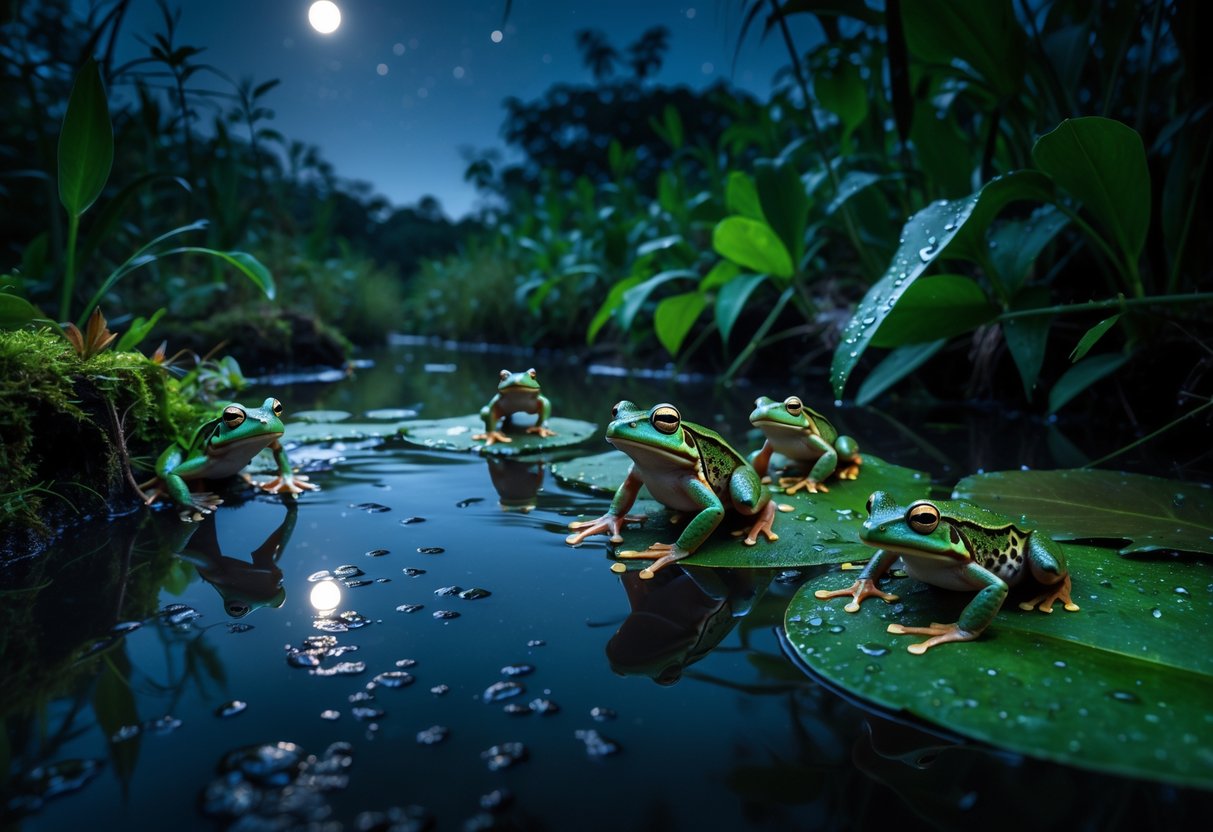
Most frogs cover anywhere from a few hundred meters to about half a mile at night. Some can even go farther, depending on what they need and where they live. This nightly movement helps them stay safe, find meals, and check out new spots for breeding or shelter.
If you know how far frogs roam, you’ll start to understand their habits a bit better. Maybe that explains why you sometimes hear them calling far away from any pond.
Their nighttime journeys might make you look at your backyard or local park differently. Frogs aren’t just sitting around—they’re out there exploring, surviving, and sometimes making surprisingly long trips while the world is quiet and cool.
Typical Nighttime Travel Distances for Frogs
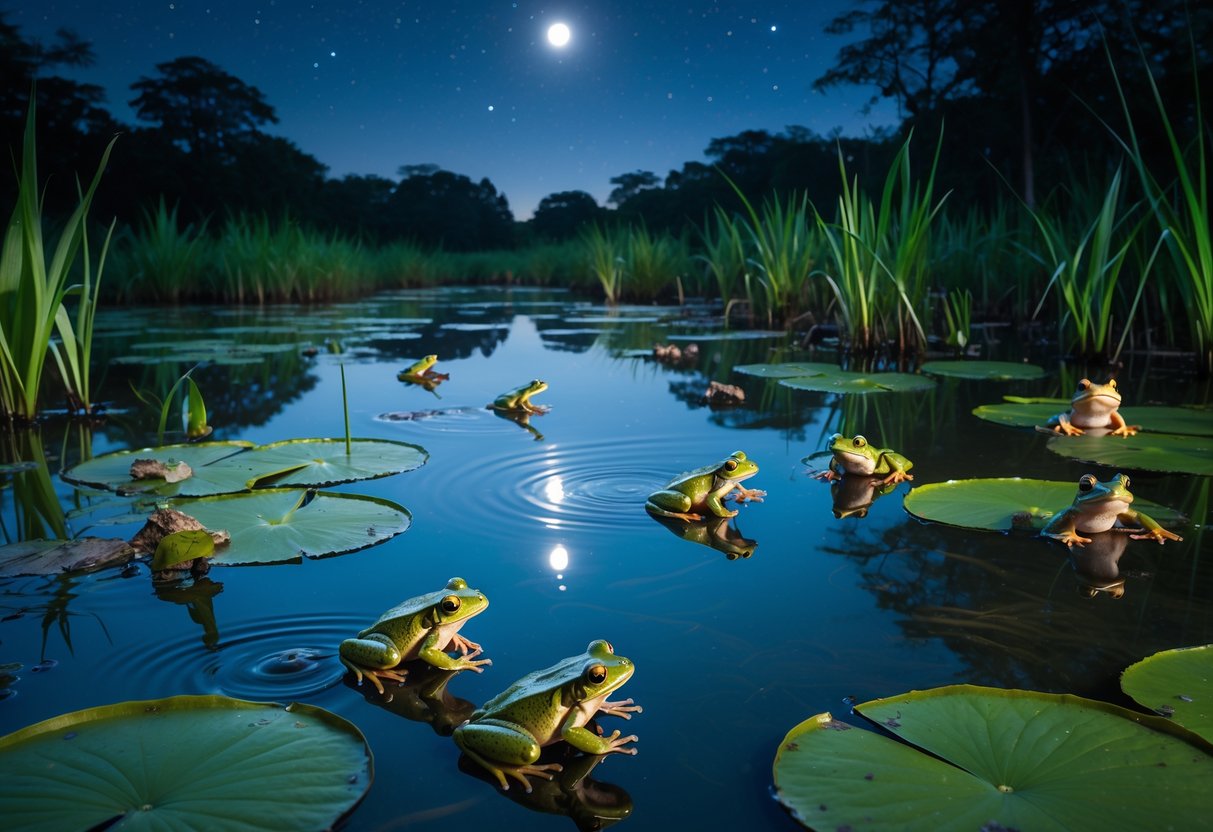
When frogs get moving at night, how far they go really depends on their species, the weather, and their surroundings.
Some frogs hang out close to home, but others travel much farther to find water or a place to breed.
How Far Frogs Commonly Move in One Night
Most frogs don’t travel all that far in a single night. Usually, they’ll move about 10 to 100 meters (roughly 30 to 330 feet).
Bigger frogs, like toads, sometimes travel up to 1 kilometer (0.6 miles) if they’re on the hunt for water or a mate. Still, the majority stick pretty close to their usual hangouts.
Tiny frogs usually don’t move as far as the larger ones. Their smaller size just makes long hops or swims tougher.
Species-Specific Ranges: red-legged frogs and More
Different frog species have their own travel quirks. For example, red-legged frogs sometimes travel up to half a mile to one mile when they leave breeding ponds for nearby forests.
The Southern Cricket frog? It might only move a few meters each night, but over time, it can cover more ground.
Tree frogs keep it short most nights, though they might glide or parachute between trees to get where they want to go.
Here’s a quick rundown:
| Frog Species | Typical Night Travel Distance |
|---|---|
| Red-legged Frog | Up to 1 mile (1.6 km) |
| Southern Cricket Frog | Around 10-100 meters |
| Tree Frogs | Short hops; gliding up to 15 meters |
Factors Affecting Nightly Travel: Weather, Season, and Habitat
A frog’s travel distance really depends on a bunch of things. Weather is a big one—frogs move more on cool, moist nights because hot or dry weather can be risky for them.
Season matters, too. During the breeding season, frogs go farther as they search for mates and good spots to lay eggs.
Habitat plays a part as well. Frogs living near water or in wetlands don’t need to travel far. But frogs in dry areas? They might have to go much farther to find water.
If there are lots of predators or obstacles around, frogs tend to keep their trips shorter and stick to safer routes.
How and Why Frogs Find New Places at Night

When frogs head out at night, they use special senses to find water, food, and safe places. They often return to familiar spots, like breeding ponds.
Changes made by humans can mess with their routes or force them to pick new destinations.
Sensory Abilities: Smell, Hearing, and Navigation
You might not expect it, but frogs really rely on their sense of smell to track down water and food. They pick up on moisture and chemicals in the air, which helps them find ponds or wetlands.
Their hearing matters, too. Frogs listen for calls from others, especially when it’s breeding time. That way, they can find company—or avoid trouble.
Frogs get around by using simple navigation tricks, like spotting landmarks or using the moon and stars. Cool, damp nights make it easier for them to travel farther without drying out.
Returning to Breeding and Spawn Sites
Frogs often make the trip back to the same ponds or lakes where they were born to lay eggs. Scientists call this site fidelity.
Your local pond might have frogs that traveled a surprising distance to get there. They use their senses to track down these places, sometimes covering several miles in the process.
Traveling at night keeps them safer from predators and helps them stay cool. These breeding spots are super important for frog populations, since the right water gives eggs and young frogs a better shot at survival.
Human Impact on Frog Movement Paths
When we build roads, houses, or farms, we end up blocking or changing the routes frogs use to travel. This often means fewer frogs actually reach their breeding ponds.
Pollution and habitat loss make it tough for frogs to find clean water. Safe places to move at night get even scarcer.
Want to help out? Try leaving some natural areas near water or set up frog-friendly paths. Frog tunnels or wildlife corridors can really help them cross busy areas without getting hurt.
Honestly, your choices can shape how well frogs get around and survive.
Curious about how frogs find water and travel at night? Check out this exploring frog travel article.


