
Ever wondered what frogs actually eat? Maybe you’re curious if rats ever end up on their menu. Frogs don’t usually eat rats—rats are just too big for most frogs to even attempt. Most frogs stick to insects, small fish, or whatever little critters they can easily gulp down.
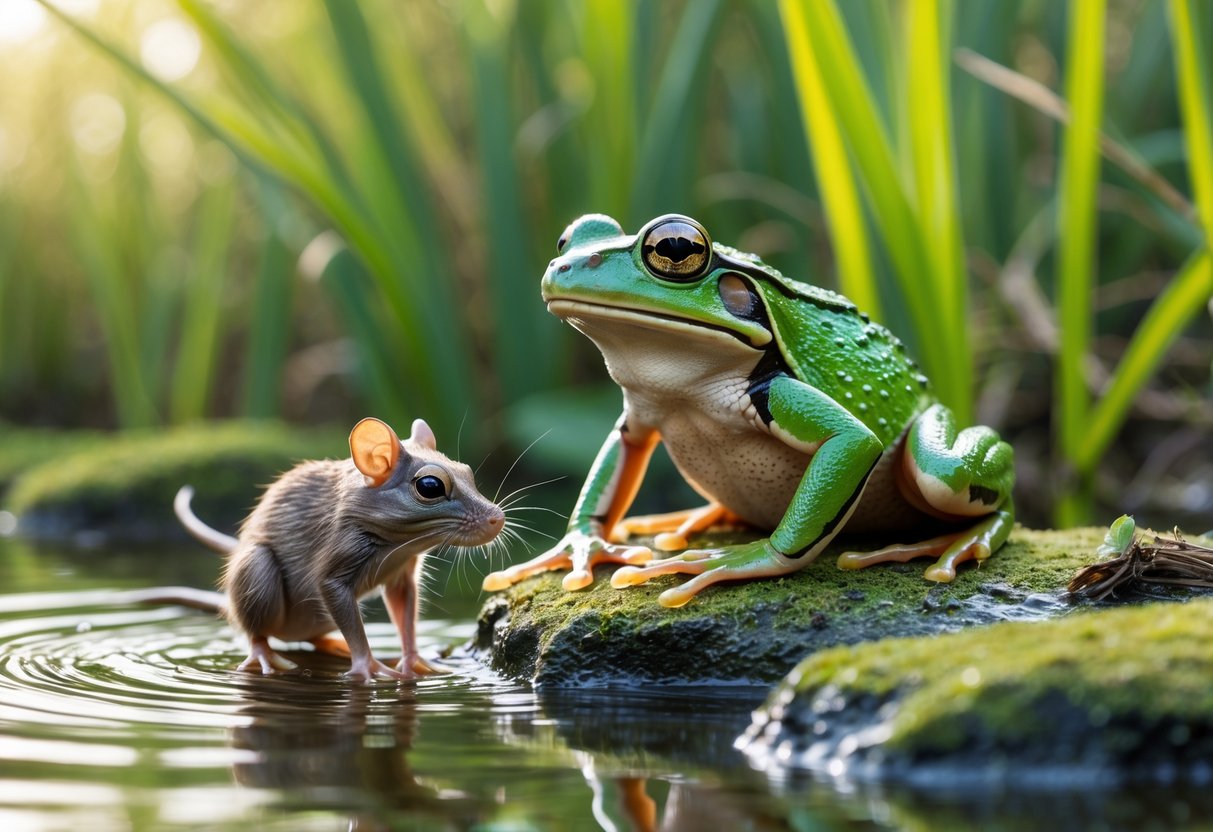
But, there are a few exceptions. Some really large frogs, like the African bullfrog or the goliath frog, sometimes eat small rodents like mice. Rats, though? Still pretty rare.
If you’re keeping a frog as a pet, or just fascinated by how they fit into nature, knowing what they eat tells you a lot about them.
Curious about which frogs might actually eat small rodents, and why rats aren’t a typical frog snack? Let’s dig into frog feeding habits and their size limits.
Do Frogs Eat Rats?

Some frogs eat rats, but it really depends on the frog’s size and what prey is around. Bigger frog species have a shot at catching and eating small rodents.
Frogs hunt in different ways and their diets vary a lot. Most of them go for insects, but a few ambitious frogs will try for bigger animals if they can.
Predatory Behavior and Dietary Habits of Frogs
Frogs act as opportunistic feeders. They eat whatever fits in their mouth and moves slow enough to catch.
Most frogs just wait around and snap up prey with their sticky tongues.
While insects and smaller creatures make up the bulk of their diet, some big frogs go after larger prey like small rodents. That kind of hunting helps them survive in places where food options change a lot.
Frogs don’t chew—they swallow their food whole. Some even swallow small birds, reptiles, or other frogs if the opportunity comes up.
Which Frog Species Can Consume Small Rodents?
Only a handful of big frog species can eat rats or other small rodents. For example:
- Goliath frog: This giant can eat mice, rats, and even other small mammals.
- African bullfrog: It’s big and has sharp teeth—sometimes it eats mice or small birds.
- Pacman frog: With its huge mouth, it occasionally eats small rodents, but not often.
- Cane toad: An omnivore that sometimes eats rats, insects, and even plants.
These frogs need to be large enough to handle rodents safely.
Size Limitations and Prey Selection
A frog’s size really sets the limit for what it can eat. Smaller frogs just can’t handle rats—they’re too big and strong.
Most frogs stick with insects, worms, and other small animals. Even the big ones only go after rodents like mice or rats if they’re large enough and really hungry.
Eating rodents isn’t always safe for frogs, either. Rodents can carry parasites or diseases that put the frog at risk.
If you’re interested in frogs that might eat rats, look into species like the goliath frog or African bullfrog. Smaller frogs won’t even try.
You can read more about how frogs and rodents interact at Do Rats Eat Frogs? A Detailed Look At The Predator-Prey Relationship.
Frogs and Rats in the Wild

Rats and frogs often share the same habitats, and their interactions can get pretty interesting. Sometimes, rats eat frogs, and both animals face some risks when they cross paths.
It’s worth understanding how rats feed, how frogs defend themselves, and the health issues that can pop up from their encounters.
Opportunistic Feeding in Rats
Rats act as opportunistic feeders. They eat whatever’s around, from bugs to plants to table scraps.
Common rats, like the brown rat and black rat, will even eat small animals if they get the chance.
Sometimes frogs end up as a meal for rats, especially if other food is hard to find. Rats usually go for frogs that are easy to catch—maybe slow or frozen ones.
Because they’re so adaptable, rats’ diets change depending on what people or nature provide. Frogs aren’t a main food source, but they do end up on the menu now and then.
Predator-Prey Relationship Between Rats and Frogs
Out in the wild, rats and frogs have a complicated predator-prey relationship. Sometimes rats eat frogs, but frogs don’t really target rats.
Frogs try to survive by hiding or freezing when they sense danger from rats. Unfortunately, freezing can make them easy for rats to grab.
How they interact depends on the species, where they live, and their size. Big frogs usually steer clear of rats, but smaller frogs sometimes get eaten.
Potential Health Concerns and Animal Welfare
When rats eat frogs, both animals—and honestly, the environment too—face some health risks.
Brown rats often carry rat lungworm, a parasite that mainly affects rats but can also harm amphibians if it spreads.
If you spot frogs or rats hanging around your home, keep in mind that rats might spread diseases while they’re out hunting or scavenging.
From an animal welfare perspective, rats eating frogs definitely causes stress and injuries for the frogs.
If rat populations get out of hand, some frog populations could really struggle to survive.
Taking steps to control rats can go a long way in protecting local frog species.
It also helps keep the environment healthier for all sorts of wildlife.
Curious to learn more? Check out Do Rats Eat Frogs And Toads? The Surprising Truth Revealed.


