
Ever wondered where frogs sleep? The answer isn’t as simple as you might think. Frogs don’t stick to just one spot—they’ll sleep in water, on land, or even up in the trees.
Depending on their species and what’s around, frogs pick places like underwater plants, leaf litter, burrows, or they tuck themselves under rocks and logs.
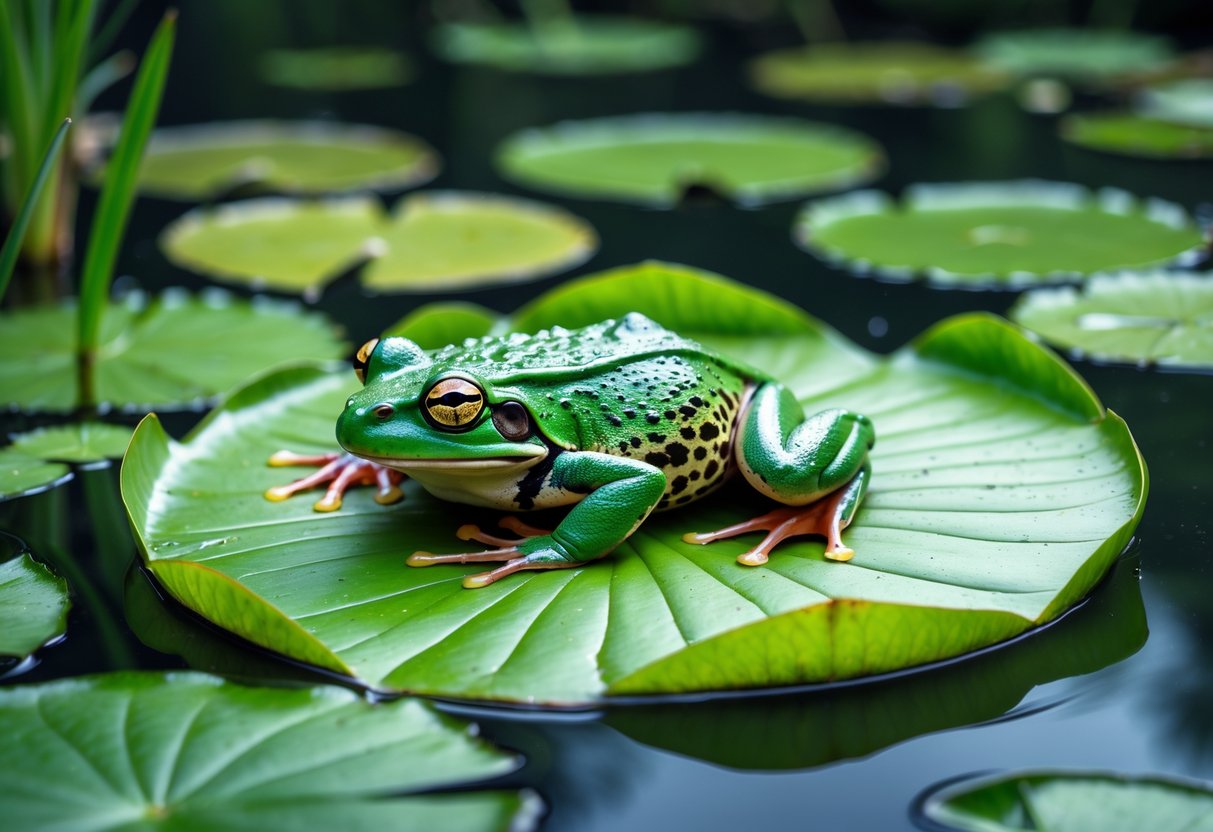
You might imagine frogs curled up somewhere safe, but honestly, they’re pretty flexible about where they rest. Some even sleep upside down on branches, and a few stay half-alert while they’re dozing.
Learning about where frogs sleep gives you a new appreciation for how these little creatures stay safe and comfortable out there.
It’s actually fascinating to see how well frogs adapt to their surroundings. If you’re curious about their sleeping habits and how they manage to find safety in all sorts of places, let’s dive in.
Where Do Frogs Sleep in the Wild?

Frogs pick their sleeping spots based on their species and environment. They look for places that protect them from predators and help keep their bodies cool or moist.
Whether they live in water, on land, or up in trees, their habitat really shapes where they end up resting.
Resting Habitats and Shelter-Seeking Behavior
Frogs actively search for safe, hidden places when it’s time to sleep. Most will choose shady, moist spots like under leaves or inside hollow logs.
These places help them avoid drying out and keep them out of sight from predators.
You’ll often spot frogs in cool, damp areas that block out the sun. They stay still, limbs tucked close, blending right into the background.
Frogs also like to sleep near water, so they can make a quick escape if needed.
Differences Between Aquatic and Terrestrial Frogs
Aquatic frogs spend a lot of time underwater and sleep tucked away beneath rocks or among plant roots in ponds and streams. They breathe through their skin, so they don’t need to come up for air while resting underwater.
Terrestrial frogs stick to land. They hide in leaf litter, rock cracks, or burrows to stay safe.
Since they’re not great swimmers, they prefer dry places like compost heaps or under logs. They need to keep their skin moist, but usually, they aren’t actually in the water when they sleep.
Sleeping Locations for Tree Frogs
If you go looking for frogs in trees, you’ll probably find them sleeping high up on leaves or inside tree hollows. Tree frogs have these cool toe pads that let them cling to smooth surfaces without slipping.
They’ll often rest in places like bromeliads or tucked into big leaves.
These spots protect them from rain and hungry predators. Sleeping above the ground keeps them cooler and safer than hanging out on the forest floor.
Burrowing, Hiding, and Seasonal Dormancy
Some frogs dig or use burrows to sleep. Toads, which are a type of frog, dig deep into loose soil with their strong back legs.
This helps them hide from extreme heat or cold.
When it gets cold, many frogs go into a state similar to hibernation. They burrow underground or stay underwater, slowing down their activity to save energy.
During this time, their heart rate and breathing drop way down until things warm up again.
How Frogs Sleep: Patterns, Adaptations, and Unique Features

Frogs rest in ways that seem pretty strange compared to how we do it. Their sleep involves different brain activity and some special body parts and behaviors that help them stay safe.
These features honestly make their sleep kind of fascinating.
Sleep Patterns of Frogs Compared to Mammals
Frogs don’t sleep like mammals at all. They don’t really have long, deep REM sleep the way people do.
Instead, they break up their sleep into short bursts—sometimes just a few minutes at a time. This lighter sleep lets them stay alert to danger, even when they’re resting.
You might catch a frog resting with its eyes open or barely moving. Their brain activity slows, so their bodies save energy, but their minds stay half-ready.
People sometimes call this a “torpor” state, which is pretty different from what we experience.
The Role of the Nictitating Membrane
Frogs can’t close their eyelids, so they use something called a nictitating membrane. It’s this thin, see-through layer that slides over their eyes.
The membrane protects their eyes but keeps them sort of open during sleep.
This feature helps frogs stay aware of what’s happening around them. You might see a frog sleeping with its eyes still visible, but the membrane keeps out dirt and injury.
It even lets some light through, which helps them stay a bit alert when they’re dozing.
Inactivity, Posture, and Alertness During Rest
When frogs sleep, they barely move and slow down their metabolism. You’ll usually find them in quiet spots like under logs, leaves, or in shallow water.
Their posture changes—some lay flat on their stomachs, others curl up, and a few even sleep upside down.
Even while resting, frogs keep a certain level of alertness. They can react fast to predators because their brains stay responsive.
If something startles them, they’ll wake up and leap away in an instant.
Environmental Factors Affecting Frog Sleep
Where frogs sleep—and how they do it—really depends on what’s going on around them. Temperature, moisture, and light all play a role in shaping when and how long frogs rest.
When it gets cold, frogs often sleep longer to save energy. Warmer weather tends to wake them up and get them moving.
Frogs that hang out in water have some pretty wild adaptations. They can actually sleep underwater by soaking up oxygen right through their skin.
On land, frogs usually pick damp, hidden places. They want to stay safe and make sure they don’t dry out.
If there’s not much food around, frogs might change up their sleep patterns too.
You can check out more about these unique frog sleep habits at this frog sleep patterns guide.


