
The story of the princess kissing a frog isn’t just a cute, magical moment. It’s really about looking past what’s on the outside and realizing that real value can hide beneath the surface.
This lesson nudges you to stay open-minded and give chances to people or things you might overlook at first.
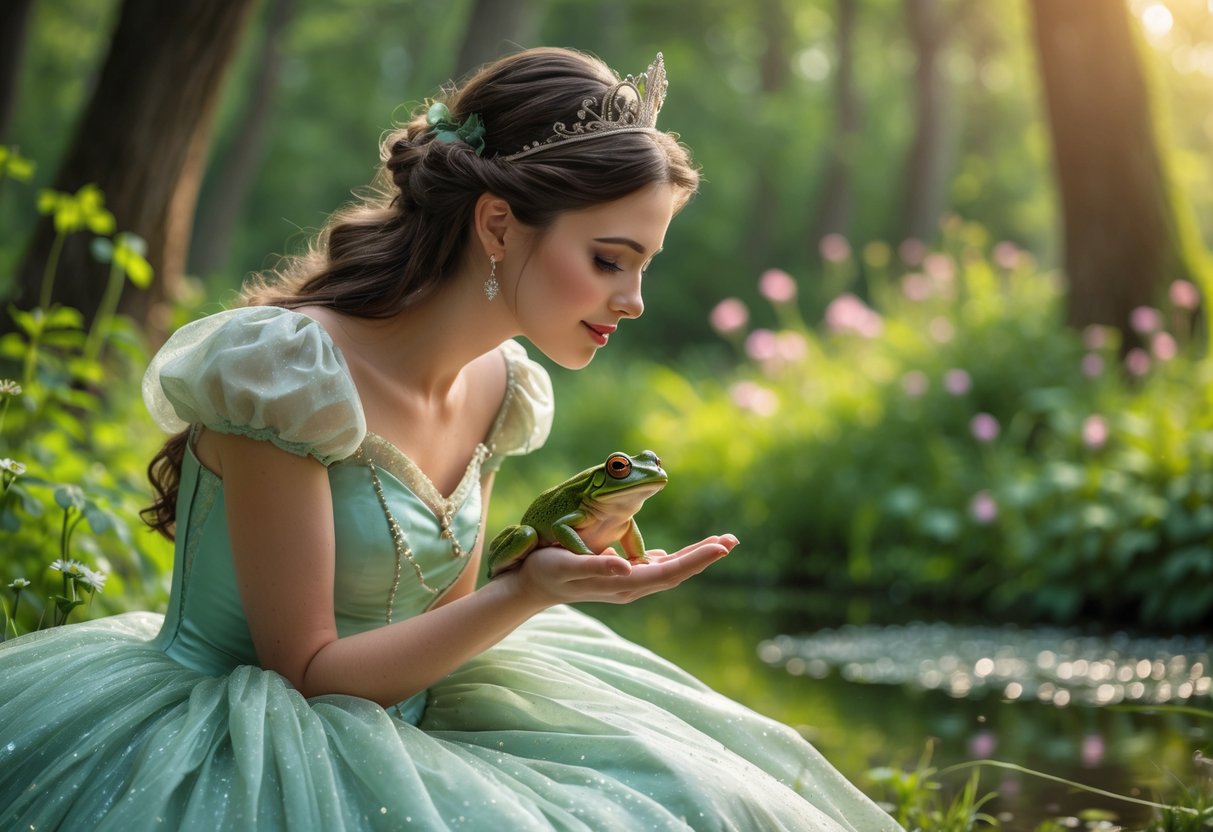
Some versions of the tale focus on love’s power to change things. Others highlight how patience and dealing with disappointment are part of finding something—or someone—truly special.
You might have to “kiss a lot of frogs” before you find the right opportunity or person. That’s just how life goes sometimes.
Understanding this story can shift how you see everyday challenges. It’s a reminder to be hopeful, patient, and kind, even when things look far from perfect.
Origins and Interpretations of the Princess Kissing a Frog Motif
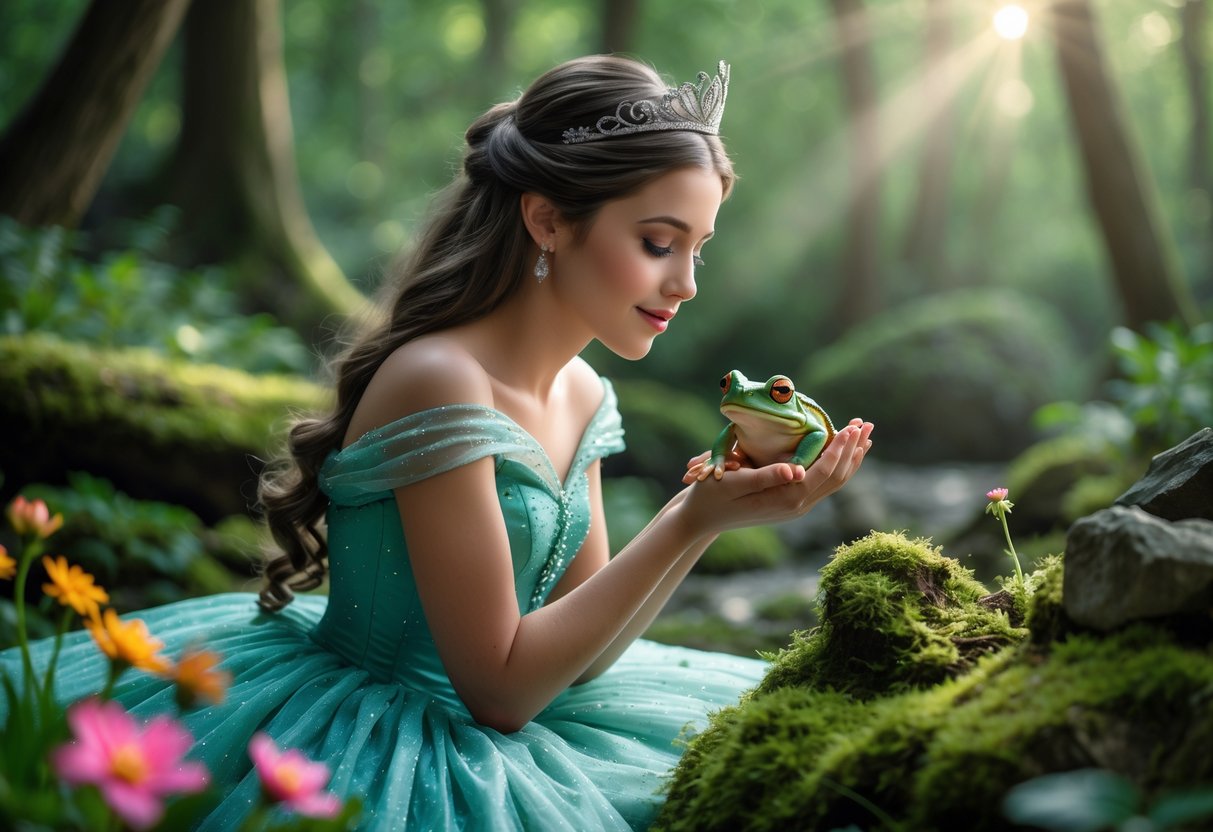
The princess-and-frog story has more twists than you might expect. The original tales, how the motif changed, and the ideas behind the kiss all add depth to what seems like a simple fairy tale.
These details actually help you see why the story still matters and how many ways it’s been told.
The Frog Prince and Its Variations
You might assume the famous story always started with a princess kissing a frog, but that’s not really the case. In the Brothers Grimm version, the princess actually throws the frog against a wall, which turns him into a prince.
Some lesser-known versions do use a kiss, but those showed up later or in different regions.
In other tales, the frog asks for a kiss, and the princess—maybe a bit grossed out—goes along with it. Sometimes, the frog spends a few nights with the princess before changing.
You’ll notice that the story isn’t set in stone. Different cultures and times have put their own spin on it.
The Missing Kiss in the Grimm Fairy Tale
Oddly enough, the famous kiss doesn’t appear in the original Grimm fairy tale at all. Jacob and Wilhelm Grimm collected a version in the early 1800s where the princess breaks a promise to the frog.
The transformation happens only after she throws him against the wall.
Modern versions, especially in English, added the kiss later on. Translations and retellings from the 19th century made the kiss part of the story.
So, the kiss you picture is really a modern twist, not something from the earliest tales.
Evolution of the Kiss Motif in Literature
As time went on, the kiss became the main way the frog got turned back into a prince. English translations and newer versions leaned into romance and kindness.
By the 20th century, “kissing the frog” was a phrase about being patient in love.
You can spot this motif in all kinds of books, movies, and adaptations—Disney’s The Princess and the Frog comes to mind. These stories focus more on love and transformation, rather than the rougher original.
That shift made the story gentler and more about growing emotionally.
Symbolism Behind Transformation and Maturity
The kiss isn’t just a magic trick—it’s about seeing past the obvious and growing as a person. Kindness, acceptance, and love can spark real change.
The frog stands in for things you might want to avoid at first, but later learn to value.
Older versions show the princess feeling fear or disgust, but then finally accepting the frog. That’s a lot like real life, when you have to push through tough stuff to get to something better.
The transformation also points to growing up—learning to spot real worth, not just what’s on the surface.
Modern Proverb and Cultural Impact

The princess kissing the frog story has grown way past fairy tale status. It shapes how people talk about patience, effort, and finding the right match.
You’ll hear it in sayings, see it in pop culture, and notice it changing how we think about relationships.
‘You Have to Kiss a Lot of Frogs’ Proverb Explained
When someone says you have to kiss a lot of frogs before you meet your prince, they mean you’ll probably face plenty of letdowns before you find the right person. This modern saying comes straight from the fairy tale, where a kiss transforms the frog.
The phrase reminds you that not every try will be a win. It encourages patience and sticking with it, whether you’re dating or just dealing with life.
Sometimes, the “frogs” you meet aren’t what you hoped for, but every experience teaches you something new about what you want.
You’ll even find this proverb in the Dictionary of Modern Proverbs. It’s become a go-to way to talk about the ups and downs of searching for love or success.
Influence on Pop Culture and Language
You’ll spot the frog-kissing idea everywhere—movies, books, TV shows, you name it. People use it for laughs or as a gentle lesson about hope and trying again.
Stories often play with the princess and frog theme, making it fun and easy to relate to.
The phrase kiss a lot of frogs has slipped into everyday conversation, too. Folks use it when talking about relationships, job hunts, or just about anything that takes a few tries.
Even fashion and ads borrow the frog or prince as symbols of change and surprise. That shows how deeply the story has worked its way into culture, way beyond just being a bedtime story.
Gender Roles and Psychological Themes
The tale and the proverb really make you wonder who actually takes action in relationships. In older versions, the princess throws the frog against the wall to break the spell.
Now, she usually kisses the frog instead, showing love or maybe just a bit of kindness.
This shift points to ideas about active love and acceptance. Sometimes you have to look past appearances and believe people can change or have hidden value.
On a psychological level, this story nudges you to stay open-minded and patient with others.
It also gets you thinking about your own role in building connections, instead of just waiting around for something perfect to show up.


