
Ever seen a frog suddenly squirt a clear liquid? You might’ve wondered what on earth that stuff is. Most of the time, what frogs squirt is just urine, sometimes mixed with water they’ve soaked up through their skin. It’s a weird but clever defense move they use when they’re startled or feel threatened.
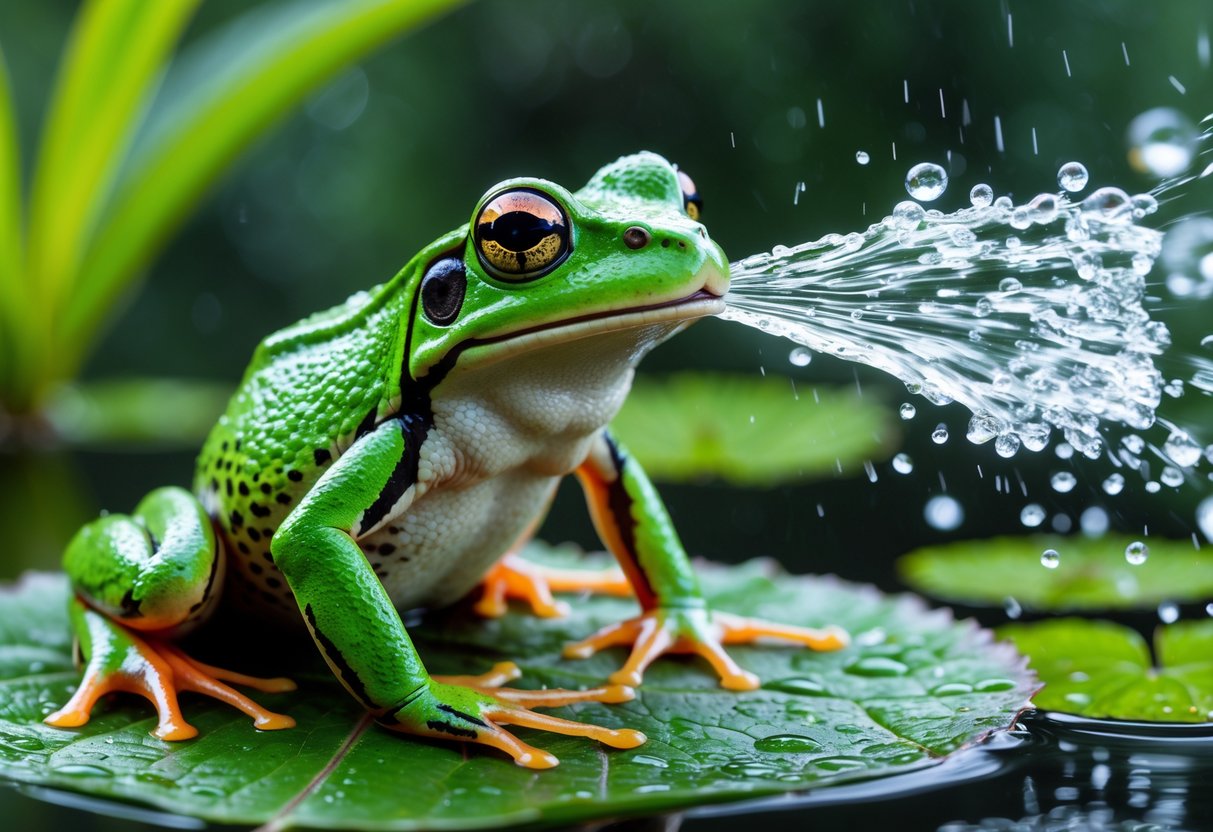
Frogs don’t drink water the way we do. Instead, they absorb it right through their skin.
When they need to get rid of extra liquid, they just squirt it out. Sometimes, they even use this trick to throw off predators or rivals.
Let’s dig into why frogs squirt, when they do it, and how this odd little action helps them survive out there.
What Frogs Squirt and Why

Frogs and toads have a few different squirting methods to protect themselves or just stay healthy. Depending on the species and situation, they might squirt clear liquid, blood, or even toxins.
These fluids help with defense, hydration, and keeping predators at bay. It’s honestly fascinating how much squirting tells us about their survival tactics.
Clear Liquid Secretion Explained
A lot of frogs squirt a clear liquid when they’re scared. Usually, it’s mucus or water.
This stuff makes them slippery, so it’s tough for anything to grab them. Sometimes, the liquid just keeps their skin moist, which is super important since frogs partly breathe through their skin.
If you spot a frog spraying clear liquid, it’s pretty harmless—just a way to get away. Some predators might not like the taste, though.
It’s not venomous, but it can be enough to make a small attacker think twice. That watery squirt acts like a quick shield, giving the frog a shot at escape.
Defensive Mechanisms in Frogs and Toads
Toads and some frogs have a few extra tricks up their sleeves besides squirting water. For example, horned toads can squirt blood from their eyes. Yeah, it sounds wild, but it works—predators get freaked out.
The blood also has chemicals that taste awful or irritate whatever’s attacking them.
Amphibians might puff themselves up to look bigger. Their skin sometimes has poison glands that let out toxins if they feel threatened.
These poisons can make predators sick or just turn them off from eating the frog or toad.
Poison Glands Versus Water Squirting
Poison glands and watery squirts work differently. Poison glands release toxins that can hurt or scare off predators if they bite or touch the frog.
You’ll mostly find these glands on toads and a few frog species.
Water or mucus squirting is more about making the frog slippery or just confusing attackers. It won’t really harm a predator.
The clear spray is a quick fix for escape, while poison glands offer more serious, lasting protection.
Both methods help frogs and toads survive, but they work in totally different ways.
| Defense Type | Purpose | Found In | Effect on Predator |
|---|---|---|---|
| Clear liquid | Slippery escape, skin moist | Many frogs, toads | Harmless, tastes bad |
| Blood squirt | Scare and deter | Horned toads | Irritates, tastes bad |
| Poison glands | Chemical defense | Toads, some frogs | Sickens or repels |
Differences Between Frogs, Toads, and Tadpoles
Frogs, toads, and tadpoles all handle squirting a bit differently. Tadpoles usually don’t squirt much, since they mostly stay hidden in the water.
If they do, it’s just waste or mucus.
Frogs squirt clear liquid to stay moist or dodge predators. Toads, who have drier skin, rely more on poison glands and sometimes even blood-squirting.
You’ll see toads using chemical defenses more often, while frogs stick to slippery liquids.
Knowing these differences really helps when you’re watching how amphibians deal with danger. It’s honestly impressive how creative these critters get just to stay safe.
How Frogs Squirt: Physiology and Environmental Impact
Frogs use their skin glands and body processes to squirt fluids, and these tricks play a big part in how they survive. Their delicate skin also makes them really sensitive to pollution.
That ends up affecting how they live and even how they reproduce.
Skin Glands and Osmosis
Frogs have special skin glands that make mucus and sometimes other fluids. The mucus keeps their skin moist, which matters because they breathe partly through their skin.
When a frog squirts liquid, it might be mucus or even urine, depending on what’s going on.
Osmosis helps frogs soak up water through their skin. If things get dry, frogs might squirt out extra fluid to keep their water balance right.
You might see a frog let out clear liquid—that’s often watery mucus to keep the skin soft, or urine to dump waste.
How well they manage these secretions depends on their health and what’s happening around them. If you catch a frog squirting, it’s usually about staying healthy or dodging danger.
Vulnerability to Pollutants
Frogs have thin, porous skin that soaks up stuff from the water and air. That makes them super sensitive to pollutants like pesticides, heavy metals, and fertilizers.
When these toxins get in, they can mess up a frog’s skin and organs.
Pollutants might even throw off how frogs squirt fluids, since their glands can react badly to chemicals. That makes it tougher for frogs to stay hydrated or get rid of waste.
Pollution also messes with how frogs grow, fight off disease, and even reproduce.
Honestly, once you see how much pollution can hurt frogs, it’s hard not to care about keeping their habitats clean.
Implications for Amphibian Conservation
If you want to protect frogs, you’ve got to pay attention to their watery homes and keep those places clean. Frogs need pollution-free environments because they breathe and stay hydrated through their skin.
People working in conservation usually check water quality and try to cut down on harmful chemicals near where frogs live. It’s not always easy, but it really matters.
You can actually make a difference by supporting efforts to fight pollution and save wetlands. When these places stay healthy, frogs can handle their skin functions—like squirting out fluids—way better.
It’s worth thinking about how environmental damage hits frogs. Cleaner habitats don’t just help them survive; they’re good for the whole ecosystem, too.


