
Ever spotted a frog hitching a ride on another? It’s definitely a sight that makes you wonder. Frogs usually carry each other like this to mate—males grip females in a hold called amplexus. This helps the male stay close enough to fertilize the eggs as the female lays them.
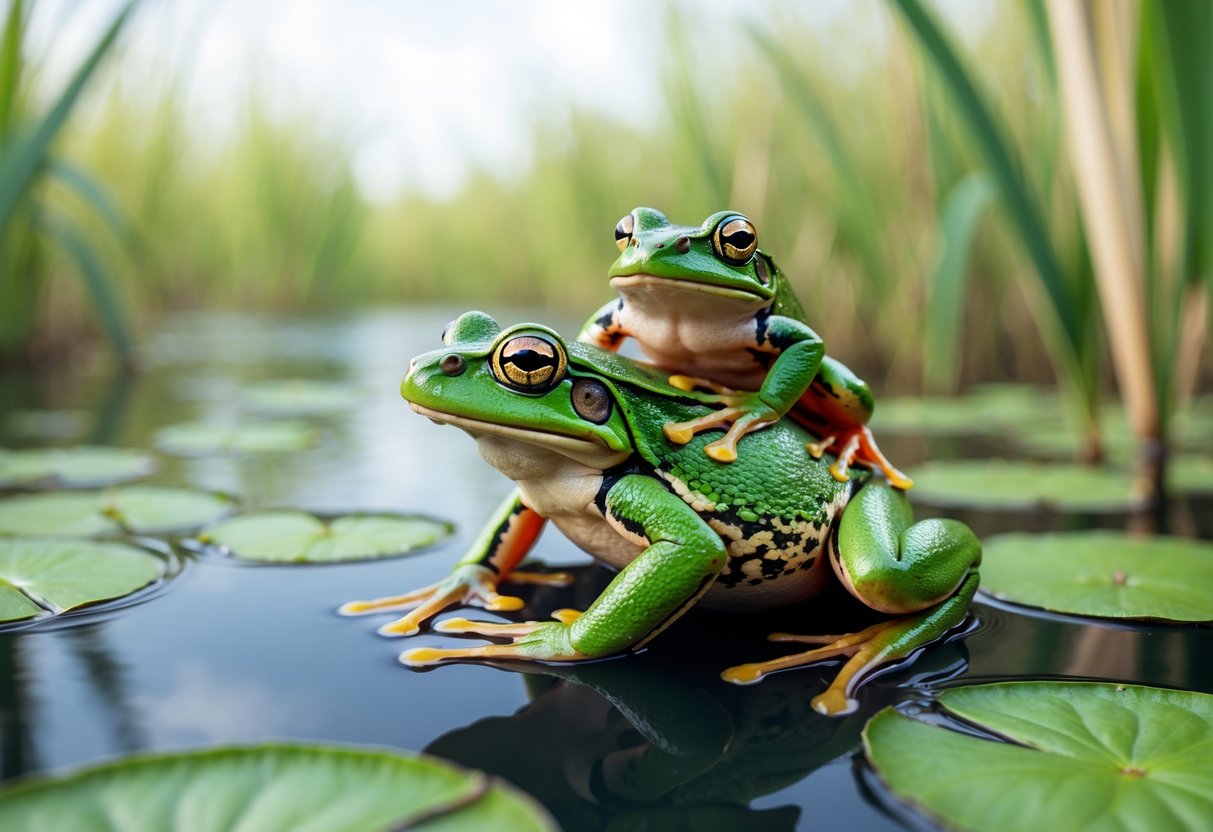
But honestly, there’s a bit more going on. Sometimes, males will ride along as females head to the breeding spot. He keeps rivals at bay and boosts his odds of being the dad. It’s kind of clever, really.
Occasionally, you’ll see frogs piggybacking for other reasons—maybe sharing a sunny patch or squabbling over territory. Still, that mating cling is the main reason you’ll catch frogs riding each other.
Why Frogs Carry Each Other: Mating Behaviors and Amplexus

When frogs carry one another, it’s usually part of their unique mating ritual. The male grabs the female and holds on tight as she lays eggs. Different species have their own twists on this, and sometimes you’ll even witness a small pile of frogs all tangled together.
What Is Amplexus and How Does It Work?
Amplexus is the term for that classic frog mating hold. The male wraps his front legs around the female, keeping himself close as she releases eggs.
He fertilizes the eggs externally, right there in the water. Depending on the species, males might grip around the female’s waist (inguinal amplexus) or just behind her front legs (axillary amplexus).
That close contact really helps his sperm reach the eggs. Males have little pads on their thumbs that help them hold on, which is kind of neat. You’ll usually spot this happening near water, though a few frogs mate on land or even up in trees.
Male and Female Roles During Mating
Most of the time, the male is smaller and climbs on top. He’ll call out, hoping to attract a female. Once she comes close, he scrambles onto her back and hangs on until she lays eggs.
Females lay their eggs one at a time or sometimes in clumps. Since the male is right there, he can release sperm directly over the eggs, making fertilization more likely.
It’s not always easy for either frog. The female might struggle to move or eat with a male clinging to her. Males, for their part, often skip meals to focus on the task at hand.
Species-Specific Mating Strategies
Some frogs have developed pretty wild ways to mate. Toads, for instance, might mate on land or even way up in the trees.
Andean toads? They can stay locked in amplexus for months, with the female carrying the male everywhere. Some males get aggressive, fighting or shoving others off a female to keep their spot.
You’ll see some frogs flash bright colors or show off odd behaviors during mating season. While most frogs handle fertilization externally, a few rare species manage it internally.
Mistaken and Multiple Amplexus Events
Sometimes, males get a bit confused and grab anything that moves—other males, random objects, or even frogs from another species. Competition is fierce, so mistakes happen.
Now and then, several males latch onto one female at the same time. This “mating ball” can get chaotic, but it’s not super common since it’s exhausting and risky.
For the female, having multiple males might mean more eggs get fertilized by different fathers, which could help with genetic diversity.
If you want to dive deeper, there are some detailed explanations on why frogs ride each other’s backs during mating.
Parental Care: Carrying Offspring on the Back

Some frogs have taken back-carrying to another level when it comes to raising their young. By carrying tadpoles on their backs, they give them a fighting chance against predators. Each species has its own version of this, and honestly, it’s fascinating to see the variety.
Back-Brooding Adaptations in Frogs
Certain frogs carry their young on their backs for protection. You might spot tadpoles or even tiny froglets clinging to the parent’s skin.
This behavior, called back-brooding, helps keep the little ones moist and hidden. It’s especially handy in dry or dangerous environments.
The parent keeps the young safe until they’re ready to make it on their own. Back-brooding really shows how frogs have adapted to survive in all sorts of places.
Check out more about these adaptations in different frog species here.
Surinam Toad: Unusual Reproduction and Back Pockets
The Surinam toad’s parenting style is honestly wild. Instead of carrying tadpoles on top, this toad’s back skin forms little pockets.
After mating, the female’s skin swells and grows over the fertilized eggs. The eggs hatch and develop into froglets inside these pockets, never leaving the mother’s back.
This keeps them safe from predators and from drying out. You won’t see the tadpoles swimming—they grow up hidden in those back chambers.
It’s a rare strategy, but it’s a cool twist on back-carrying among amphibians. If you’re curious, you can read more about this unique method here.
Marsupial Frogs and Other Unique Strategies
Marsupial frogs really take parental care to another level. The females actually have special pouches—kind of like marsupial mammals—where they carry their eggs until the froglets are ready to hatch.
These pouches keep the eggs safe and moist while they develop. The young stay protected from tough environments that might dry them out or put them in danger.
Some other frogs get creative, too. They might build foam nests or lay eggs in hidden spots, but only the most attentive parents stick around to guard them.
If you ever see a frog caring for its young this way, you’ll probably spot a close bond between the parent and its offspring. There’s often a long stretch of protection and care involved.
Want to learn more about these fascinating frogs and their unique parenting habits? Check out more details here.


