
So, you’ve spotted frogs chilling on your front door and now you’re curious—why are they there? Frogs usually show up on your porch because porch lights attract insects at night, and where there are bugs, frogs follow. That glow basically rings the dinner bell, and frogs can’t resist a good meal.
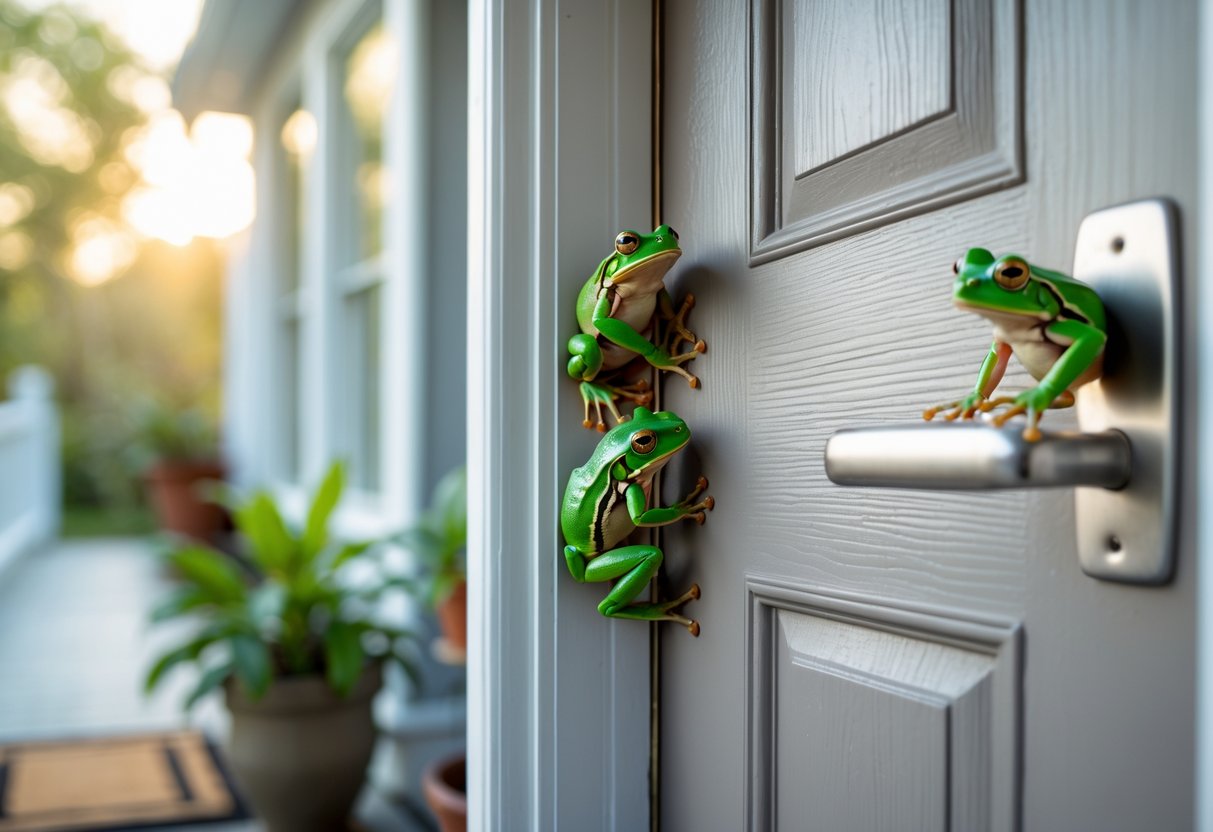
Even if you don’t live right next to a pond, frogs can wander over from damp or shady spots nearby. They hide out in cool places during the day, then get active at night when the bugs come out.
Once you get what’s bringing them over, you’ll have a better shot at keeping your porch frog-free—without hurting the little guys.
Want to know why frogs keep showing up and how you can keep them away? Here’s what you need to know if you’d rather not have amphibians greeting your guests.
Main Reasons Frogs Are on Your Front Door
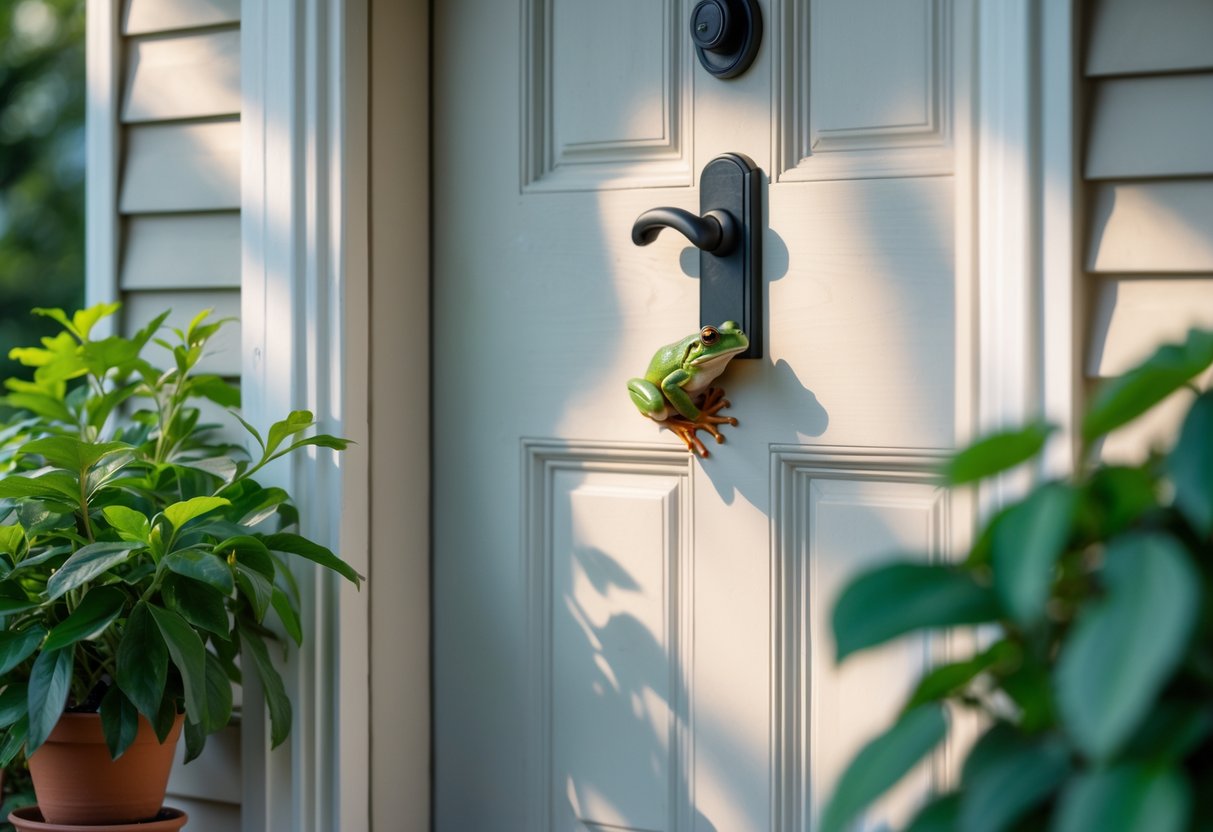
Frogs show up near your front door because they’re searching for food, water, or shelter. Weather changes or shifts in temperature can also push them closer to your house.
It helps to know the difference between frogs and toads—trust me, their habits aren’t quite the same.
Attracted by Food Sources Near Entryways
Frogs always go where the bugs are. Porch lights and outdoor plants pull in insects like moths, flies, and mosquitoes, and frogs are more than happy to take advantage.
If you keep potted plants or a little garden by your door, you’ll probably see more frogs. They’re just after the bugs hanging around those spots.
Honestly, frogs do you a favor by eating tons of insects. They might seem like odd visitors, but they help with pest control.
Moisture, Water, and Shelter Around Your Home
Frogs need moisture because their skin breathes for them. If your entryway stays damp or shady, or if you’ve got water nearby, frogs will find it.
Stuff like birdbaths, ponds, or even just wet leaves can pull frogs in. They need that moisture to keep from drying out.
They also search for places to hide—mulch beds, leafy plants, even under door mats. If your yard has cool, wet corners, frogs will stick around during hot or dry days.
Effects of Weather and Temperature Changes
Weather can really change where frogs hang out. Warm rain or humid evenings draw them out to hunt.
Since frogs are cold-blooded, their body temp shifts with the weather. When it gets chilly, they look for warmer spots—sometimes that means your doorway.
In spring and summer, frogs get more active thanks to the warmth and moisture. When fall hits, you might spot them before they slow down or hibernate.
Differences Between Frogs and Toads at Doorways
Frogs and toads look alike, but they’re not the same. Frogs have smooth, wet skin and stick to wetter places. Toads are bumpy and dry, so they handle drier areas better.
You’ll probably see more toads if your area’s on the dry side. They can wander farther from water.
Toads move slower and like to hang out on land. Frogs jump and swim more. Spotting which one’s visiting helps you figure out why they’re there in the first place.
How to Prevent Frogs From Gathering at Your Front Door
If you want frogs to stop hanging out by your front door, you’ll need to deal with water, bugs, and any ways they might sneak inside.
Take away what attracts them, and they’ll move on.
Eliminate Standing Water and Moisture Sources
Frogs can’t live without water, so standing water near your house is like an open invitation. Check for puddles, clogged gutters, or birdbaths you forget to empty.
Drain or fill any spots where water collects. Fix leaks and get rid of containers that trap rainwater.
If you’ve got a pond, keep it clean and avoid shallow spots where tadpoles could grow. Less moisture means fewer frogs showing up.
Reduce Insects and Outdoor Lighting
Frogs come for the bugs, and porch lights bring bugs in. You can cut down their food supply by changing your lighting.
Turn off porch lights when you don’t need them, or swap in yellow or LED bulbs that attract fewer insects. Motion-activated lights can help too.
You might want to use bug zappers or mosquito traps away from your door to lure bugs elsewhere. Fewer insects means frogs will look for snacks somewhere else.
Install Door Sweeps and Seal Entry Points
Frogs can squeeze into tiny cracks around doors and windows. Seal up those gaps to keep them out.
Add door sweeps at the bottom of outside doors to close the space between the door and the ground. Use weatherstripping and caulk for cracks around frames.
Repair any holes in window screens. Cover vents with fine mesh. Keeping frogs out means you won’t have any unexpected guests inside.
Yard Maintenance and Deterring Frog Infestations
Keep your yard tidy if you want fewer frogs hanging out near your door. I’d suggest trimming the grass often and clearing away piles of leaves or wood—frogs love hiding in those during the day.
Try not to let thick ground covers or dense bushes grow right next to your porch. Those shady spots basically roll out the welcome mat for frogs.
If you’re up for it, you can make a frog-friendly zone farther from your house. Some people even sprinkle coffee grounds around entry points, and honestly, that’s a pretty gentle way to nudge frogs elsewhere.


