
So, you’re thinking about keeping a frog and wondering if it belongs in water? Well, it really depends on the type of frog you’ve got in mind. Some frogs, like aquatic species, absolutely need to spend most of their lives in water, while others do better on land or somewhere in between.
Figuring out which frog you have (or want) is the first step to making sure it stays healthy and happy.
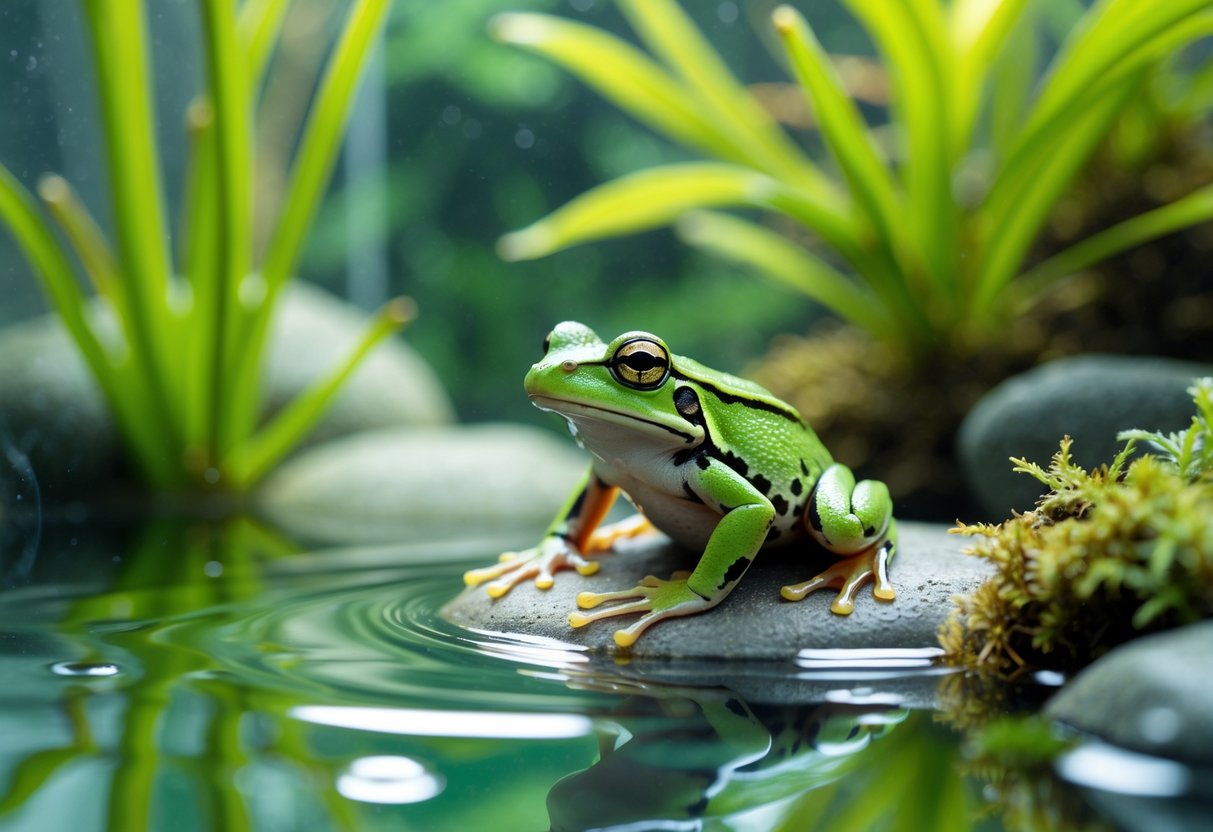
Aquatic frogs—think African dwarf frogs—spend their whole lives underwater but still come up for air. If you set up their tank properly and keep the water clean, they’re pretty easy and fun to care for.
But a lot of frogs can’t handle being underwater all the time. They need some land or at least a moist spot to hang out.
Understanding your frog’s water needs really helps you avoid the usual problems. Plus, it makes watching your pet thrive a lot more rewarding.
Let’s dive into which frogs need water and how to set up the right home for them.
Which Frogs Can Live in Water and Their Basic Habitat Needs

Frogs can be pretty picky about water. Some spend all their time in it, while others like to split their days between land and water.
Knowing these differences really helps when you’re setting up a habitat.
Aquatic Frogs vs. Semi-Aquatic Frogs
Aquatic frogs basically live underwater. They’ve got webbed feet and strong legs built for swimming, not hopping around on land.
They don’t need dry spots in their tanks, but they do need somewhere to rest just under the water’s surface.
Semi-aquatic frogs like to swim, but they also need dry land. They move back and forth, so you’ll need a tank with both water and land zones.
Add things like rocks or branches for resting, and keep the humidity up with water features.
If you know your frog’s species, you’ll have a much easier time building the right setup.
Popular Water-Dwelling Frog Species
African dwarf frogs make great pets, especially for beginners. They live entirely in water and usually reach about 2.5 inches.
Keep their tanks no deeper than 12 inches so they can reach the surface to breathe. It’s fine to keep them in groups, but don’t overcrowd the tank or the water gets dirty fast.
African clawed frogs get bigger and need more space. You’ll want at least a 20-gallon tank for one or two of them.
They prefer still water and can grow up to 4.5 inches. Feed them a mix of pellets, worms, and the occasional small fish.
Indonesian floating frogs also spend most of their lives in water. They like hunting for insects near the surface and do well in small tanks with floating plants.
If you want more info on aquatic frogs, check out this list of pet frogs that live in water.
Species That Should Not Be Kept Fully Aquatic
Some frogs swim really well but can’t live only in water. Fire-bellied toads, leopard frogs, and Vietnamese mossy frogs all need both land and water.
Their tanks should have dry areas with hiding spots and enough water for a swim.
Tree frogs, like White’s tree frog and poison dart frogs, mostly stick to moist land. They need shallow water but can get sick if you keep them underwater all the time.
Pacman frogs are land lovers. They barely swim and just need a shallow water dish.
Understanding which frogs aren’t fully aquatic saves you from making the wrong setup. Their health depends on having both land and water.
Setting Up a Proper Frog Enclosure: Aquatic, Semi-Aquatic, and Terrestrial

When you set up a frog’s home, you want to match what it needs in the wild. That means picking the right tank, setting up the floor and water spots, and keeping the temperature and humidity just right.
You’ll also need to plan for feeding and daily care. It’s a bit of work, but it pays off when your frog is healthy.
Choosing the Right Tank Type
Your frog’s species decides what kind of tank you need. Aquatic frogs, like African dwarf frogs, need a tank mostly filled with water.
Semi-aquatic frogs want both land and water. You can build a tank with a water section and a dry area for your frog to climb onto.
Terrestrial frogs spend most of their time on land. Go for a terrarium with lots of floor space and not much water.
Glass tanks are best because they hold in moisture and let you watch your frog. Always use a mesh lid for airflow and to keep your frog from escaping.
Substrate and Water Features
Pick a ground covering, or substrate, that fits your frog. Aquatic and semi-aquatic frogs do well with smooth gravel or a non-particulate substrate in the water.
Terrestrial frogs like something soft and natural, like coconut fiber, leaf litter, or sphagnum moss. These hold moisture and feel comfy.
Make sure the water is clean and safe—always use dechlorinated water. If you have a semi-aquatic frog, add a small pond or water area that’s easy to get in and out of.
Change the water every day to stop bacteria from building up. Frogs aren’t exactly tidy, so you’ll need to help keep their space clean.
Temperature, Humidity, and Lighting Requirements
Frogs rely on their environment for warmth. Set up a temperature gradient in the tank so your frog can move to its favorite spot.
Use a heat lamp or heating pad, but don’t let things get too hot.
Put a thermometer and a hygrometer in the tank to keep an eye on temperature and humidity. Most frogs need humidity between 70% and 90%.
Use a spray bottle or an automatic mister to keep the air moist, especially for species like poison dart frogs.
Add a UVB light to help your frog make Vitamin D3. This helps with calcium absorption, which is pretty important.
Stick to a light schedule that mimics day and night. Turn off the lights at night so your frog stays on a normal cycle.
Feeding and Ongoing Care Tips
Feed your frog based on its species. Most frogs love live insects like crickets or worms, and some will accept prepared frog food too.
Offer smaller meals every day or two. If there’s any leftover food, just scoop it out—it keeps the tank cleaner.
Take a few minutes each day to watch your frog for signs of stress or illness. Change the water and remove waste to keep things tidy.
Keep the substrate moist and mist the tank so humidity stays in the right range. Check the temperature and humidity often with your thermometer and hygrometer.
If your frog suddenly acts differently or looks off, look it up or reach out to an expert. Sometimes you’ll need to tweak the setup or switch up the food.
For more tips on tank setup, take a look at frog tank and habitat setup.


