
Ever listened to frogs croaking all night and wondered if they just never sleep? Well, the short answer is no—frogs don’t stay up all night. They’re mostly active after dark, but they still need to rest and get some sleep. At night, frogs mix things up: they hunt, call out, move around, and then take breaks to rest—kind of like how we do after a long day.
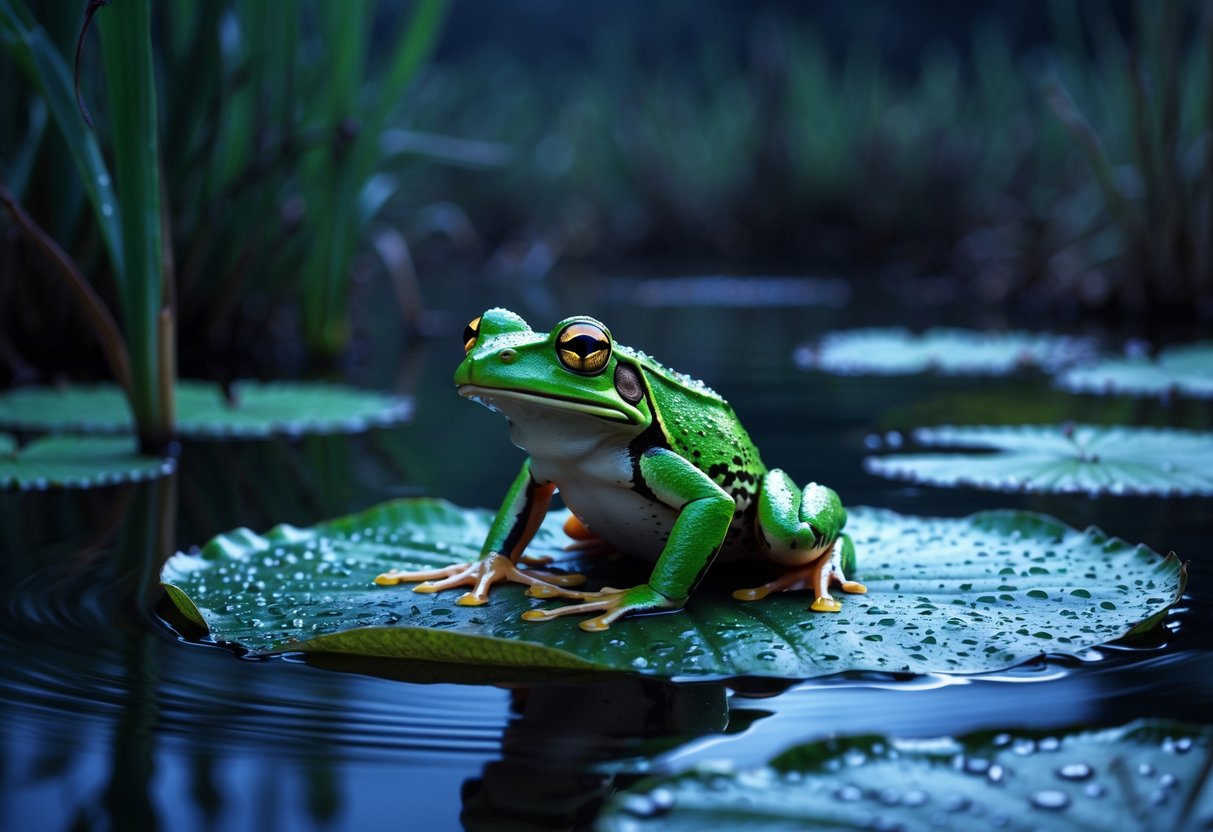
Frogs sleep way differently than humans. They can nap on land, in water, or even tucked under leaves. Their sleep habits shift depending on their species and what’s happening in their environment.
Some frogs are busier at night than others. It all depends on the type of frog and where it lives.
If you’re curious about how frogs juggle their night life with getting enough rest, you’re in the right place. There are definitely some surprising things about how these little guys sleep and keep themselves safe.
Do Frogs Stay Up All Night?
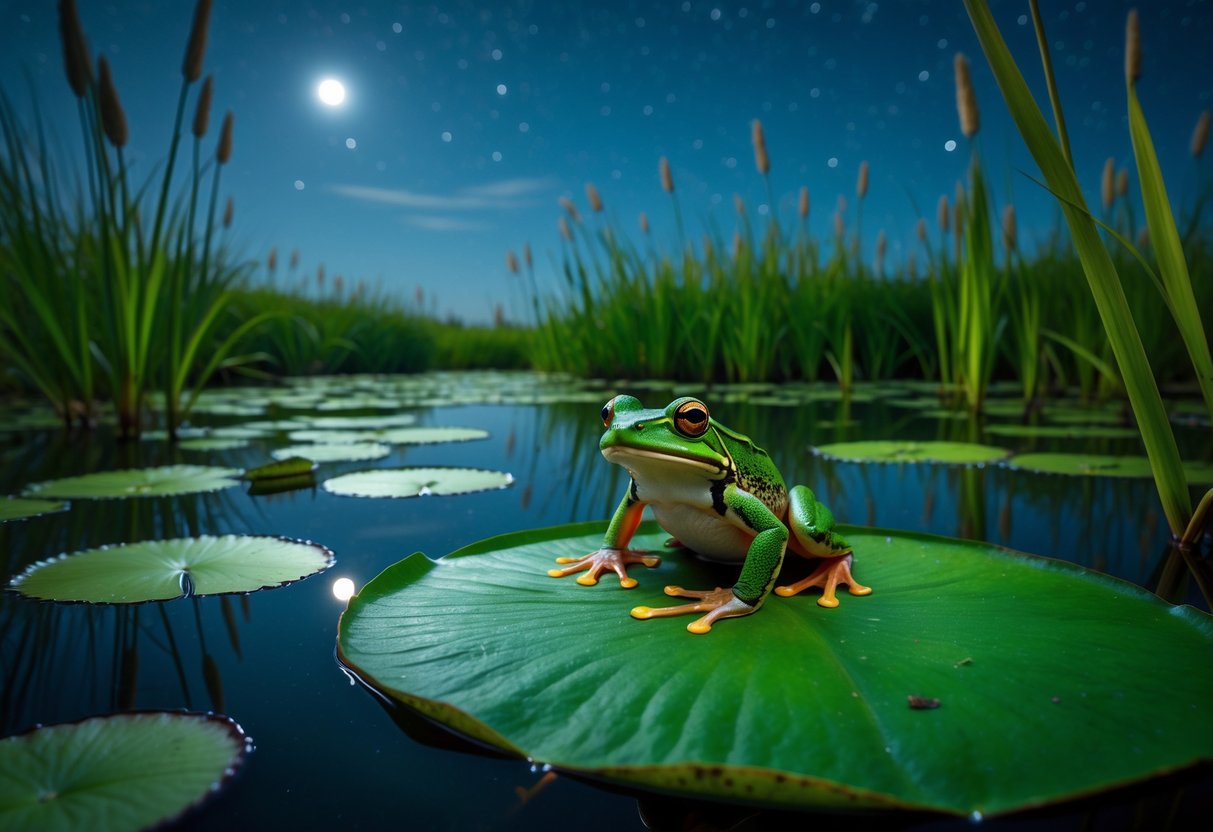
Different frog species have their own routines. Some spend the whole night moving around, while others take it easy and rest more.
They decide what to do based on when they need to hunt, hide, or call for a mate.
Are Most Frogs Nocturnal?
Most frogs run on a nocturnal schedule, so you’ll catch them waking up as the sun goes down. They dodge the heat and predators by lying low during the day.
Their bodies work great in the dark. Tree frogs, for example, see well at night, which helps them catch bugs.
Being out at night also lets them avoid some of the animals that might try to eat them during the day.
Nocturnal frogs usually find cool, damp spots to sleep through the day—under leaves, rocks, or in burrows. Their sleep is lighter than ours, so they can snap awake fast if something comes near.
What Frogs Do at Night
At night, frogs go hunting for insects. Male frogs get pretty loud once it’s dark, croaking to attract mates.
They make good use of the night—hunting, calling, and searching for partners.
Cooler temperatures and higher humidity at night help them keep their skin moist. That lets them stay active longer.
Nighttime is also a bit safer, since many predators aren’t out then.
You might spot frogs just sitting on leaves or by water, sometimes dozing for a bit but always alert. They’re ready to jump away if anything gets too close.
This mix of resting and staying active really helps them get by.
Exceptions: Diurnal and Crepuscular Frogs
Not every frog is a night owl. Some, like green frogs and bullfrogs, do most of their hunting during the day and sleep at night.
A few frogs prefer dawn and dusk—these are crepuscular frogs. They avoid the brightest and darkest hours, which helps them dodge predators and extreme temps.
Tree frogs are all over the map. Some stick to nighttime, while others might be out and about during the day, depending on where they live.
Knowing these differences makes it easier to figure out when you’ll see or hear frogs in your area.
Their activity really comes down to their species and the habitat they’re in.
Curious? You can read more about nocturnal frogs and tree frogs.
How and When Frogs Sleep

Frogs definitely don’t sleep like humans do. They rest in their own way—sometimes during the day, sometimes at night.
Each species has its own routine, and their sleep is more like a series of light naps than deep, long stretches. They use some special tricks to stay safe while they rest.
Frog Sleep Patterns and Duration
Frogs rest at different times, both during the day and night. Their sleep is lighter and more broken up than ours.
Some frogs slip into deep rest but can wake up in a flash if something’s wrong.
You might see a frog just sitting there, eyes open or half-closed, for hours at a time. Red-Eyed Tree Frogs, for example, chill for 12 to 14 hours during the day, then get busy at night.
Overall, their rest adds up to 10 or more hours a day, but it’s scattered throughout.
Unique Sleeping Habits and the Nictitating Membrane
Frogs have this neat feature—a nictitating membrane, which is basically a see-through eyelid. They close it when they rest, and it keeps their eyes safe without blocking their view.
This way, frogs can stay alert even while they’re snoozing. You might notice their eyes partly covered by this layer when they’re resting.
It lets them spot predators or prey without giving away their position. Some frogs tuck their legs under their bodies and sit super still when they’re taking a break.
Do Frogs Sleep During the Day?
Lots of frogs, especially nocturnal ones, rest during the day. They usually hide out under leaves or inside hollow trees to stay safe.
Burrowing frogs and plenty of toads spend daylight hours underground or in the soil, steering clear of heat and predators.
Their eyes might stay open while they rest, keeping watch. This kind of light, alert sleep—sometimes called cataleptic sleep—lets them react fast if something happens.
Seasonal Changes: Brumation in Frogs
When the weather turns cold, frogs slow down and go through something called brumation. It’s kind of like hibernation, but not as intense.
Frogs get pretty sluggish and spend a lot more time resting to save up their energy. Sometimes, they’ll burrow into mud or hide under piles of leaves.
Their heart rate drops, and their metabolism crawls along, but honestly, they can still wake up if something disturbs them. Brumation lets frogs make it through the cold months without eating much or moving around, which is a big shift from how they act when it’s warmer.


