
Ever spot a frog with wild colors and wonder what’s up with that? Frogs don’t just wear these shades for fun—those colors help them survive in all kinds of clever ways.
Some frogs rely on their colors to disappear into the background, dodging predators that might be looking for a snack. Others? They go bold, flashing bright colors that basically scream, “Don’t even think about eating me!” because, honestly, they might be poisonous.
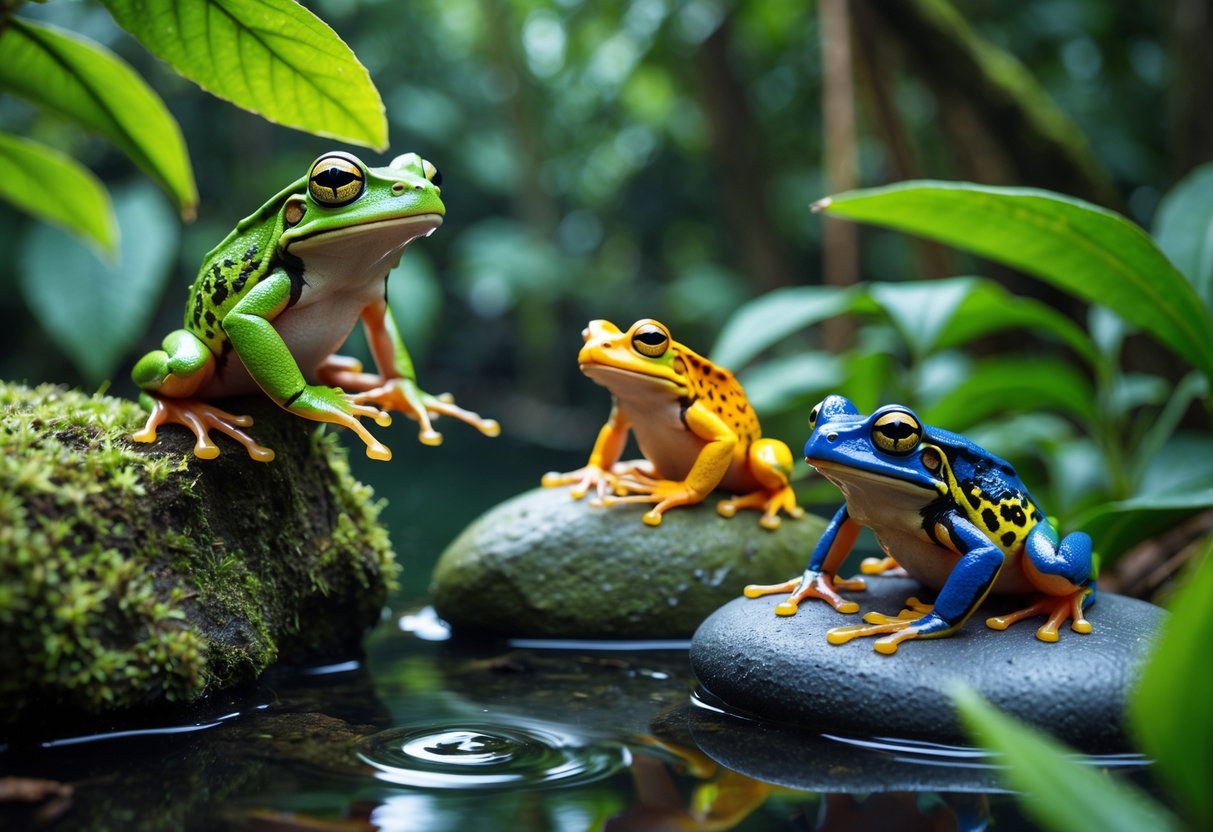
Frog colors can reveal whether they’re safe to touch, help them vanish, or even attract a mate. Some frogs pull off a color change trick to match whatever’s around them. Others sport eye-catching patterns that scare off anything that gets too close.
When you look at a frog’s skin, you’re seeing a story about how it survives. Little tree frogs and big ones alike use color as a kind of secret code for survival and behavior.
Curious about how these colors work? Let’s dive into the world of frog colors. Turns out, those patterns are way more than just cool designs.
The Meanings Behind Frog Colors

Frog colors do a lot more than make them look interesting. They help frogs hide, warn off enemies, find love, and even show who’s who.
When you start to notice these details, frogs become even more fascinating. There’s a whole survival strategy written right on their skin.
Camouflage and Survival Significance
Lots of frogs blend right in with their surroundings. Camouflage keeps them hidden from predators.
Take the green tree frog or the red-eyed tree frog. Their greens and browns look just like leaves or tree bark.
Some tree frogs even shift their skin tone a bit, matching the light or shadows around them. Pigment cells move inside their skin to make this happen.
Camouflage lets frogs slip past birds, snakes, and other hunters by vanishing into plants or mud. If you’ve ever struggled to spot a frog in the wild, now you know why.
Warning Colors and Toxicity
Bright colors? Big warning sign. Frogs like the strawberry poison dart frog or golden poison frog show off reds, blues, and yellows to warn everyone they’re dangerous.
This is aposematism in action. These frogs pack toxins that can make animals sick—or worse.
Their flashy colors send a clear message: “Back off.” Predators usually learn pretty fast to avoid these bold frogs.
The brighter the frog, the more toxic it usually is. That orange-red poison dart frog isn’t just showing off—it’s advertising real danger.
Attracting Mates and Social Signals
Colors matter for frog romance, too. Male poison dart frogs use bright shades and bold patterns to catch the attention of females.
Females often go for the shiniest, most colorful males. It helps those guys stand out from the crowd.
Sometimes, frogs with the same basic color still look different in brightness, and that can make all the difference in finding a mate.
Colors can also send signals about territory or status. When you see a brightly colored frog near others, it might be showing off or getting ready to breed.
Famous Colorful Frog Species
Some frogs are just plain famous for their looks. The strawberry poison dart frog has a red body with blue legs—pretty hard to miss.
The golden poison frog glows with bright yellow skin, while the blue poison dart frog sports a vivid blue with black spots.
Then there’s the tomato frog, which pops with a red-orange shade that’s honestly a bit surprising if you stumble on one.
Red-eyed tree frogs show off green bodies and those huge red eyes. You’ll spot them right away, but for the frog, those colors mean survival and social power.
These species all use color in their own way—sometimes for safety, sometimes for showing off. Nature really knows how to put on a show.
If you want to learn more about how frogs get such wild colors, check out frogs and their colors explained.
How Do Frogs Get Their Colors?
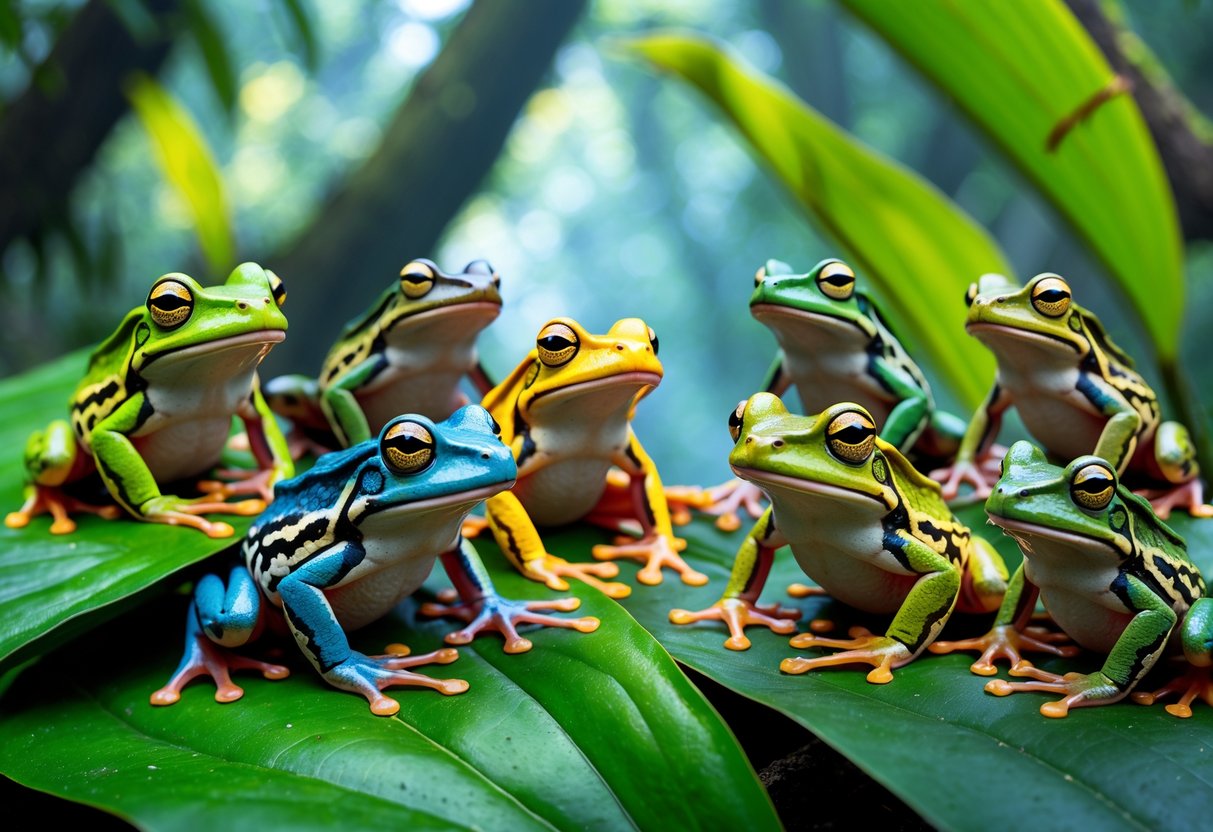
Frog colors come from special skin cells and a mix of genes and environment. These colors help frogs hide, attract a mate, or deal with heat.
But things like pollution or climate change can mess with the variety of colors you see in frog populations.
Chromatophores and Skin Pigmentation
Frogs use cells called chromatophores to get their skin colors. There are three main types.
- Melanophores carry black or brown pigments.
- Iridophores reflect light and help create blues and greens.
- Xanthophores hold yellow and red pigments.
These cells stack up in layers, mixing pigments to create all sorts of wild colors and patterns.
How much pigment a frog has in each cell type decides what color you’ll see on its skin.
Some frogs, like Hyla cinerea, shift their color a bit by moving pigments around inside their chromatophores. That helps them blend in or manage their body temperature.
Environmental and Genetic Influences
Frog color depends on both DNA and what’s happening around them. Genes decide which pigments a frog can make.
But the environment matters, too. UV radiation from sunlight can change how much pigment frogs produce.
Frogs living in sunny places might end up darker to protect their skin. Temperature plays a role, too—darker frogs soak up heat faster, which helps them stay warm.
Different habitats push frogs toward different colors. Forest frogs need to blend in with leaves, while those on bright rocks might go for bolder shades.
Where a frog lives can even influence how its genes express certain colors.
Color Variation and Adaptation
Frog color variations help them survive. Bright colors warn predators about poison, like the reds and yellows on poison dart frogs.
Dull colors help frogs hide from birds, snakes, and other threats.
When frogs get separated by things like rising sea levels, they can evolve totally new color patterns over time.
Some frogs even show different colors just to attract a mate. Females often choose males with the most vivid or shiny colors.
Threats to Color Diversity
People are putting frog color diversity at risk. Habitat loss stands out as one of the biggest threats.
When forests shrink or wetlands dry up, frogs lose their homes. The environments that once shaped their colors just disappear.
Pollution and climate change mess with frog pigments too. Sometimes, their colors fade or shift, which makes it harder for frogs to dodge predators or attract a mate.
As frog numbers drop, we start losing the wild range of colors they show off. That means we’re not just losing beauty—we’re losing some of their best survival tricks.
If you’re curious about how frog color actually works, you might want to check out this explanation of chromatophores in frogs.


