
So, you spotted a frog in your garden? That’s usually a good thing. Frogs eat all kinds of insects, which means they help keep your garden healthy.
Honestly, the best move is to just let the frog be and make your space a bit more welcoming—maybe fresh water, a shady spot, or some cover. That’s all they really need.
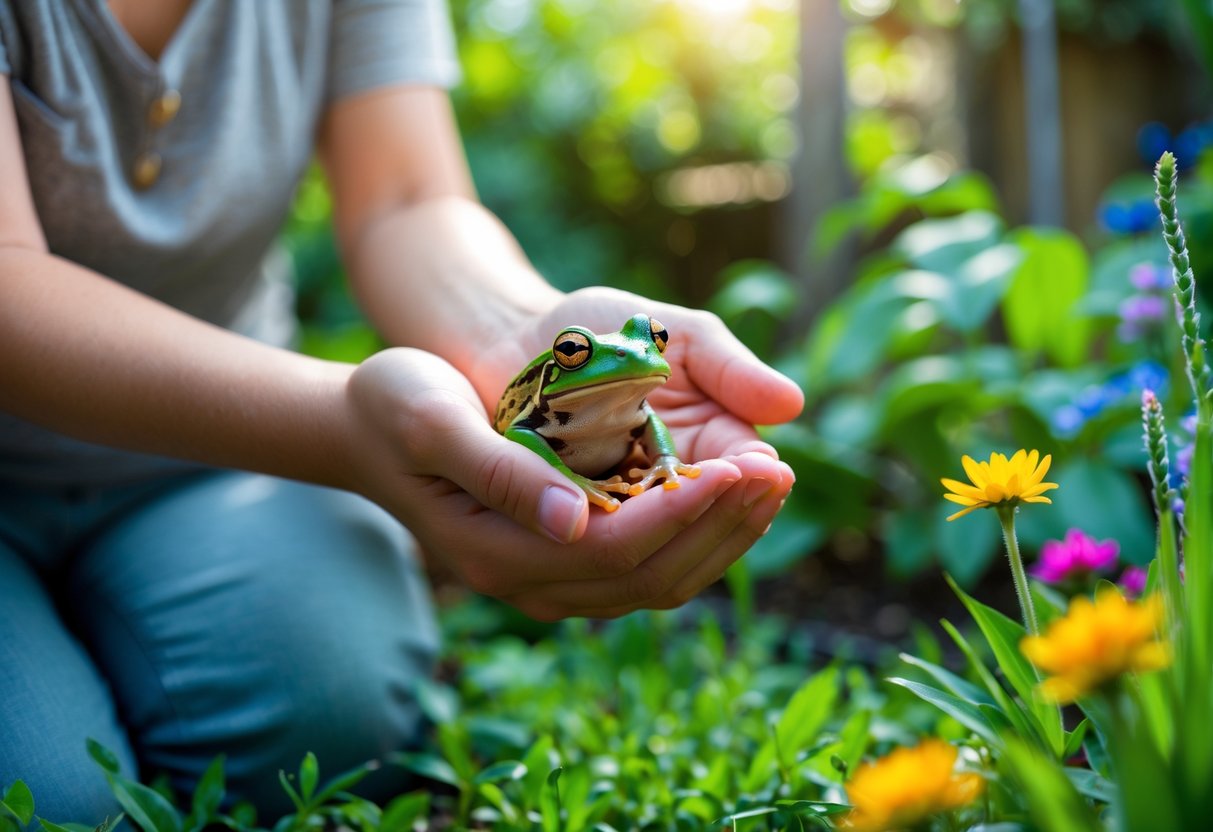
Frogs need water and places to hide from predators. If you want to help, you could add a small water feature or scatter some logs and plants for shelter.
If you feel like there are too many frogs hopping around, you can gently move a few to a nearby natural spot. Just don’t overdo it.
Watching frogs is actually pretty fun. Plus, you’re giving local wildlife a break by leaving them some space.
Want to know more about caring for frogs or how to keep their numbers in check? Let’s get into some easy tips and advice.
What to Do When You Find a Frog in Your Garden

Finding a frog or toad in your garden can be a little surprising. You might wonder what to do next, or if you should even touch it.
Take a breath and get curious. Learning about these little visitors helps you help them—and enjoy their company.
Observe and Identify the Frog or Toad
Take a minute to watch the frog or toad from a distance. Notice its size, color, and any unique markings.
If you want to know exactly what you’re looking at, try using a guidebook or an app. Some frogs need water close by, while others are fine on land. Figuring out the species helps you decide what they need.
Try not to touch the frog unless you really have to. Their skin absorbs stuff from your hands, and even a little oil or soap can hurt them.
Just watching quietly is usually best. You get to see their natural behavior, and they stay safe.
When and How to Move a Frog Safely
If the frog landed somewhere risky—like near a busy road or close to a curious pet—you might need to step in. Wet your hands or pop on some gloves to keep their skin safe.
Pick the frog up gently and move it to a safer spot. A pond, a damp corner, or under thick plants works great.
Keep it close to where you found it, since frogs know their home turf pretty well. Moving them too far can mess with their sense of direction.
If it’s not in danger, just let it be. Frogs don’t love being handled, and too much moving around can stress them out.
Protecting Frogs from Danger in Your Garden
You can make your garden more frog-friendly by piling up leaves, logs, or rocks. These little shelters give frogs a place to hide and rest.
Skip the pesticides and herbicides, especially near water or damp soil. Those chemicals can really mess frogs up, or wipe out the insects they eat.
Keep a water source handy, like a small pond or even a birdbath with shallow edges. Frogs need these spots to drink, breed, and escape from predators.
A few simple changes go a long way. You help native amphibians and get some natural pest control in return. For more on this, check out What Should I Do with a Frog in My Garden? – GreatGardenPlans.
Helping Frogs Thrive or Managing Their Presence

You can make your garden a safe haven for frogs. Sometimes, you might need to manage their numbers to keep things balanced.
Adding water, shelter, and looking after your pond can really help. It doesn’t take much.
Creating a Frog-Friendly Habitat
Frogs love places to hide. Toss in some logs, rocks, or even a compost heap for cool, damp resting spots.
Native plants are a big help, too. They attract the bugs frogs eat and give extra cover.
Try to avoid pesticides—they’re bad news for frogs and their food. Shrubs and wild areas offer better shelter than big open lawns.
Letting parts of your garden grow a bit wild can make a huge difference. Frogs will thank you for it.
Providing Water Sources and Pond Maintenance
Frogs need water for drinking, laying eggs, and just living their best life. A small pond or even a shallow bowl of fresh water works.
Stick to fresh water only. Saltwater can hurt frogs.
If you have a pond, keep it chemical-free. Add native plants around and inside for food and shelter.
Place a few rocks or logs near the water so frogs can climb out or warm up in the sun. Check the water now and then, and scoop out any debris to keep things fresh for your amphibian guests.
Safe Methods to Get Rid of Frogs if Needed
When you notice too many frogs in your garden, they might munch on more insects than you’d like or mess with your plants. If that happens, you can gently move a few frogs to a natural area nearby—just pick a spot away from your garden.
Skip the harsh chemicals and traps. Those just end up harming frogs and other creatures you probably want around.
You could try removing water sources for a bit or tidy up hiding places. That usually makes your garden less inviting for big groups of frogs.
Honestly, frogs do a great job controlling pests, so only move them if you really have to.
If you want more ideas, check out this guide on strategies for managing frog populations at home.


