
So, you brought a green frog home. Now you’re probably wondering what it actually eats, right? Green frogs love live insects like crickets, mealworms, and fruit flies. These bugs give them the protein and nutrients they need to stay lively and healthy.
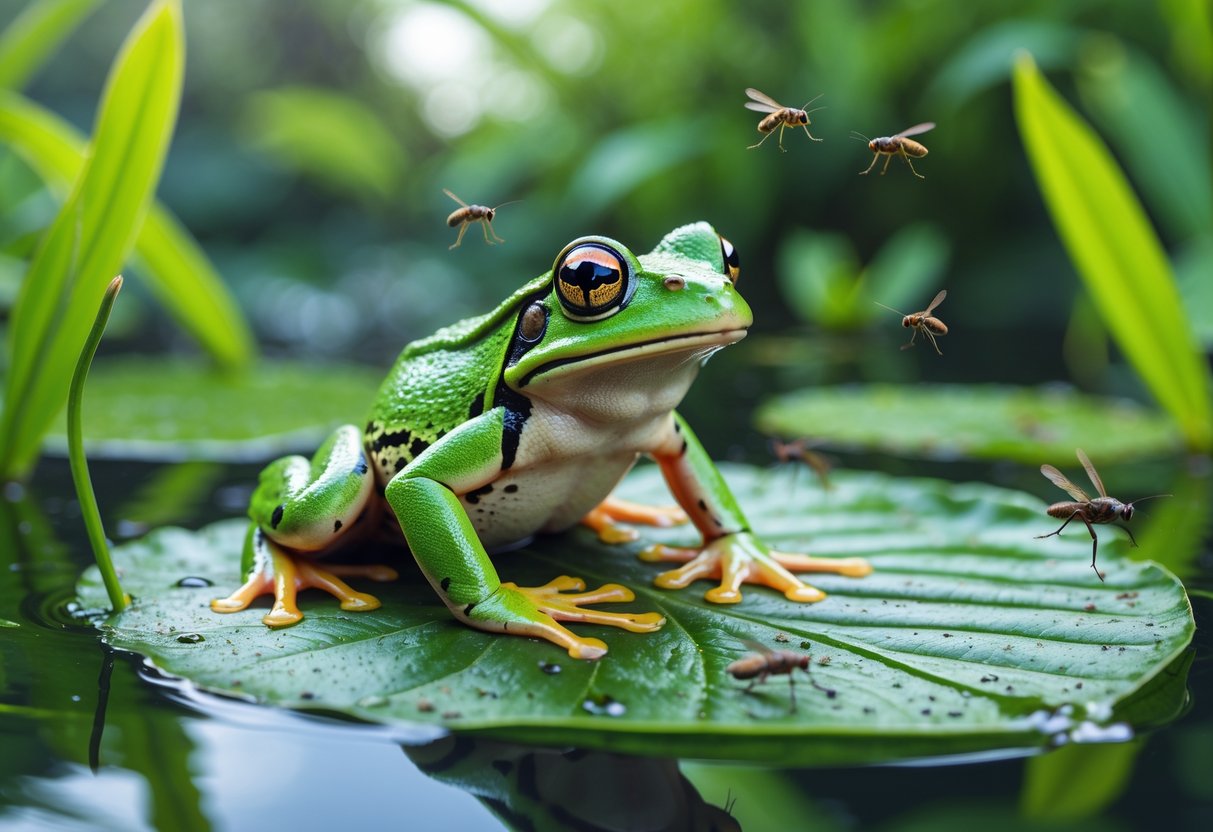
But you can’t just toss in any insect. It really matters that the food matches the size of your frog’s head, and it’s smart to mix things up. That way, your frog gets a balanced diet and doesn’t get bored with the same old snacks.
Feeding your green frog the right stuff is honestly one of the easiest ways to make sure it thrives. Let’s dig into which insects work best, how often to feed, and a few tips to make mealtime a breeze.
Essential Diet for Green Frogs

Your green frog really needs a diet full of live insects and small animals. Try to mix up the prey and watch the amounts you give at each feeding. That way, your frog stays balanced and energetic.
Natural Food Sources in the Wild
Out in the wild, green frogs like Hyla cinerea snack on all sorts of insects. They’ll eat crickets, flies, moths, beetles, ants, spiders, grasshoppers, slugs, and snails. Sometimes, they even catch tiny frogs, lizards, or the occasional small snake.
They usually hunt at night and pick off whatever they can grab. Their sticky toe pads help them climb and snatch prey from plants or trees.
Since green frogs act as opportunistic feeders, they eat whatever’s around. This wide variety keeps them strong and growing.
Appropriate Foods for Pet Green Frogs
If you’re keeping a green frog as a pet, stick with live insects. Favorites include crickets, fruit flies, mealworms, waxworms, and small beetles. These choices are close to what they’d eat in the wild.
You might want to add some commercial frog food for extra vitamins and minerals. Don’t feed your frog wild-caught prey like fish, birds, or reptiles. Those can carry parasites or toxins, and nobody wants that.
Feed your insects healthy food (gut-loading) before giving them to your frog. It bumps up the nutrition your frog gets. You can also dust the bugs with calcium and vitamin powders to help keep your frog’s bones and skin in good shape.
Feeding Frequency and Portion Sizes
Feed your green frog small amounts every day or every other day. Young frogs eat more often because they’re still growing. Adults usually do fine with meals 3-4 times a week.
Choose insects about the size of your frog’s head or smaller. If the prey’s too big, your frog might struggle to eat or digest it. Take out any uneaten food after a few hours so the tank stays clean.
If your frog starts looking chubby or too skinny, tweak the amount you feed. Just keep an eye on its energy and weight to make sure you’re on the right track.
For more tips, check out this American Green Tree Frog Diet guide.
Special Dietary Needs by Species and Life Stage
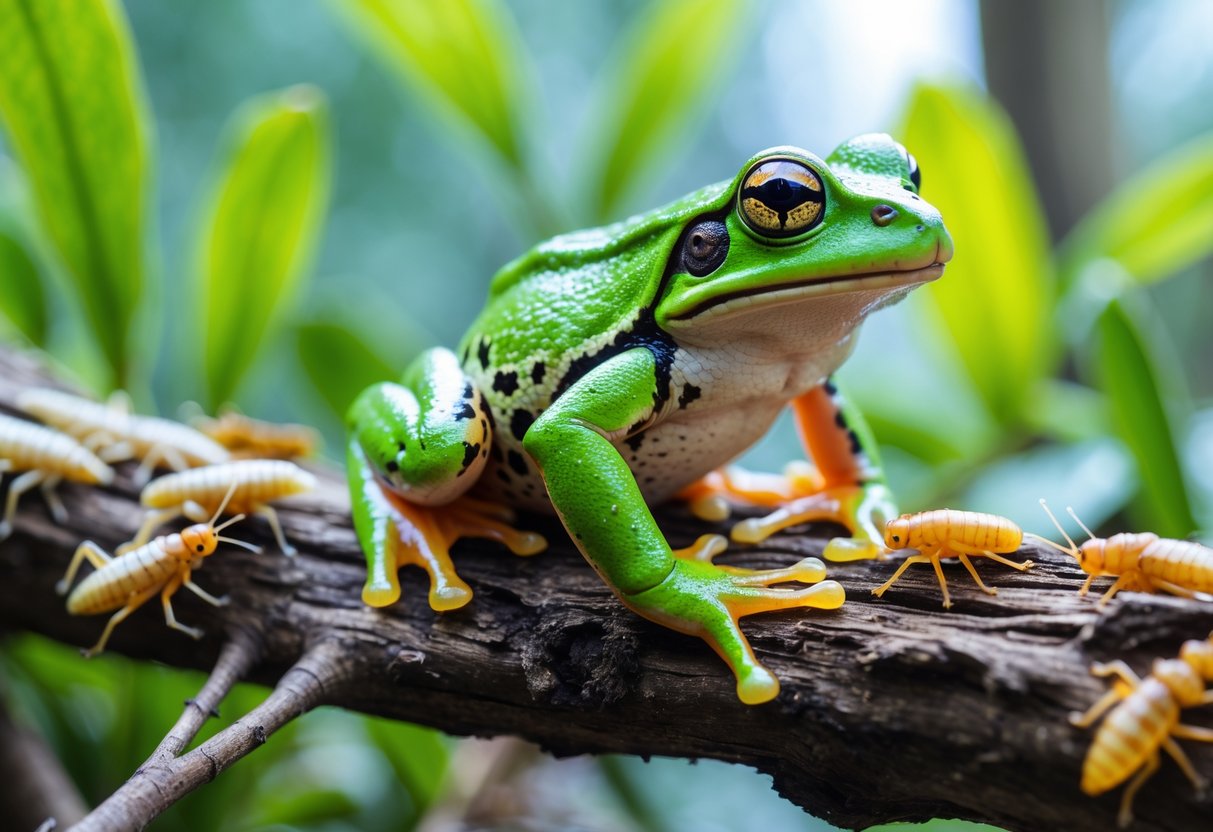
Green frogs don’t all eat the same way. Their diet changes depending on species and age. As your frog grows, its needs shift, and the type of frog you have matters for what you should feed.
Green Tree Frog Diet: American vs. Australian
If you have an American green tree frog, it mostly eats insects like crickets, flies, moths, and beetles. These frogs usually skip eating other frogs or mice.
Australian green tree frogs eat a wider variety. Sometimes, they even munch on small mice or other tiny frogs. Always make sure the prey isn’t bigger than your frog—otherwise, you could run into problems.
Both types need a mix of insects for good health. You can add vitamin and mineral supplements if you want. Only feed mice or frogs to Australians, though—Americans really shouldn’t eat those.
Feeding Tadpoles, Juveniles, and Adults
Tadpoles eat in a totally different way than adults do. They go for algae, plant bits, and tiny aquatic foods.
If you’re taking care of tadpoles, try giving them boiled lettuce or algae wafers. Some folks use special tadpole food too.
Once your frog hits the juvenile stage, its diet changes. Now it’ll chase after small insects like crickets or fruit flies.
For adults, things open up a bit more. Larger insects—think moths or cockroaches—can be on the menu, but it really depends on how big your frog is.
Try to feed your green tree frog every two or three days. Overfeeding isn’t great, so watch out for that.
I’d recommend dusting the bugs with calcium and vitamin powders. It helps keep their bones and bodies strong.


