
Picture a wild sprint through the woods or maybe across a field—who wins? Most of the time, a deer will outrun your average dog in a short, wild dash. Deer just have those faster bursts, crazy agility, and they handle rough ground better. That one fact might change how you think about backyard chases, hunting tales, or even those “what if” moments you imagine.
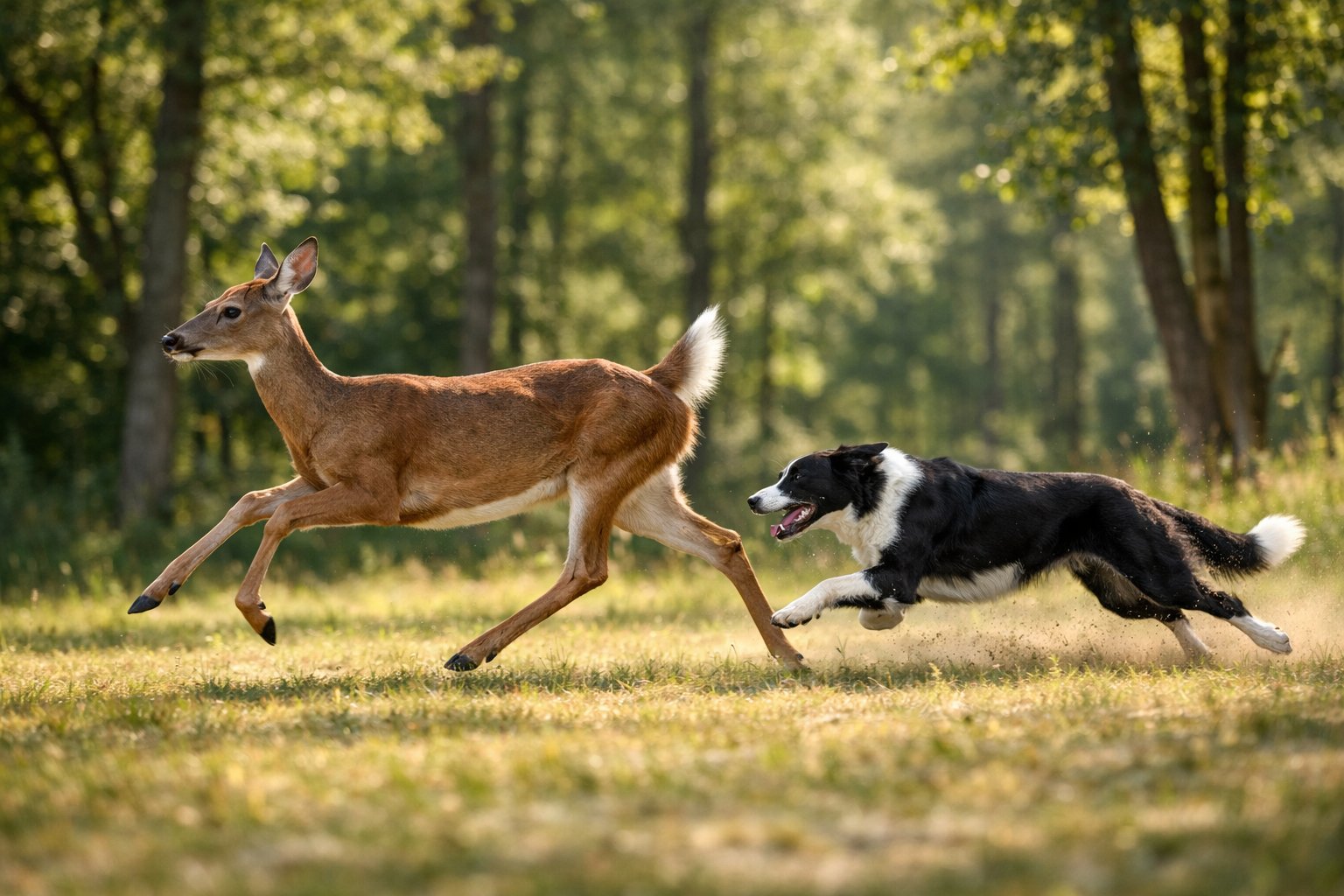
Stick around as we break down top speeds, breed differences, and how terrain or distance can flip the script. You’ll see when a fast dog can actually catch up—and why a deer’s quick launch often ends the race before it really starts.
Deer vs. Dog: Speed Comparison

Deer hit high speeds in short bursts and seem born for rough ground. Some dog breeds can keep up or even pass a deer on flat, open terrain, but the outcome depends on the breed and where they run.
Top Running Speeds of Deer
White-tailed deer usually sprint up to about 35–40 mph when startled, but only for a short distance. Mule deer hit similar numbers.
Elk and moose move slower for their size—elk can run about 30–45 mph, while moose usually top out around 30–35 mph. Reindeer (caribou) are quick too, but they’re more about long-distance travel than all-out sprinting.
Deer don’t just run fast—they accelerate like rockets and twist through brush with ease. That agility counts for a lot if you ever watch a chase in the woods or on bumpy ground.
If you want a ballpark number for a wild deer sprint, think 35–40 mph for white-tails. Here’s a bit more on deer top speeds if you’re curious.
Fastest Dog Breeds and Their Peak Speeds
Greyhounds take the crown for fastest dogs, hitting about 40–45 mph in short sprints. Whippets aren’t far behind, usually clocking in around 35–40 mph.
Other speedsters like salukis, Afghan hounds, borzois, and ibizan hounds also break into the mid-30s or low 40s mph range. The American Kennel Club lists sighthounds as the fastest types overall.
Most working or sporting breeds—think German Shepherds or Labradors—run slower, usually 25–30 mph. If you’re after the single fastest domestic dog, greyhounds almost always win in measured races.
Breed and Species Variations Impacting Speed
Body size, leg length, muscle type, and even breeding history all play a part in speed. Sighthounds like whippets have long strides and light bodies. Greyhounds combine strong muscles and low body fat for peak sprinting.
Mastiffs and heavier breeds swap speed for strength, rarely breaking 20–25 mph.
Among deer, lighter-bodied types like some white-tails start quicker than big elk or moose. Habitat changes everything—a greyhound on a flat field can outrun a deer, but in thick woods, the deer’s agility usually wins.
So, your answer depends on the ground, the distance, and which animals you’re talking about. On a flat, short sprint, pick a greyhound. In dense woods, a deer has the edge.
If you want more details, check out this comparative guide on deer and dog speeds.
Factors Influencing Speed in Deer and Dogs
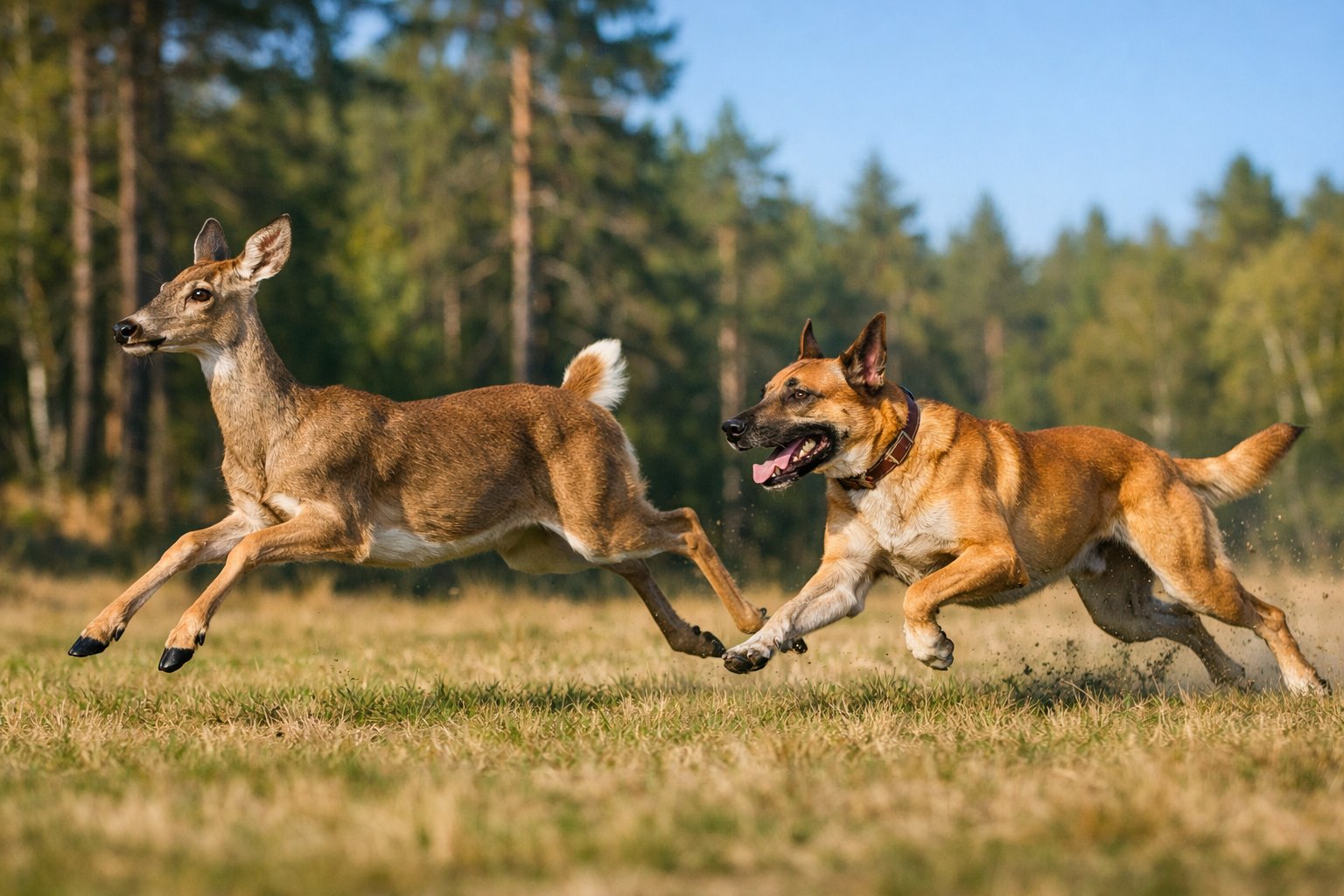
What makes an animal run fast? It really comes down to body shape, muscle type, and whatever obstacles or threats are nearby.
Habitat and the specific rival or predator often decide whether speed, stamina, or agility matter most.
Physical Adaptations and Anatomy
Deer have long, thin legs and lightweight bodies built for quick dashes and long chases. Their muscles help them take off fast and keep going.
White-tailed and mule deer can hit about 35–40 mph in a sprint because their hind legs store and release energy with every bound.
Dog breeds are all over the map. Greyhounds and salukis have deep chests and long legs for pure speed. Vizslas and dalmatians strike a balance between speed and stamina.
Border collies and Jack Russell terriers focus more on agility and quick turns, not sheer speed. Dobermans have powerful acceleration for short bursts, which comes in handy in yards or parks.
Family dogs usually mix different traits, so their top speeds tend to be lower than racing breeds.
Think of anatomy as a set of tools. Deer use their legs and flexible spines to clear obstacles, while sighthounds are built for straight-line speed. Muscle type, limb length, and body weight all change how each animal runs.
Predators and Environmental Challenges
Wolves, mountain lions, or bears force deer to rely on early warning and explosive sprints to reach cover. Their sharp hearing and sense of smell help them spot danger early, and zig-zagging runs can wear out predators.
In thick brush or hilly terrain, a deer’s agility usually beats a dog’s raw speed.
Dogs have different challenges. Pack hunters like wolves use teamwork and endurance. A single dog—maybe a Jack Russell or the family pet—has to rely on quick turns and persistence.
In open fields, a saluki or greyhound can outrun many predators. But in woods or a cluttered dog park, a border collie’s agility or a terrier’s stubbornness matter more.
Human-made obstacles change things too. Roads, fences, and yards can affect how a chase plays out. If a deer escapes across rough ground, it might leave a dog behind, even if the dog’s fast on pavement.
Famous Speed Records and Real-World Scenarios
Let’s talk top speeds for a second. Greyhounds can hit about 45 mph, while deer usually max out around 35 to 40 mph.
So, in a straight sprint, a greyhound or saluki would probably outrun most deer. But honestly, life’s not a racetrack, is it?
Out in the wild, deer rely on stamina and their knack for leaping over obstacles. That’s how they usually slip away from wolves or mountain lions during a chase.
Picture a suburban dog park. If a family dog gets loose, it might catch up to a young deer—though only if the ground is flat and luck’s on its side.
Hunting breeds like Vizslas or Dobermans can close the gap fast. Still, they have a tough time if the deer darts into thick brush or takes off up a steep hill.


