
Ever wondered what owls eat? You’re definitely not alone. Owls are impressive hunters, mainly going after small animals like mice, voles, and all sorts of insects.
Depending on the species, they’ll also eat birds, fish, snakes, and sometimes even bigger prey. Their wide-ranging diet lets them survive just about anywhere.
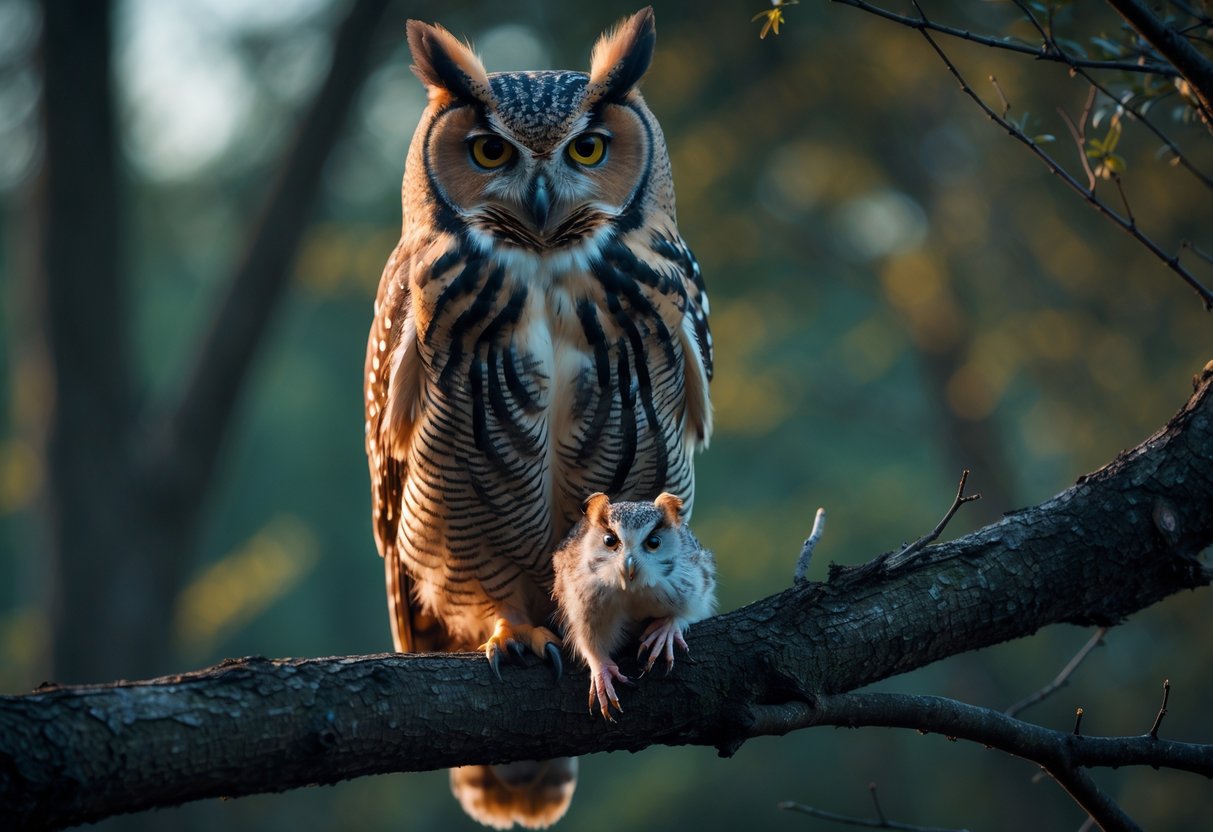
Some folks think owls only hunt at night, but that’s not always true. A few are active during the day or at dusk, chasing down whatever they find.
Owls don’t bother chewing food; they either swallow it whole or rip it into chunks. Later, they spit out pellets made of bones and fur.
Learning about what owls eat gives you a new appreciation for these mysterious, silent hunters.
If you’re curious about the kinds of food owls go after and how they manage to catch it, stick around. Their diets and hunting tricks are pretty fascinating—honestly, it’s a world most people never really think about.
Primary Foods in the Owl Diet

Owls eat all sorts of animals, and what they eat depends on their size and habitat. Their main meals include small mammals, birds, insects, and sometimes reptiles or fish.
Many owls go after animals that are easy to catch at night.
Small Mammals Eaten by Owls
Small mammals make up the bulk of many owls’ diets. Barn owls and plenty of others hunt field voles, mice, rats, and shrews.
These little mammals are usually out and about at night, so owls have an easier time catching them. Bigger owls sometimes go after rabbits or squirrels, but only if they’re strong enough.
Barn owls stick mostly to rodents like mice and voles, which are everywhere in fields and meadows. These mammals give owls the energy they need.
Shrews and pocket gophers pop up on the menu too, if they’re around.
Birds and Other Avian Prey
Some owls add birds to their meals. They’ll catch small birds like sparrows or finches.
Bigger species, like eagle owls, sometimes hunt ducks or even other birds of prey.
Owls usually hunt birds at night when the birds are sleeping or just less alert. Their silent flight and sharp talons let them sneak up fast.
Some owls even pluck feathers before eating, which is a bit surprising.
Reptiles, Amphibians, and Fish
Owls that live near water or in warmer places often hunt reptiles, amphibians, and fish. You might spot long-eared owls or barred owls eating frogs, snakes, or small fish.
These animals add some variety and can be easy to catch around wetlands or marshes.
Some owls swoop down from perches near ponds or streams to grab their prey. Barred owls, for example, hunt both fish and amphibians.
In the desert, some owls even eat snakes and scorpions.
Insects and Invertebrates
Smaller owls go after insects and other invertebrates. Beetles, moths, spiders, earthworms, and snails all make the cut.
Little owls and scops owls especially seem to love these smaller snacks.
Insects give owls a quick energy boost, especially when the weather’s warm and bugs are everywhere. Some owls snatch insects right out of the air or off the ground.
Eating insects helps when small mammals are hard to find.
If you’re looking for more details about what owls eat, the Woodland Trust has a great page on owl diets and hunting habits.
Diet Differences Between Owl Species
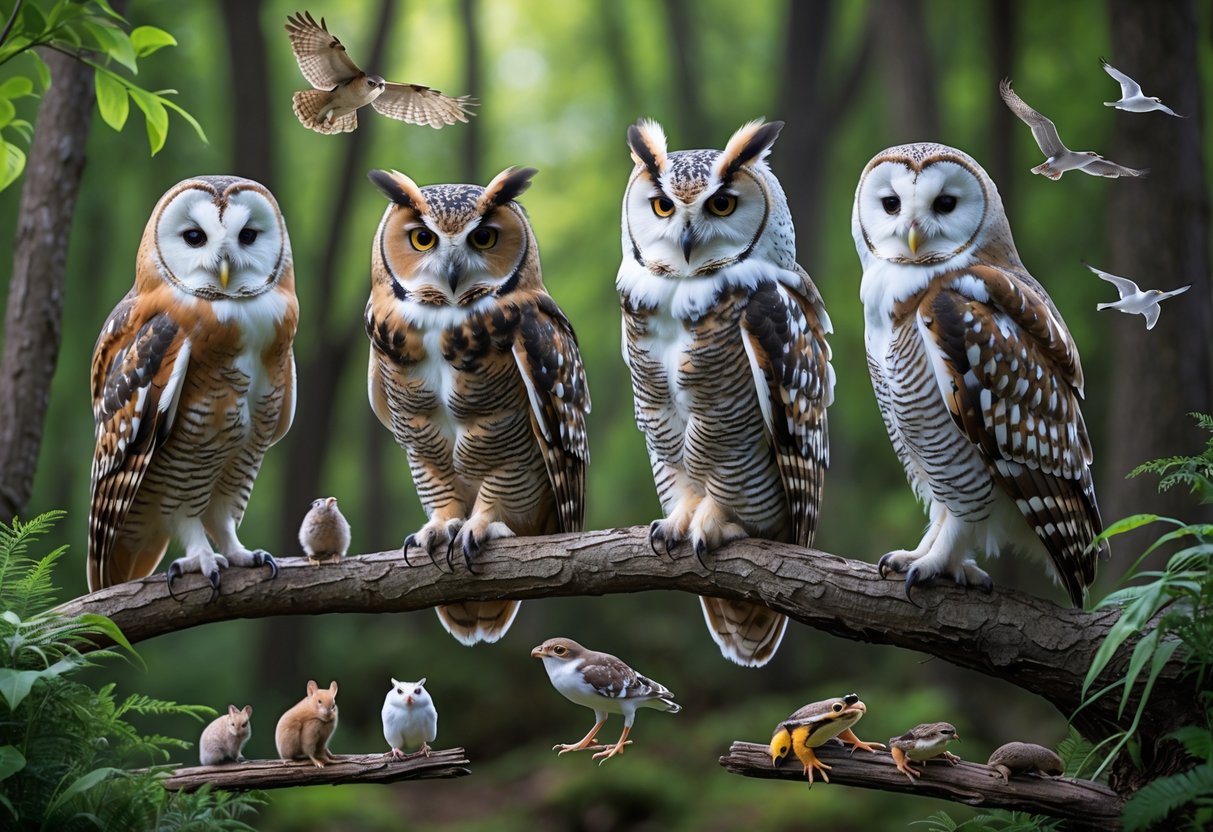
Owls eat all kinds of animals, but their favorites depend on the species and where they live. Some stick mostly to rodents, while others go after insects or small birds.
Their diets really show how they fit into their environment.
Great Horned Owl Diet
The great horned owl eats a huge range of animals. You’ll see them hunting mammals like rabbits, weasels, and rodents.
They also eat birds, including other raptors and crows. That makes them one of the top predators in their area.
Great horned owls can even take down bigger prey, like small foxes. They usually hunt at night, using their powerful talons to grab and kill.
Their size and strength let them go after all sorts of animals, which helps them survive in different places.
Barn Owl Food Preferences
Barn owls mostly eat small mammals—mice, voles, and shrews are their go-to. Sometimes, they’ll also catch small birds or fish if they get the chance.
They prefer hunting over open fields where rodents are everywhere.
You’ll notice barn owls flying silently over farmland or grasslands. They focus on rodents because they’re easy to catch and digest.
Barn owls often swallow their prey whole, then later cough up pellets with the bones and fur.
Screech Owl and Barred Owl Feeding Habits
Screech owls hunt small mammals like field voles, wood mice, and bank voles. They’ll also go after small birds.
Because screech owls are on the smaller side, their prey tends to be small too.
Barred owls eat a bigger variety. They go after insects, fish, amphibians, reptiles, birds, and small mammals like rabbits.
This wide diet lets barred owls live in forests and near water, where there’s plenty of different prey.
Both screech and barred owls rely on sharp hearing and silent flight to hunt at night. They usually pounce from perches and swoop down fast.
Burrowing Owl and Other Species
Burrowing owls stand out from most nocturnal owls. They hunt mostly during the day and love to snack on insects like beetles and grasshoppers.
They’ll also go after small mammals and birds when they get the chance.
Other owl species switch things up depending on where they live. Some desert owls go for snakes, while forest owls might grab frogs instead.
If you spend time watching owls, you’ll notice their diets really depend on what’s nearby. Their hunting habits and food choices just show how well they fit into their surroundings.
Curious about what different owls eat? You can dig deeper in the Owl Diet Explained.


