
Ever sat outside at night and caught the haunting sound of an owl’s hoot? It’s hard not to wonder what’s going on out there when everything else is so quiet. Owls hoot mostly to mark their territory and talk to other owls—sometimes to attract a mate, other times to warn rivals to stay away. These nighttime calls help them keep their space and kick off family life.
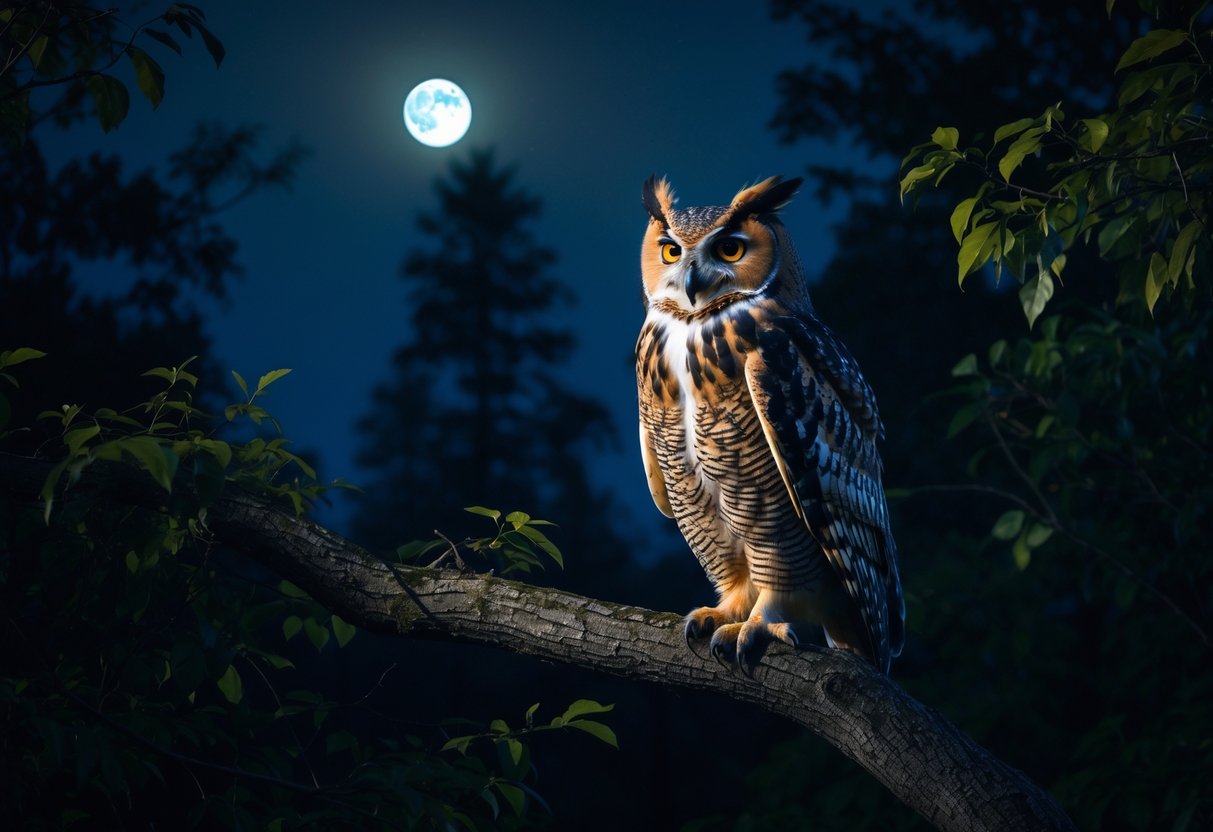
Owls come alive after dark. They hunt at night, using sharp vision and hearing that really give them an edge. Their hoots travel farther when the world is quiet, so it’s easier for them to get their message across.
When you listen closely, you’re hearing owls claim their spot or reach out to others. It’s like you’re eavesdropping on their secret nighttime conversations.
You might notice different calls depending on what the owl wants. Sometimes the hoots sound gentle, calling to a mate. Other times, they’re loud and aggressive—clearly saying “stay away.” When you start to recognize these sounds, you get a peek into the hidden nightlife of nature.
Primary Reasons Owls Hoot at Night

Owls use hoots to send important messages to each other. Their calls tell others about territory, love interests, or danger.
These sounds help them survive and find their place in the world.
Territorial Communication
When you hear a lone owl hooting, he’s usually marking his territory. Male owls, especially great horned owls, will sit in their spot and let out rhythmic hoots.
That’s his way of warning other owls to keep away. By hooting, he claims prime hunting and nesting ground for himself.
The sound works well at night because it carries far in the still air. If another owl answers, they might start a vocal duel to figure out who gets to stay.
This back-and-forth often settles things without a fight, using sound instead of claws.
Mating and Pair Bonding
Owls also hoot to attract a mate. A healthy male will hoot to show he’s got good hunting grounds and a safe nest.
He wants to let females know he’s a solid partner. Once a pair forms, you might catch them hooting to each other.
These back-and-forth calls help them stay close and confirm their bond. Some pairs even duet, almost like they’re having a conversation.
Courtship hooting mostly happens in late fall and winter, getting ready for the breeding season.
Warning Signals and Threats
Owls don’t always hoot for friendly reasons. Sometimes, they use harsh sounds like growls, hisses, or even snap their beaks to warn off danger.
If you hear those noises, the owl probably feels threatened—maybe by a predator or a person who got too close.
These defensive calls pop up most when owls protect their young. It’s their way of saying “back off.”
Unlike regular hoots, these warning sounds show the owl’s stressed or ready to defend its turf.
If you’re curious, you can dig deeper into owl behavior at nature-mentor.com.
Hooting Diversity and Notable Owl Species
Owls don’t all sound the same. They use different hoots and calls depending on what they need.
Their sounds can tell you a lot—maybe they’re marking territory, maybe they’re looking for a mate. Some species, like the great horned owl, have hoots you’ll recognize right away.
Hooting Patterns in Different Species
Each owl species has its own style. Some give deep, rhythmic hoots, while others screech, whistle, or even click.
These sounds serve different purposes—warning rivals, attracting mates, or keeping in touch with family.
You might hear a single hoot repeated over and over if an owl’s defending its turf. In social moments, owls sometimes call back and forth.
Duets like these help with bonding, especially during courtship. Learning these patterns can help you figure out which owl is nearby.
Great Horned Owl Vocalizations
The great horned owl stands out for its deep, steady “hoo-hoo” hoots. When you hear that, it’s probably a male marking territory or calling to a female.
His hooting is so steady and distinct, it’s tough to mistake for anything else. Besides hoots, great horned owls make other noises too—growls or barks if they feel threatened.
These extra sounds come out mostly during breeding season or when they’re protecting a nest. The variety in their calls really helps them survive and communicate in the dark.
Nighttime Behavior and Adaptations
Owls mostly come alive at night because, well, their bodies just work better in the dark. Those huge eyes? They help them spot things even when it’s barely light out.
Their feathers let them glide almost silently—honestly, it’s kind of spooky how quiet they are. That’s a big advantage when they’re hunting.
When the sun goes down, owls hoot to warn off rivals or try their luck at finding a mate. You’ll probably notice more hooting in the fall and winter since that’s when they claim territory and look for partners.
The quiet nighttime hours really help their calls travel farther without all the daytime racket.
If you’re curious, there’s more about owl hooting at nature-mentor.com.


