
When you hear an owl hooting outside, it’s not just a random sound. Owls mostly make noise to communicate—maybe they’re marking territory, calling for a mate, or warning others. These calls help them protect their space and connect with other owls nearby.
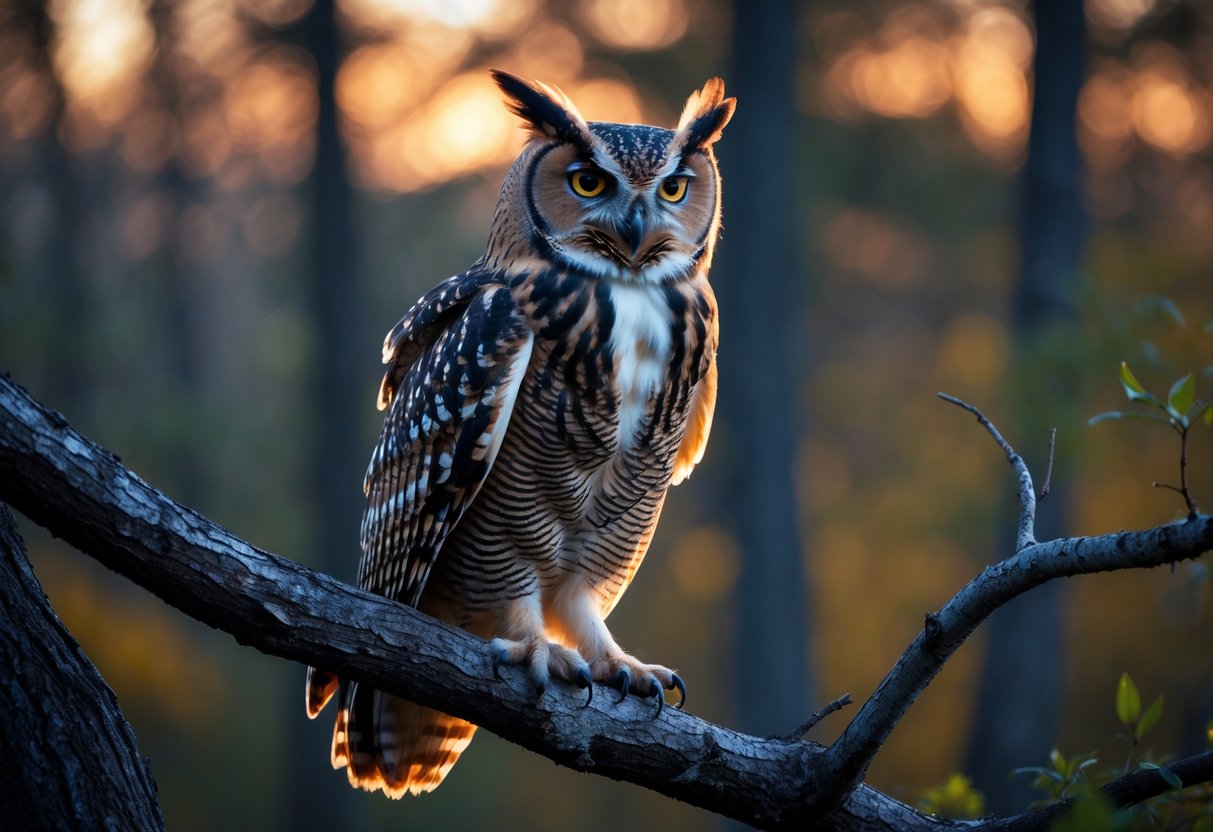
Ever wonder why owls sound different at night? Or what those weird screeches actually mean? Each sound tells you something about what the owl’s doing or feeling.
If you’ve been curious about those unique owl sounds and what they might be saying, you’re in the right spot. Let’s try to make sense of their calls.
Decoding Owl Noises: What Common Calls Mean

Owls use their sounds for important things—marking territory, warning about danger, or talking with family. Each type of call gives you a clue about what’s going on. If you learn these calls, you’ll get a better sense of what owls are saying out there.
Territory and Mating Hoots
When you hear owls hooting at night, they’re usually claiming their space. Great Horned Owls make deep, rhythmic hoots to tell others, “This spot’s taken.” These hoots also help them find a mate.
Barred Owls have that “Who cooks for you?” call. That pattern means, “This is my hunting area,” and it’s part of their courtship too.
Eastern Screech Owls go for shorter, softer trills or whinnies when they’re courting. Territorial calls tend to sound steady and repeat over and over.
These sounds let you know where owls live and if they’re looking for a partner. Listen for these calls in forests or even at the edge of town.
Alarm and Threat Sounds
Owls get loud and sharp if they feel threatened. Eastern Screech Owls will let out harsh whistles or sudden screeches to scare off predators. These calls warn others that danger’s close.
Great Horned Owls might hiss or make guttural croaks when they defend their nest. Barred Owls sometimes yelp or bark quickly if they’re stressed.
These noises are way harsher than their usual hoots and really get your attention fast. When you hear alarm calls, the owl is probably trying to protect itself or its chicks.
If you can spot these sounds, you’ll know when an owl feels scared or upset.
Juvenile and Family Communication
Baby owls and their parents use different sounds to stay in touch. Young Barred Owls, for example, make high-pitched begging calls that sound like whistles.
These calls basically say, “Feed me!” Barn Owls use soft trills and chirps when they’re with their mates or chicks.
Northern Saw-whet Owls use short, sharp whistles or toots to show where they are. Family calls help owls keep track of each other, especially at night.
If you listen closely, you’ll hear these gentle or quick sounds around nests or roosts. It’s a reminder that even these fierce birds have a caring side.
You can check out recordings to help you recognize owl calls, like Learn 10 Common Owl Calls (Eastern United States).
Owl Species and Their Unique Vocalizations

Owls have a ton of different sounds. Each species uses calls that fit their needs. Some calls warn others, claim territory, or attract a mate.
You’ll find each owl has its own way of calling, which helps you tell them apart.
Barred Owl Calls and Meanings
Barred Owls are famous for their clear, rhythmic calls. Their best-known sound is a series of hoots that go “Who cooks for you? Who cooks for you all?” They mostly use this to mark territory and talk to their mates.
Besides hoots, Barred Owls can let out sharp, loud screams if they feel threatened. That’s their way of saying, “Back off!”
You’ll hear Barred Owls mainly at night in wooded places. Their calls stand out because of that steady rhythm and deep tone.
If you learn the call, you can spot them even if you never see them.
Great Horned Owl Hoots
Great Horned Owls have deep, powerful hoots. Usually, you’ll hear a series of three to five hoots, with a pause in between. They sound a bit like “hoo-h’HOO-hoo-hoo.”
These hoots mostly set territory and attract a mate. Great Horned Owls also scream and growl, especially near their nests to scare off threats.
Young owls make sharp calls when they’re hungry and want food. Since these owls live in so many places, you might hear their hoots at night in forests, cities, or even out on farms.
Their low, strong hoots are a sure sign they’re nearby.
Distinctive Sounds of the Barn Owl
Barn owls make softer, eerier calls than you might expect. Instead of the classic hoot, you’ll usually hear a long, harsh screech.
The sound can come across as a sharp “shreee” or a drawn-out “screeech.” It’s honestly a little unsettling if you catch it alone in the dark.
When they’re courting, barn owls switch things up and use gentler cooing sounds. If something scares them, they snap their beaks to make a clacking noise.
You’ll often find these owls hunting in open fields or around farms. Their screeches echo through the night, and if you don’t know what’s making the noise, it can feel pretty mysterious.
If you start to recognize barn owl sounds, you’ll get a better sense of what they’re up to after dark. Every owl species has its own unique voice, and if you listen closely, you’ll start to pick out the differences.
Curious to hear more? Check out the distinctive calls of owls.


