
When you hear an owl making a lot of noise, it’s usually trying to get a message across. Owls use different sounds to claim their territory, attract a mate, or warn others to back off.
These calls are their way of talking in the dark when you can’t see them.
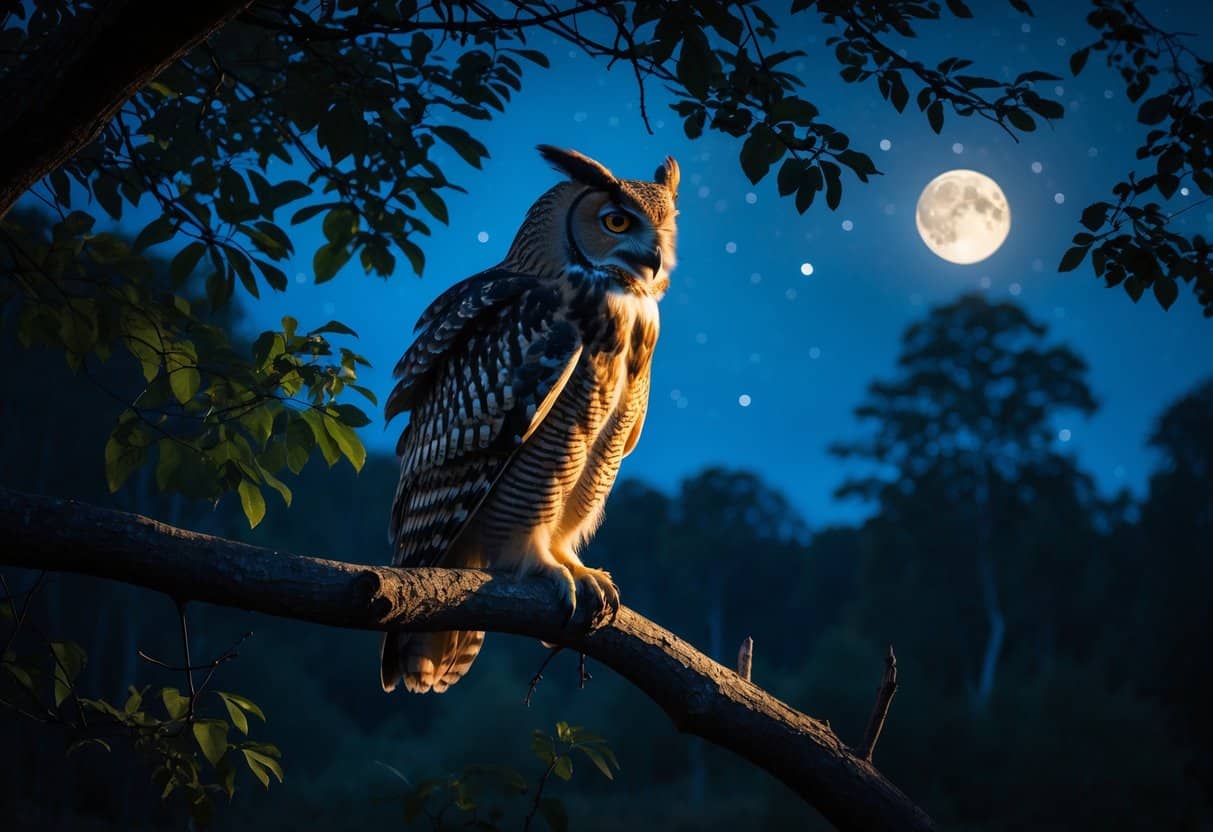
You might notice patterns like hoots, shrieks, or even hisses. Each sound means something different.
Sometimes owls get chatty to find a partner. Other times, they’re just defending their space from intruders.
If you start to listen closely, you’ll get a glimpse into their secret nighttime world.
Why Owls Make a Lot of Noise
Owls get loud to send important messages.
You might hear warnings, calls for mates, or even claims over territory.
Depending on what the owl wants to say, you’ll notice different hoots, screeches, or screams.
Territorial Defense and Marking
Owls often get noisy when they’re defending their space.
Male owls, like the great horned owl, let out deep, rhythmic hoots to say, “This is my home.”
These sounds warn other owls to stay away.
They also use calls to mark where their territory starts and ends.
A barred owl is famous for a repetitive call that sounds like, “Who cooks for you?”
That call helps keep neighbors from crossing into their turf.
Being loud at night lets owls protect their hunting grounds and nesting spots.
It’s their way of saying the area is already taken.
Mating and Courtship Communication
Owls get loud to find and attract mates.
Male owls, like great horned owls, hoot in patterns to show off their strength and health.
Sometimes, these calls turn into a back-and-forth between a pair, helping them bond.
During breeding season, you might hear special sounds like trills or whistles.
Some species even clap their wings or make other noises as part of their courtship.
Screeching or screech-like sounds often play a role here.
They help owls find a partner and keep the pair close.
Warning Signals and Alarm Responses
Owls use sharp screams or loud calls to warn others about danger.
If a predator shows up, an owl might scream to scare it off or alert its mate.
Great horned owls sometimes let out loud, sudden noises when they feel threatened.
These noises might sound like growls or harsh barks.
By making alarm calls, the owl protects its nest, young, and territory.
You might hear these sounds if you wander too close without realizing it.
Juvenile Vocalizations and Hunger Calls
Young owls get loud and sometimes piercing when they want food.
These hungry calls grab their parents’ attention, especially at night.
Barred owl chicks and great horned owl babies often screech when begging for food.
These calls sound urgent and can really carry.
As the young grow, their sounds change, but they still use vocal calls to get what they need.
If you listen for these noises, you might spot owls nearby.
For more on owl calls like hoots and screeches, check out nature-mentor.com or listen to great horned owl screams at All About Birds.
Common Owl Sounds and Their Meanings
When owls get noisy, each sound usually has a purpose.
They might be marking territory, warning off threats, or just chatting with others.
Some calls come out soft and rhythmic, while others are loud and sharp, depending on their mood or intent.
Hooting and Traditional Calls
Great horned owls use hoots to say, “This is my space.”
Their hoots sound deep and slow, often in patterns like “hoo-h’HOO-hoo.”
This lets other owls know where they live.
Barred owls have a weirdly memorable call that sounds like “who-cooks-for-you.”
That call carries far and often comes in groups of eight or nine notes.
During mating season, you might hear males and females hooting together.
These traditional calls mostly help owls find mates and keep others away from their area.
If you hear steady hoots, it’s likely that owls are sticking to their territory or trying to connect with a partner.
Bill Clicking and Aggressive Noises
Owls don’t just hoot when they feel threatened.
They’ll make sharp noises like bill clicking or hissing to warn off danger.
Great horned owls sometimes snap their beaks rapidly, mixing in some hissing sounds.
This behavior shows the owl feels upset or scared.
Barred owls sometimes join in with clacks or rapid snapping, especially if they’re defending their nest.
If you hear these harsh sounds near an owl’s home, you’re probably too close.
These noises are a clear message to back off and respect their space.
Screeches, Screams, and Other Distinctive Calls
Owls don’t just hoot or click. Some, like barn owls and screech owls, let out these eerie screams or sharp screeches.
Honestly, these sounds can be pretty loud and even a little unsettling.
When owls screech, they’re usually signaling alarm or trying to scare off predators. A barn owl might shriek for several seconds as a warning.
Sometimes, you’ll hear a “screaming” sound that almost sounds human. That’s the owl protecting its territory or warning others about danger.
These distinctive calls show you the owl feels stressed, threatened, or just wants to scare away rivals or predators.
They’re actually pretty important for how owls survive and communicate.
Curious about more owl calls? Check out this owl sounds guide.


