
So, you hear an owl hooting outside your window or maybe somewhere in your backyard. It’s hard not to notice, right? You might wonder if you need to do something.
Honestly, you don’t have to do much—this is just what owls do. Usually, they’re just carrying on with their lives, maybe marking their turf. Owls call out at night for all sorts of reasons, like looking for a mate or warning others to back off.

Sometimes, that hooting feels a bit spooky or mysterious. But really, it’s nothing to worry about. If you know a little about why owls make those sounds, you might start to feel more curious than uneasy.
Whether it’s a Great Horned Owl or some other kind, their calls actually mean something in the natural world. I think it’s kind of neat once you realize it’s just another part of the nighttime soundtrack.
If you’re curious about what those sounds mean and what you should do, you’re in the right place. For more on this, check out the advice about hearing owls near your house.
Immediate Steps When You Hear an Owl Hooting
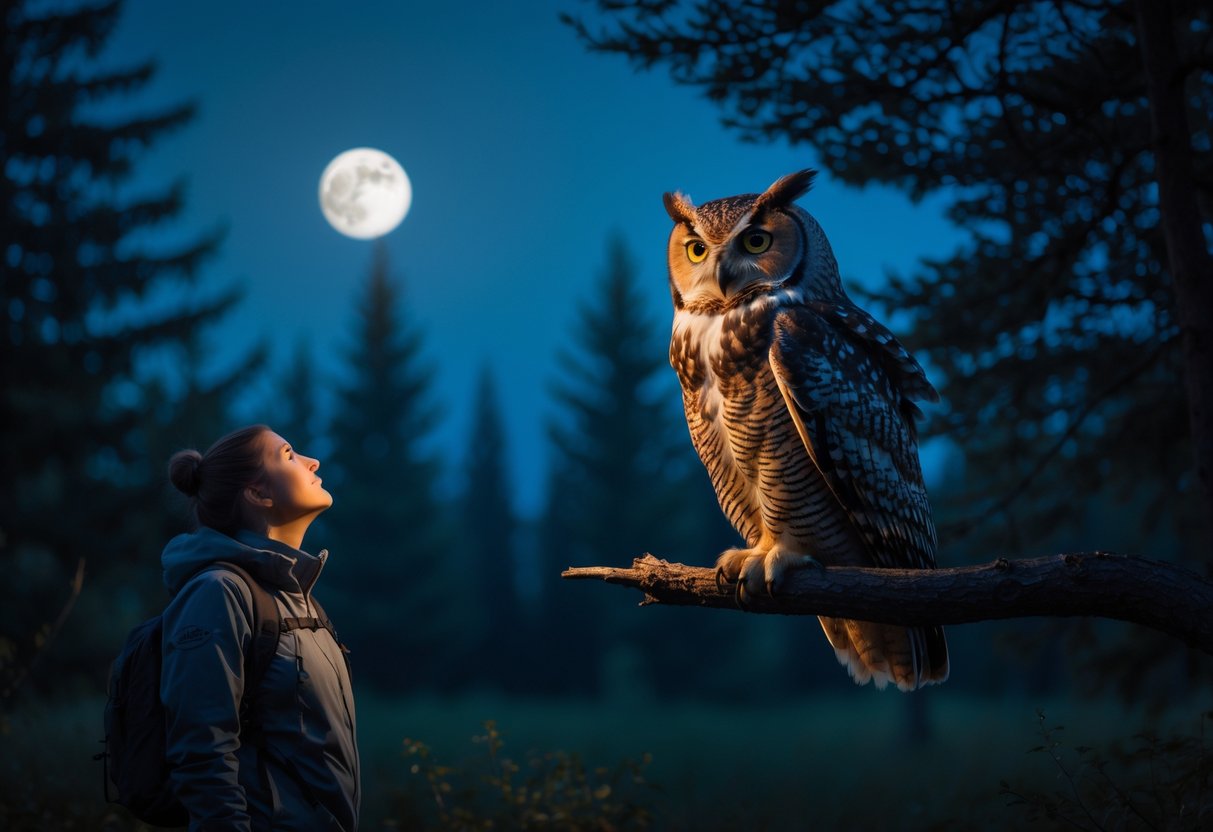
When you catch that hoot nearby, just pause and listen. Try not to disturb the owl.
It’s good to pay attention to the sound and what’s going on around you. Staying calm helps you figure out what’s up without scaring the bird away.
Stay Calm and Listen Carefully
Take a breath. Stay still.
Owls hoot at night to talk to each other or claim their spot. If you listen, you might hear if it’s just one owl or a few.
Try picking out the rhythm or pitch. A steady hoot usually means the owl is saying, “This is my place.” If the calls get loud or weird, maybe the owl feels threatened.
Skip the sudden moves or loud noises. You’ll get a better chance to listen and maybe even spot the owl.
Observe Your Surroundings
Glance around, but don’t make a big fuss. Owls love quiet spots with tall trees or forests.
If the hooting is close, see if you can tell where it’s coming from. Sometimes it’s a rooftop or a big branch.
Check for signs like feathers or little bones under trees. That’s a hint owls hunt or nest nearby.
Notice the time and weather. You’ll hear more owl calls on cold, clear nights, though some species do call during the day.
Avoid Disturbing the Owl
Don’t shine bright lights or walk up too close. Owls need the dark and quiet to hunt and find mates.
If you hear one near your house, don’t bang on things or yell to scare it off. Just listen from a distance.
Giving the owl space lets it go about its business—breeding, hunting, whatever it needs to do. That’s better for the owl and honestly, the whole ecosystem. For more tips, check this guide on what to do if you hear an owl outside your house.
Understanding Owl Hoots and Their Significance

When you hear an owl, it helps to know what’s behind the sound. Owls don’t just hoot for fun.
Their calls can mean a lot of things—maybe they’re marking territory, looking for a mate, or just checking in with other owls. Sometimes, the sound even tells you which kind of owl lives nearby.
Owls also show up in stories and beliefs from all over the world. There’s something about their calls that gets people talking.
Common Reasons Owls Hoot
Owls mostly hoot to say, “This is my spot.” They make noise to warn others away, especially during breeding season.
Sometimes, they’re calling out for a mate. You might even hear a pair hooting together, building their bond.
Some owls get louder at night or in winter, which is when they get ready to breed. Each sound can mean something different, like chasing off a rival or calling to a partner.
If you hear a bunch of hoots in a row, that owl might be on guard or really looking for a mate. Want to dive deeper? Check out Birdfact’s article on why owls hoot.
Identifying Local Owl Species by Sound
Owls don’t all sound the same. The great horned owl gives a deep, four-note call—kind of like “hoo-h’HOO-hoo-hoo.”
The barred owl sounds different, almost like it’s asking, “Who cooks for you? Who cooks for you all?” It’s a funny way to remember it, but it works.
Smaller owls often skip the hooting and go for screeches or whistles. Barn owls, for example, just shriek.
If you want to get better at this, listen for the number of hoots, the pitch, and the rhythm. It makes nighttime walks a lot more interesting, honestly.
Cultural Beliefs and Superstitions about Owl Hoots
Owls mean different things to people around the world. Some Native American traditions see owls as guides for spirits or as protectors during the night.
If you hear an owl hoot, some folks might say it’s a sign from the spirit world. I’ve heard people say owl hoots bring wisdom or warn us that change is coming.
Others think owl calls spell bad luck or even hint at death. These beliefs really depend on where you live and the stories you grew up with.
No matter what, owls have always stood for mystery and insight. When you hear an owl hoot, you’re connecting with these old ideas that still linger in many cultures.
If you’re curious, you can learn more about the spiritual meanings of owls on The Local Mystic website.


