
Owls have this mysterious vibe, right? They hunt mostly at night, so it’s natural to wonder if your chickens are at risk. Yep, owls can eat chickens, especially when your birds are roosting and not paying attention. Not every owl is a problem—usually, it’s the bigger ones like the great horned owl that go after chickens.
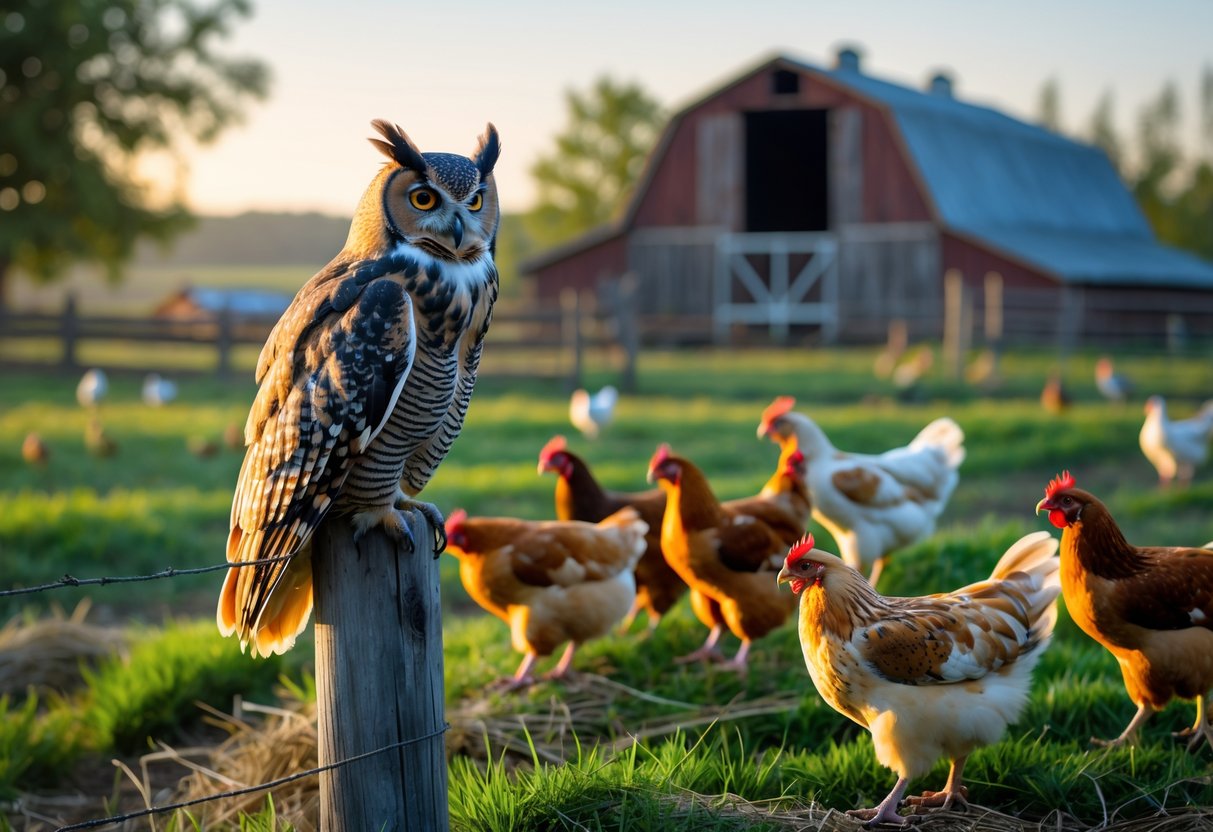
If you keep chickens, you really should know when and why owls might show up. Chickens usually weigh more than what most owls hunt, but if you’ve got smaller or younger birds, owls will still try their luck. Learning how owls hunt and how to protect your flock goes a long way.
Curious about how to spot the signs of an owl attack? Want to know what actually makes owls dangerous to chickens? Stick around. You can also check out more info on owl attacks at poultrydvm.com.
Will Owls Eat Chickens? Risks and Owl Behavior
Owls have earned a reputation as powerful hunters. They can be a real threat to chickens, especially after sunset. If you understand why owls go after chickens and which species you need to watch out for, you’ll be better prepared.
Why Owls Target Chickens
Owls go after chickens because, honestly, chickens make for an easy meal. Your flock might spend time outside or in runs that aren’t totally secure at night. Owls look for small to medium birds, and chickens fit that bill.
If your coop or run has gaps or weak spots, owls can sneak in or swoop down fast. Once they find your chickens, they might come back for more. Usually, an owl will kill just one bird a night, but even that can be a lot.
Nocturnal Hunting Habits of Owls
Owls mostly hunt at night, taking advantage of the darkness and quiet. Their eyesight and hearing are seriously impressive, so they spot prey without much trouble.
Because they hunt when it’s dark, your chickens are more exposed while they sleep or hang out outside. Owls often attack from above, flying in almost silently and snatching birds from the coop or run.
You might find chickens with missing feathers or, sometimes, missing heads—owls tend to remove those parts. If you see this, there’s a good chance an owl is around.
Most Concerning Owl Species for Chickens
The great horned owl is the biggest threat to backyard chickens. With its wide wingspan and strong talons, it can easily grab a rooster or hen.
Barn owls also go after chickens sometimes, but they aren’t as big of a problem as great horned owls. Smaller types, like screech owls, usually leave chickens alone.
If you know the great horned owl is your main concern, you can focus your protection efforts. For more on owl attacks, check out owl predation on chickens.
How to Protect Chickens from Owl Attacks

If you want to keep your flock safe, you’ll need to secure the coop, watch for owl activity, and get creative with deterrents. Owls hunt quietly and quickly, so you have to stay one step ahead.
Securing Chicken Coops and Runs
Start by locking your chickens inside a sturdy coop before it gets dark. Owls usually attack at night, when your birds can’t defend themselves. Use strong wire mesh or netting over all sides and the top of your run. This keeps owls out, since they can fly in without making a sound.
Make sure the coop has solid walls and tight doors. Check for any gaps where an owl could squeeze in. Adding lights around the coop sometimes helps, but remember, owls are used to the dark. Closing the coop early and keeping birds inside for at least 10-14 nights after an attack can break the cycle.
Detecting Signs of Owl Predation
Maybe you notice a missing bird, or your chickens seem nervous after dark. Owls often leave white, chalky droppings near the spot they struck. That’s one of the telltale signs.
After sunset, grab a flashlight and check your chicken area. Look for scattered feathers or strange damage on the coop roof or run. Owls usually hit spots where they can grab a bird fast, so patch up any weak areas right away.
Best Deterrents and Prevention Methods
Decoy owls can sometimes work, but honestly, real owls just figure them out unless you keep moving them around.
You might want to try motion-activated lights or noisemakers right near the coop. Those can startle owls and send them flying off.
Another trick? Hang bird netting vertically where owls usually swoop in. The net’s basically invisible, so it throws them off and blocks their path.
Some folks even use water guns or sudden loud sounds to annoy owls enough that they just give up and leave. It’s a bit silly, but hey, whatever works without hurting anyone.
If you’re still having trouble, you could bring in a livestock guardian dog. These dogs love to run around with the chickens and chase away any predators.
Locking your coop up early in the evening, along with these other ideas, really gives your chickens a better shot at staying safe from owls.
If you want more detailed tips or stories from other chicken owners, check out the discussion on how to deter owls.


