
Ever wondered if owls actually build their own nests or just take over someone else’s hard work? You’re definitely not the only one thinking about it. Owls have a reputation for being clever and adaptable, but when it comes to nesting, most owls don’t bother building their own nests—they usually reuse or “borrow” nests made by other birds. Honestly, it makes sense; it saves them a ton of energy and lets them start nesting before other birds even get going.
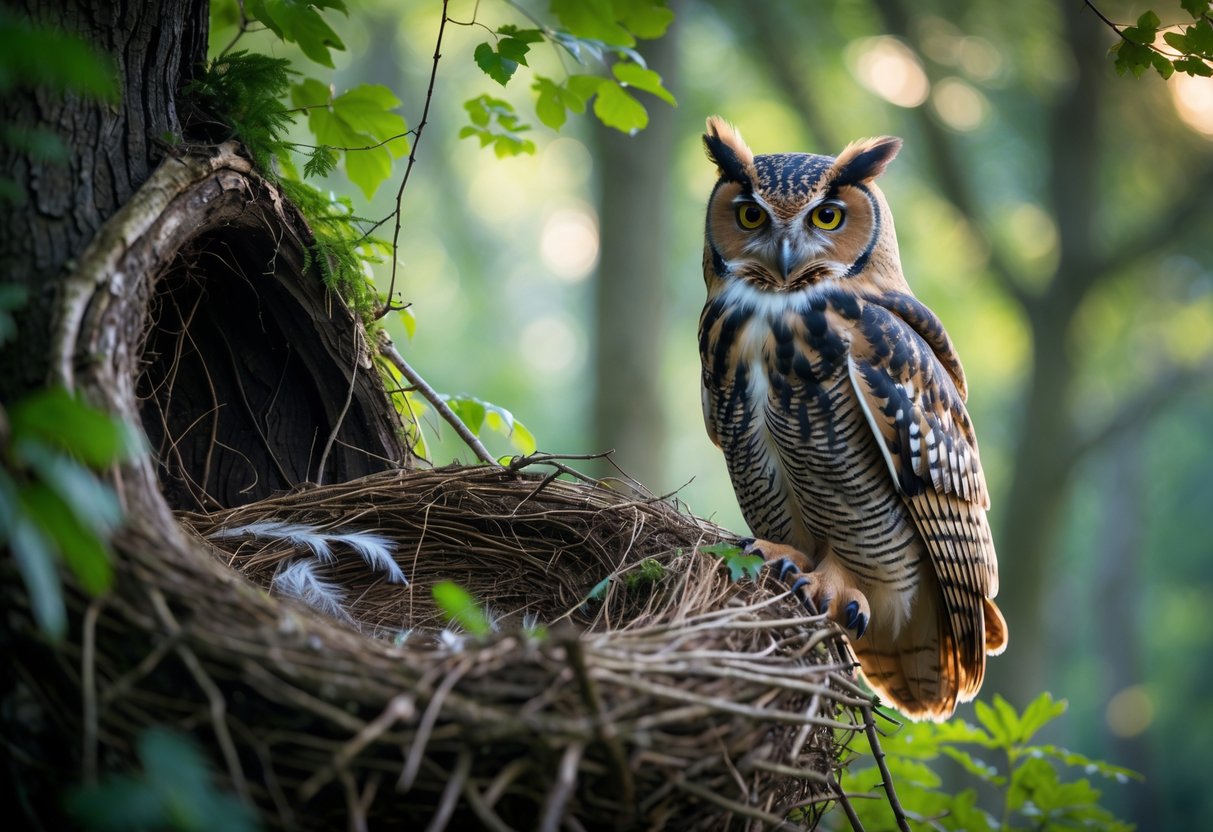
It might surprise you, but even the big guys—like great horned owls—often move into nests originally made by hawks or eagles. Smaller owls? They tend to squeeze into tree cavities or use old nesting boxes left behind by woodpeckers. Once you start noticing how owls find their homes, you can’t help but admire their knack for making do with what’s around.
Do Owls Steal Nests from Other Birds?

Owls don’t build nests the way most birds do. Instead, they rely on nests already made by other birds or just use natural cavities.
Sometimes, they’ll even take over nests from bigger birds or move into spots abandoned by squirrels and other critters.
Great Horned Owl Nesting Behavior
Great horned owls (Bubo virginianus) don’t actually build their own nests. They often “steal” nests from other large birds.
You’ll see them move into nests built by hawks, eagles, or other raptors. They start nesting early—sometimes as soon as mid-winter.
This early start helps them claim nests before other birds get the chance. Of course, if they try to steal from golden eagles, it can get pretty messy since eagles nest later and might fight back.
Great horned owls like big nests high up in trees. Their chicks grow fast and often end up outside the nest when they get too big.
The parents stick around to care for them nearby.
Typical Nest Sources for Owls
Most owls don’t bother making nests out of sticks or grass. Instead, they use tree cavities made by woodpeckers or natural holes in trees.
Smaller owls—like screech owls or saw-whet owls—depend on these cavities or even man-made boxes.
Large owls, such as great horned owls, usually move into abandoned nests from bigger birds. Some owls, like short-eared and burrowing owls, nest right on the ground.
Burrowing owls use old animal burrows, often ones dug by badgers. You’ll almost never see an owl carrying nesting material.
They just use what’s already there—a broken tree top or an empty hawk nest works just fine.
Interaction with Hawks, Crows, and Squirrels
Great horned owls often take over nests built by hawks, crows, and ravens. Hawks can put up a fight when they’re defending their nests, so the owls have to wait until the coast is clear.
Owls might also chase squirrels out of their tree nests. Squirrel nests are cozy, but all an owl really needs is a solid platform for eggs.
These situations show just how opportunistic—and sometimes aggressive—owls can be about finding a good nesting spot. If you hear owl hoots near a big nest, there’s a good chance the owls have moved in or are staking their claim.
For more details on great horned owl nesting habits, check out this in-depth article.
Owl Nesting Materials and Their Impact on Other Species
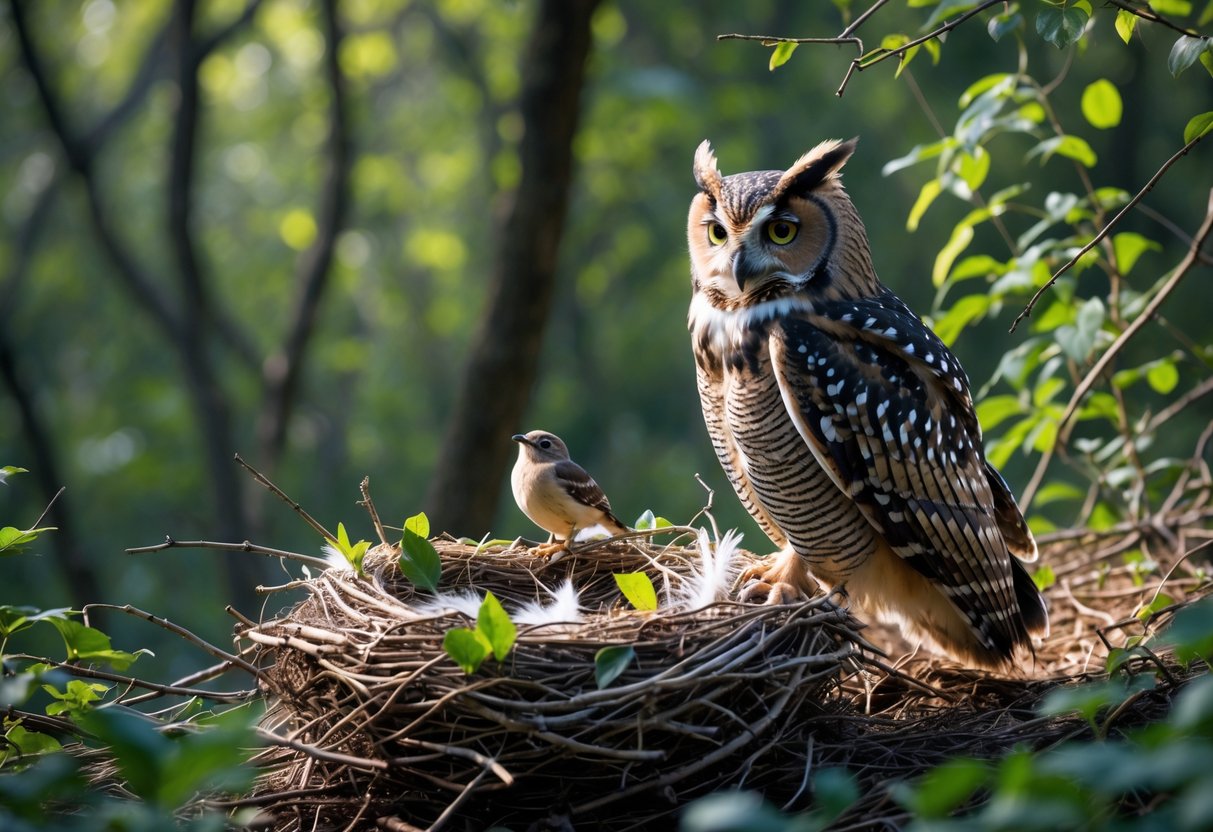
Owls keep things simple when it comes to nesting materials. They usually recycle whatever’s handy—natural items or abandoned nests from other animals.
The stuff they use can affect other wildlife, leading to some competition over the best spots.
Common Materials Used in Owl Nests
Owls line their nests with sticks, leaves, feathers, bark, and moss. Most of these things come from the environment or are leftovers from birds like woodpeckers.
They don’t actually build nests from scratch. Instead, they prefer natural cavities or old nests and sometimes add a little soft debris for cushioning.
Feathers help keep eggs warm. Sticks and bark add structure, while moss and leaves help with insulation.
Sometimes, you’ll even spot owl pellets or bits of fur from prey like mice or voles mixed in for extra softness. By using what’s already there, owls save energy for hunting and protecting their chicks.
Effects on Local Wildlife and Nest Competition
Owls often move into nests built by woodpeckers, turkeys, or pheasants. When they do, they push out those species.
Smaller birds and mammals end up scrambling for safe spots to raise their young. It’s tough out there.
Birds aren’t the only ones in this mess. Small mammals like voles and mice rely on natural shelters too, and owls sometimes swoop in and take over.
This kind of nest stealing can shake things up for these animals. Even grasshoppers or other insects might feel the effects when the ecosystem gets out of balance.
When owls pick old nests or natural cavities, they keep the cycle moving. Still, you can’t help but notice the constant tug-of-war for the best nesting spots.


