
Ever wondered if owls can actually show affection to humans? You’re definitely not alone there. Owls have this reputation for being mysterious and wild, but a few of them do show gentle signs of affection—especially if they’ve built a close bond with someone.
Owls won’t act like your average dog or cat, but some get comfortable enough to nuzzle, rub their heads, or softly touch with their beaks.
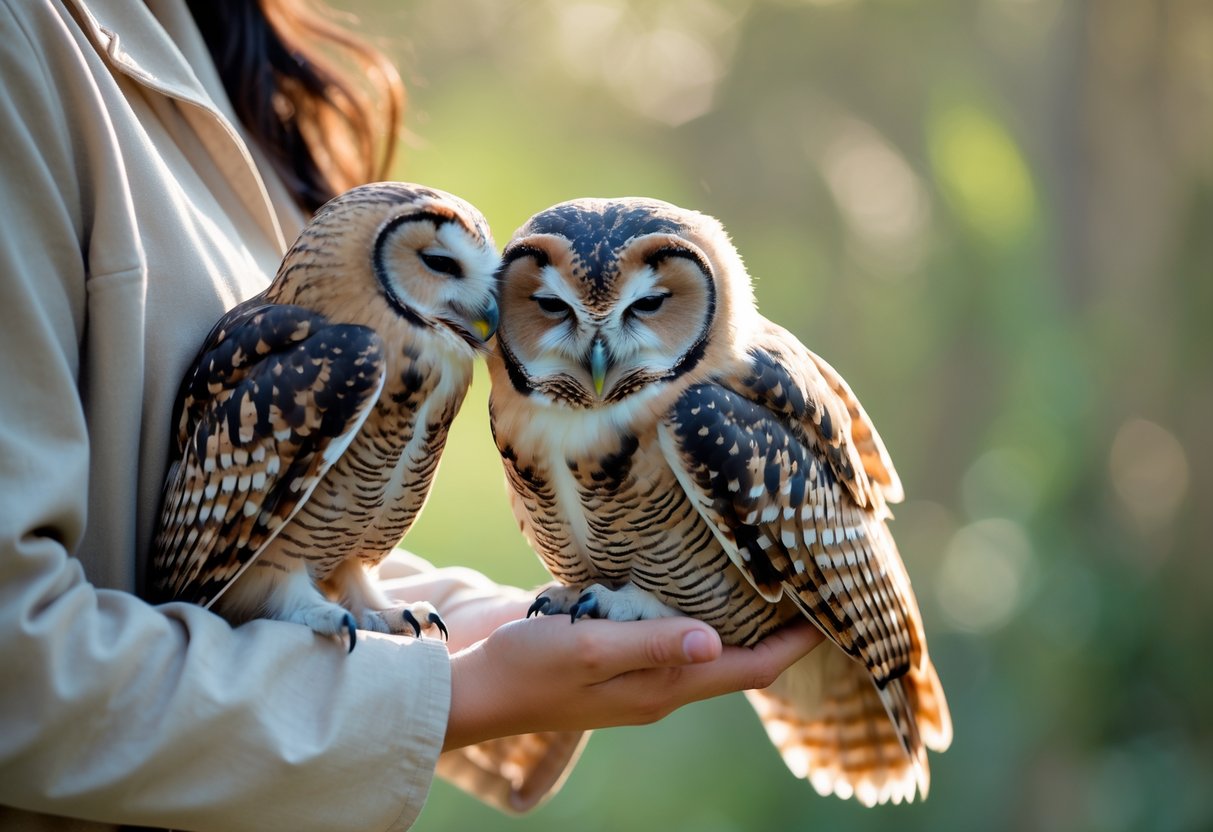
If you raise an owl closely, it might start to see you as family. You’ll notice it responding to you with trust and a certain calmness.
Still, owls are wild at heart. Their ways of showing affection don’t really match what you’d expect from a pet.
Learning how owls express themselves helps you appreciate their quirks and understand how they might connect with you.
Not every owl will want to hang out with people, but some species—and individual birds—do show comfort and even affection if you’re patient and gentle.
Curious about what those signs actually look like? Stick around to see how these birds might just surprise you. Want more details? Take a look at this page on owls showing affection.
Do Owls Show Affection to Humans?

Owls sometimes act affectionate, but figuring out what’s really going on takes a bit of care. Some owls seem to enjoy being around people, while others keep their distance.
How an owl acts depends a lot on whether it’s wild or captive, and what kind of owl it is.
Interpreting Owl Behavior Around People
When you rub an owl’s head or neck and it lets you, that’s usually a sign it trusts you. It’s not exactly “love” like a dog or cat, but it matters.
Owls might preen themselves near you or gently tap you with their beaks. Sometimes that’s bonding, and sometimes it’s just what owls do.
Watch their body language. If an owl sits still and seems relaxed, it probably feels okay with you nearby.
Remember, though—owls can change their mood quickly if they get stressed or startled.
Differences Between Wild and Captive Owls
Wild owls usually avoid humans. They act cautious because, to them, we’re strangers.
If you spot a wild owl acting friendly, chances are it grew up around people or got used to them somehow.
Captive owls, especially those hand-raised, often seem more at ease with people. Some even tolerate petting or seek out attention.
Still, most captive owls hang on to their natural instincts. They don’t usually like being cuddled.
Owls in rehab or educational programs sometimes bond with their caretakers. That trust takes time and patience—it’s not the same as the affection you’d get from a pet.
How Affection Manifests in Owl Interactions
Owls usually show affection through gentle touches, like beak taps or preening. If you see two owls “kissing,” they’re probably strengthening their bond.
This can happen during courtship, or between siblings.
Some owls lean into a light head rub or stick close to someone familiar. That means they feel safe—not that they want a hug.
Different owl species have their own ways of showing comfort.
If an owl seems calm and quiet around you, take it as a good sign. But always give them space—those beaks and talons can do real damage if the owl feels threatened.
Want to see more? Check out how people get owls to act affectionate on Reddit.
Factors Influencing Owl-Human Relationships

Your relationship with an owl depends on how it was raised, its species, and even how people in your culture view these birds.
These things shape whether an owl will act comfortable or affectionate around you.
Impact of Raising and Socialization
Owls raised by humans from a young age sometimes show behaviors that look affectionate. For example, an imprinted owl might follow you, call out, or stick close.
That happens because the owl sees you as family—kind of like it would with another owl.
Adult wild owls almost never act this way. They usually keep their distance or act wary.
Even young owls that seem cuddly usually show affection during feeding or care, not because of deep bonding.
Socializing an owl takes a lot of time and patience. Owls raised in captivity act differently than wild ones, but those bonds depend on early and ongoing interaction.
Role of Individual Owl Species
Not all owls act the same around people. Barn Owls and Eastern Screech Owls, for example, seem more chill or curious about humans.
Bigger owls, like Great Horned Owls, tend to be more independent and less affectionate.
Some owls naturally show closeness during mating or with siblings—like gentle grooming or soft calls. These behaviors aren’t meant for people, but in captivity, they can look like affection.
If you want to see an owl bond, it helps to know the species and its habits. That’s the best way to keep things safe and respectful for everyone involved.
Cultural Perceptions and Representations
Owls pop up everywhere—in art, stories, symbols—basically all over the world. People tend to see them as wise, mysterious, or even magical, which stirs up a lot of fascination and, honestly, a bit of love for these birds.
This kind of cultural view pushes folks to want to get closer to owls, sometimes reading their actions as affectionate. Sure, owls don’t really show love the way pets do, but the way they act during mating or while caring for their families? That can look a lot like affection to us.
How you picture owls in your mind probably shapes how you interact with them, too. If you see them as noble or gentle, you’re more likely to approach them with patience and care, and that might help you build a quiet, respectful bond.
All these stories and ideas people share about owls? They seriously shape how we connect with them—way beyond just what we see them do.


