
Owls are quiet, watchful birds that mostly come out when the sun goes down. You might think they just sit still all night, but honestly, they’ve got a bunch of interesting behaviors that help them survive.
For example, owls catch prey with their sharp talons and often stay very still to avoid being noticed. That stillness? It’s not laziness—it’s strategy.
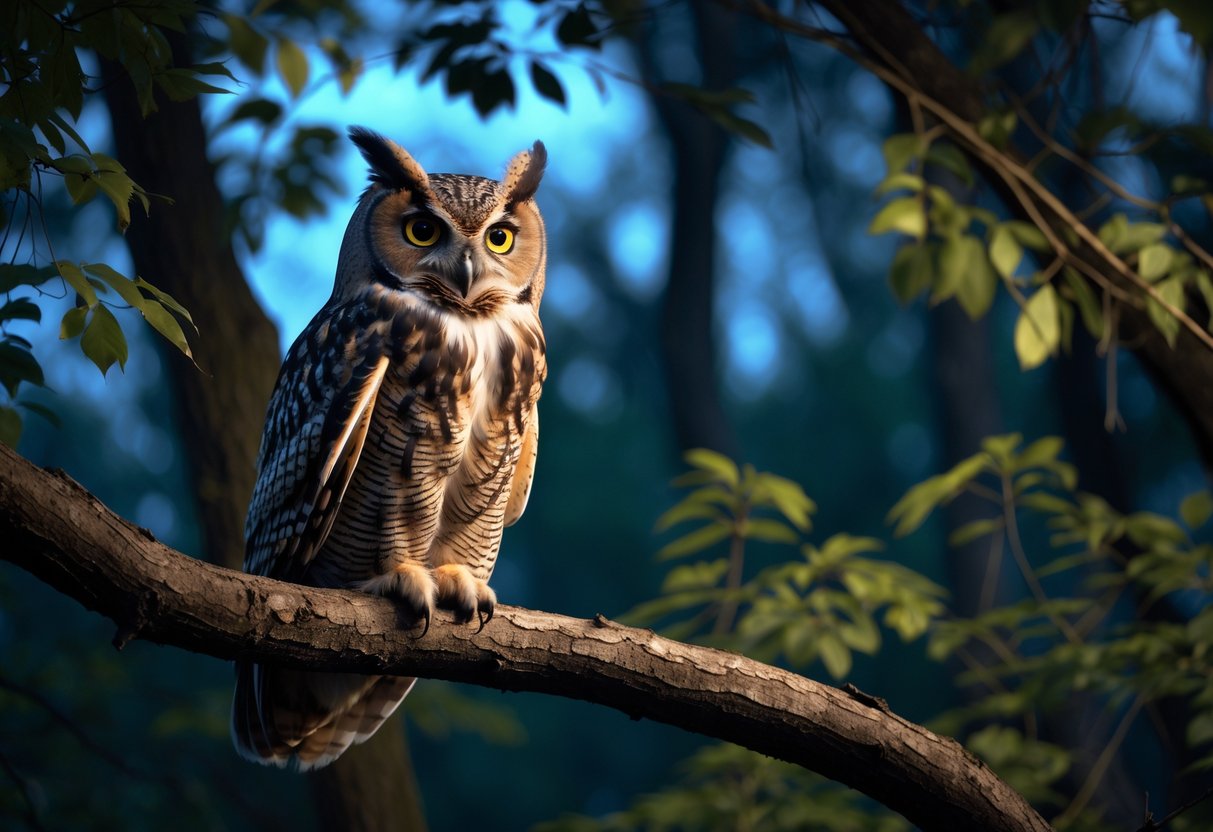
Owls are active during dawn and dusk, preen their feathers, and use different calls like hoots or screeches to communicate. You might notice them moving their heads in a curious way—this helps them see better in three dimensions.
Owls also have unique body language, like fluffing up to look bigger when scared. It’s not just for show; it’s a survival trick.
If you ever hear an owl or spot one in the wild, knowing these behaviors can help you figure out what the owl is feeling or doing. From hunting quietly to defending their young, owls have habits that make them fascinating to watch.
See why owls are such skilled hunters and cautious creatures? It’s honestly hard not to be impressed.
Typical Behaviors of Owls

Owls show a variety of behaviors that help them survive and hunt. Their daily activity, hunting methods, social habits, and ways to communicate all matter a lot.
These behaviors differ depending on the species and their environment. No two owls act exactly the same.
Activity Patterns: Nocturnal, Diurnal, and Crepuscular Behavior
Most owls are nocturnal, so you’ll hear and see them hunting at night. Owls like the Great Horned Owl (Bubo virginianus) and the Eastern Screech-Owl come out after dark.
Their eyes and ears help them spot prey in low light. Some owls, like the Burrowing Owl (Athene cunicularia), are diurnal and stay active during the day.
The Northern Hawk Owl and the Short-Eared Owl also hunt at day or dusk. Crepuscular owls head out during twilight, dawn, or dusk, which helps them dodge some predators and competition.
You can often tell when an owl is active by watching their hunting times. Their activity helps them fit into different parts of the food chain and keeps them out of trouble.
Hunting Styles and Feeding Habits
Owls hunt skillfully, using sharp talons and hooked bills to catch prey. They rely on silence and surprise.
Their soft feathers let them fly almost silently. The Great Horned Owl watches from high perches and swoops down on prey.
Many owls hunt small mammals like mice and rabbits, but they’ll also eat birds, insects, and even fish. The Barn Owl (Tyto alba) mainly hunts rodents on open fields, using its amazing hearing.
The Eastern Screech-Owl and Northern Saw-Whet Owl hunt in forests. Some species, like the Burrowing Owl, hunt on the ground, sneaking up on insects and small reptiles.
Hunting styles vary, but all owls are powerful predators. No wonder people call them raptors.
Social Structure and Territoriality
Owls usually keep to themselves. You’ll mostly find them alone, except during breeding season or when roosting with family.
Many species defend a territory to keep other owls away from their hunting area. Owls use visual and sound signals to claim territory or warn others.
Some, like the Great Horned Owl, get aggressive when defending their space. Others might share roosts quietly, especially when it’s cold.
Burrowing Owls act more social than most. They live in small groups near their burrows.
These owls show more social behaviors, like calls and body language, to interact. It’s pretty charming, honestly.
Vocalizations and Communication
Owls use all kinds of sounds to communicate. Most people know about hoots, but owls also screech, whistle, and trill.
These sounds help owls attract mates, mark territory, or warn others of danger. Different species have their own calls.
The Great Horned Owl’s hoot sounds deep and powerful. The Eastern Screech-Owl can change its pitch to send different messages.
Some smaller owls, like the Northern Saw-Whet Owl, use repeated toots to talk. Besides sounds, owls use body language—postures and feather fluffing—to show alarm or readiness.
These ways of communicating really matter for their survival and social lives.
For more detailed info on owl behaviors, check out the Characteristics and Behavior of Owls.
Owl Body Language and Signs of Stress

Owls use their bodies in all sorts of ways to show how they feel and what’s on their minds. You can learn a lot by watching their posture, eyes, and movements.
These signs can help you tell if an owl is calm, alert, or just plain stressed. It’s not always obvious, but the clues are there.
Postures: Relaxed and Alert States
A relaxed owl usually has a rounded body and smooth feathers. You might spot a Barn Owl or Burrowing Owl sitting quietly with flat feathers.
Their eyes may be half-closed, and sometimes they’ll stretch or preen. If an owl is alert, it changes shape.
It stands taller and looks thinner, stretching its body upward. This “tall thin posture” shows up in Great Horned Owls and others.
It makes the owl less visible or ready to act. Sometimes, an owl’s wings might open a bit or its feathers ruffle when it gets ready to react to danger.
Ear Tufts, Eye Expressions, and Physical Cues
Ear tufts aren’t ears, but feathers that show feelings. In owls like the Great Horned Owl, raised ear tufts usually mean alertness or stress.
If the tufts are down, the bird is probably more relaxed. Eyes give away a lot, too.
If an owl squints or narrows its eyes, it might be trying to hide or stay calm but alert. A wide stare with big pupils means curiosity or hunting mode, which you’ll see in Boreal Owls.
Other signs include raised feathers near the beak, like the rictal bristles on Snowy Owls. When those bristles go up, the owl might be irritated or stressed, especially near nests.
Behavioral Signs of Disturbance
Owls react to stress in all sorts of ways.
Their vocal sounds can shift from soft calls to harsher barks or rattles as they get more threatened.
Take Eastern Screech-Owls, for example. They’ll start with quiet single notes but might end up clacking their bills aggressively.
You might notice rapid movements too. Sometimes they whip their heads around or just stare with this intense focus.
Snowy Owls often fluff up their feathers and spread their wings a bit, trying to look bigger when something’s up.
Panting is another thing to watch for—either because they’re hot or just plain stressed.
If you see an owl clacking its bill or swiping with its talons, that’s definitely a warning. It’s basically telling you to back off.
Noticing these signs lets you give owls the space they need, which keeps everyone safer.
If you want to dig deeper, check out more examples at Signs of Stress in Owls.


