
Most people think owls only come out at night. They’re famous for being night birds, right? But honestly, not every owl sticks to the dark—some are up and about during the day or at those in-between times like dawn and dusk.
Their hunting routines really depend on the species and where they live.
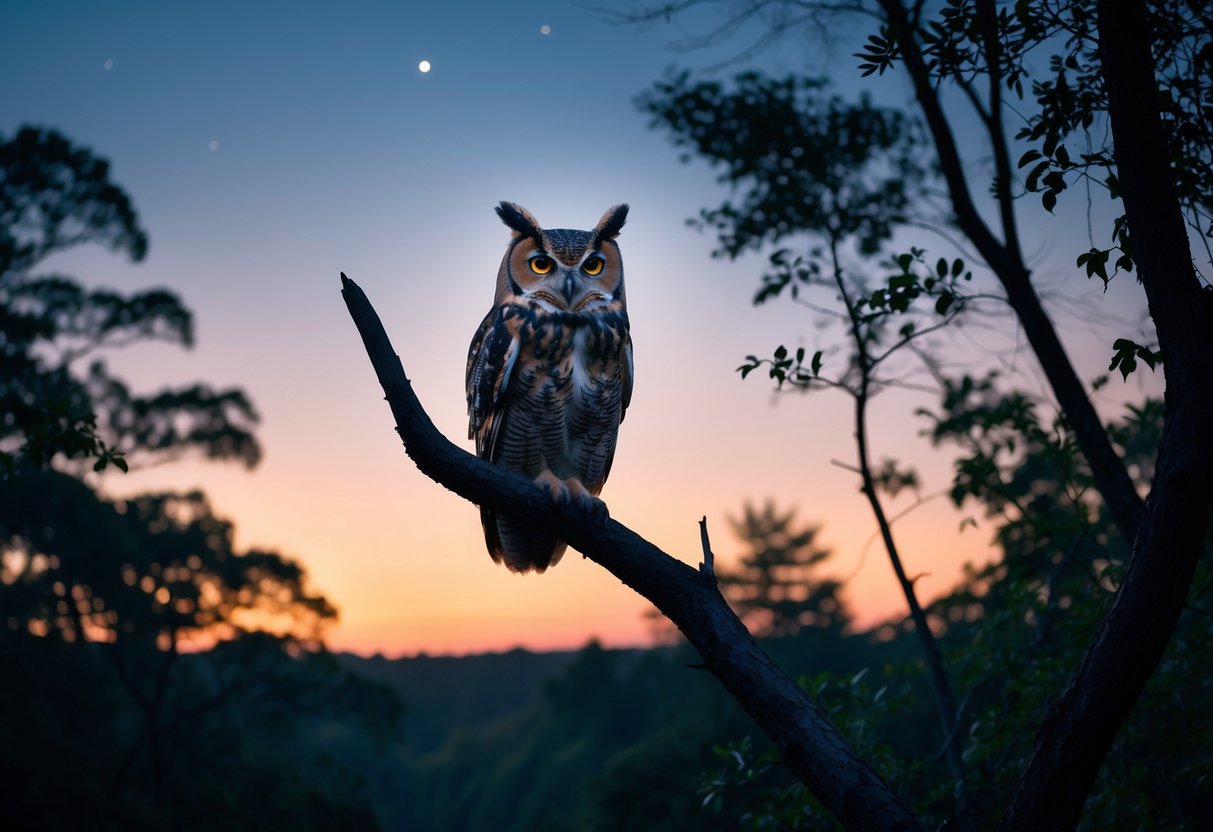
Ever wondered why you hardly see owls in daylight? It’s usually because most owls hunt best in the dark, using their sharp senses to catch dinner. But owls like the snowy owl or hawk owl? They don’t really care about the rules and might be out hunting while the sun’s shining.
Knowing this gives you a better shot at spotting these fascinating birds.
Owls have some wild adaptations—huge eyes perfect for low light, and feathers that let them swoop in without a sound.
Curious about which owls show up when? Let’s dig into how these birds live and hunt at different times of day.
When Do Owls Come Out? Understanding Owl Activity

Owls don’t all keep the same schedule. Some are out at night, others during the day, and a few prefer those in-between hours like dawn or dusk.
If you know when each type is active, you’ve got a much better chance of seeing one.
Nocturnal and Diurnal Owl Species
Most owls are nocturnal. They’re up at night, hooting after dark, and hunting when the light is low.
Great Horned Owls and Barn Owls are classic examples.
But a few owls are diurnal, so they hunt in broad daylight. The Burrowing Owl, for instance, lives in open spots like grasslands and is busy when the sun’s out.
Northern Hawk Owls do the same—they’ll chase down small birds or rodents while it’s still light.
Here’s a quick look:
| Owl Type | Active Time | Example Species |
|---|---|---|
| Nocturnal | Night | Great Horned Owl |
| Diurnal | Daytime | Burrowing Owl |
| Crepuscular* | Dawn and Dusk | Barred Owl, Short-eared Owl |
*We’ll talk about crepuscular owls next.
Crepuscular Owls: Dawn and Dusk Activity
Some owls are crepuscular—they like hunting at dawn and dusk. That’s when the light is low but not totally gone, and they can see better than their strictly nocturnal cousins.
Barred Owls and Short-eared Owls fit this bill.
These owls often avoid competing with night hunters by sticking to twilight hours.
They also go after prey that’s most active at those times, like small mammals and insects.
You might catch a glimpse of them in the soft morning or evening light.
Their habits can shift with the seasons or if food gets scarce. They’re pretty adaptable.
Common Misconceptions About Owl Behavior
It’s easy to think all owls are creatures of the night. Pop culture and old stories sure make it seem that way.
But that’s not really true for every species.
People often see those big, dark eyes on nocturnal owls and assume all owls need the dark. Plus, you tend to hear them more at night, which just adds to the myth.
If you know a bit about their different activity patterns, you’ll realize owls are way more varied than you might have thought.
Curious for more? birdorable.com on owl activity has some cool info.
Famous Owls and Their Unique Habits

Owls have all kinds of habits, depending on their species and where they live.
Some stick to the night, others are out in daylight, and a few even live underground.
If you know their habits, you’ll have a way better shot at spotting them.
Barn Owl: Nighttime Specialist
The Barn Owl (Tyto alba) is your classic night hunter.
You’ll often see it gliding over fields and grasslands just after sunset.
Its flight is so quiet, and its hearing is so sharp, it can grab rodents without making a sound.
Barn Owls hunt by flying low and listening for prey—a style called “quartering flight.”
They often nest in barns or old buildings, using human structures for shelter.
They pretty much avoid hunting in daylight, so if you want to spot one, try your luck after dark or at twilight.
Snowy Owl: Daytime Sightings
Snowy Owls don’t follow the usual owl playbook. They’re often out hunting in the middle of the day.
They come from the Arctic, where summer sun barely sets, so they’ve just gotten used to hunting whenever.
You might see a Snowy Owl sitting out in the open, scanning for lemmings or birds.
Their white feathers help them blend into snowy landscapes, but if you’re lucky, they’ll stand out in the daylight.
They don’t need darkness to hunt. If you spot an owl during the day, it could very well be a Snowy Owl.
Burrowing Owl and Daytime Activity
Burrowing Owls are a bit of an oddball—they spend a lot of time on the ground.
You’ll often see them during the day in grasslands or deserts, hanging out near their burrows.
Instead of gliding silently, Burrowing Owls run or fly low to snatch up insects and small animals.
They’re much more active when the sun’s up, which makes them easier to spot.
If you’re out in open country, look for their bright yellow eyes and the way they bob their heads. These guys are some of the most daytime-active owls around.
Great Horned Owl: True Night Hunter
The Great Horned Owl stands out as one of the most powerful and widespread nocturnal hunters. You’ll probably hear its deep, echoing hoots after dark, either marking its territory or calling out for a mate.
This owl hunts mostly at night. It relies on sharp night vision and super-sensitive hearing to track down prey.
You might be surprised—sometimes it grabs animals even bigger than itself. Rabbits, birds, and, believe it or not, skunks all end up on the menu.
Its big size, those iconic ear tufts, and that intense stare make it easy to spot if you’re lucky. If you’re hoping to catch a glimpse or hear one, head to forests or mixed woodlands after sunset.
| Owl Species | Activity Time | Habitat | Hunting Style | Key Prey |
|---|---|---|---|---|
| Barn Owl (Tyto alba) | Mostly night | Open fields, barns | Quartering flight | Rodents |
| Snowy Owl | Mostly day | Arctic tundra | Ground perch hunting | Lemmings, birds |
| Burrowing Owl | Day and dusk | Grasslands, deserts | Ground running/flying | Insects, small mammals |
| Great Horned Owl | Night | Forests, woodlands | Silent flight, ambush | Various medium animals |


