
So, you’re probably curious—can cats and owls actually get along? Honestly, the answer’s almost always no. Most cats and owls don’t peacefully share space because owls sometimes see cats as prey or even rivals. You’ll hear the occasional story of a cat and owl being friends, but let’s be real: that’s super rare.
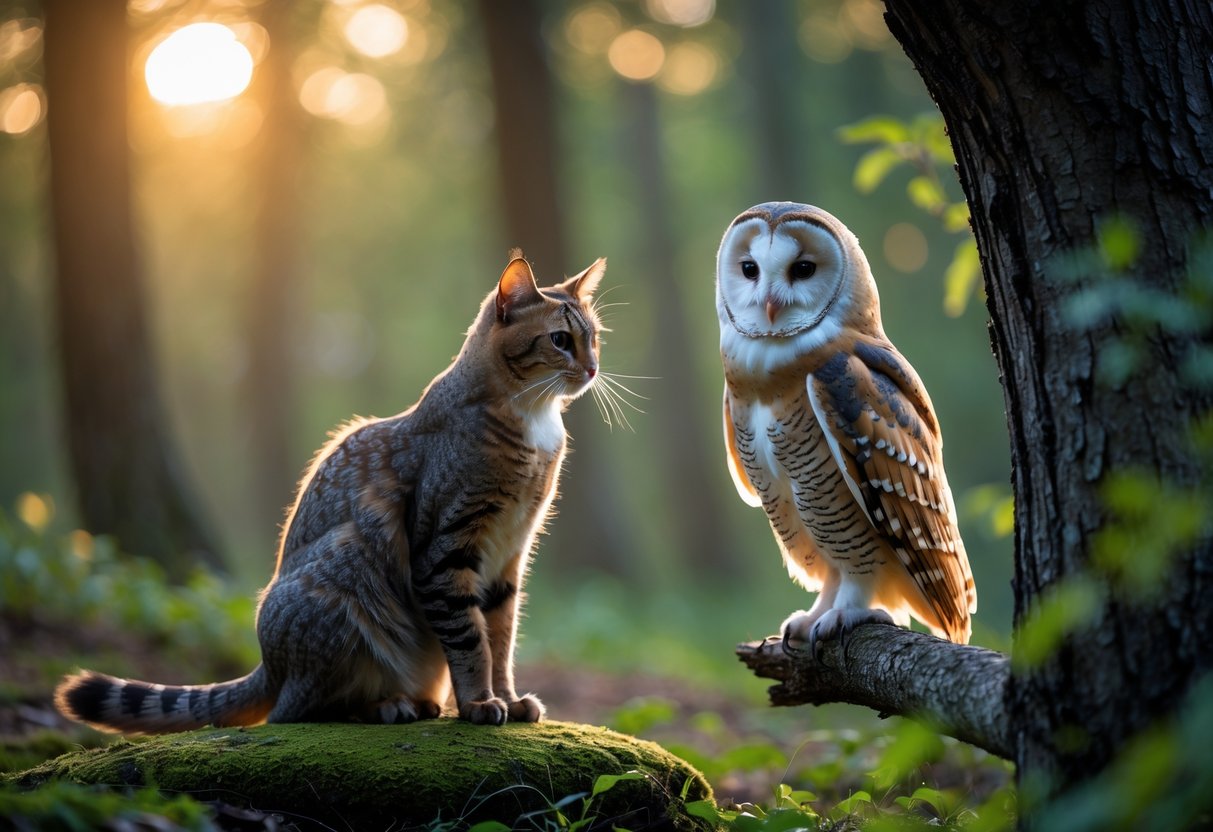
If you’ve got a cat and you spot owls outside, you need to think about safety. Owls hunt at night, and some bigger ones might even go after small cats.
Knowing how these animals behave around each other can help you keep your pet out of trouble.
Can Cats and Owls Really Be Friends?

Cats and owls come from totally different worlds, but sometimes, against the odds, they form odd little bonds. It all depends on their personalities, instincts, and how they interact.
If you pay attention to these things, you’ll get a better idea of whether a cat and owl might actually get along.
Famous Friendships: Cleo and Forbi
Take Cleo and Forbi, for example. Cleo’s a curious cat, and Forbi’s a tiny owl who’s gotten used to people.
Somehow, despite everything, they hang out and even play together. Their story’s a reminder that trust can grow between even the oddest animal pairings if they both feel safe.
You’ll see Cleo and Forbi sharing quiet moments and bursts of play. This mix of calm and energy seems to help them enjoy spending time together.
Their friendship isn’t the norm, but it shows that sometimes, animals just surprise us.
Predator and Prey Instincts
Both cats and owls hunt, but they go after different prey and use different tactics. Owls hunt small animals and usually swallow them whole.
Cats stalk and pounce, then bite their prey. Because of this, cats usually don’t see owls as food, and the feeling’s mutual.
Still, owls might attack if they’re hungry or feel threatened. Cats could fight back, but owls can just fly off, which gives them a big advantage.
If you’re thinking about letting a cat and owl interact, you need to keep an eye on their moods. Never put them together if either one seems stressed or agitated.
Personality Traits and Compatibility
Cats and owls both act pretty cautious and curious. They’re independent, too, and sometimes seem a bit annoyed or wary, especially when something’s new.
But if they get used to each other, they might actually become playful buddies.
Comfort and trust matter most. Owls trained in falconry, like the barn owl Gebra, usually stay more relaxed around other animals.
Active cats who love to explore might find an owl more interesting than threatening. If both animals respect each other’s space, their personalities sometimes click enough for a real friendship.
Want to see another example? Check out Fum and Gebra’s story.
Risks and Considerations When Introducing Cats to Owls
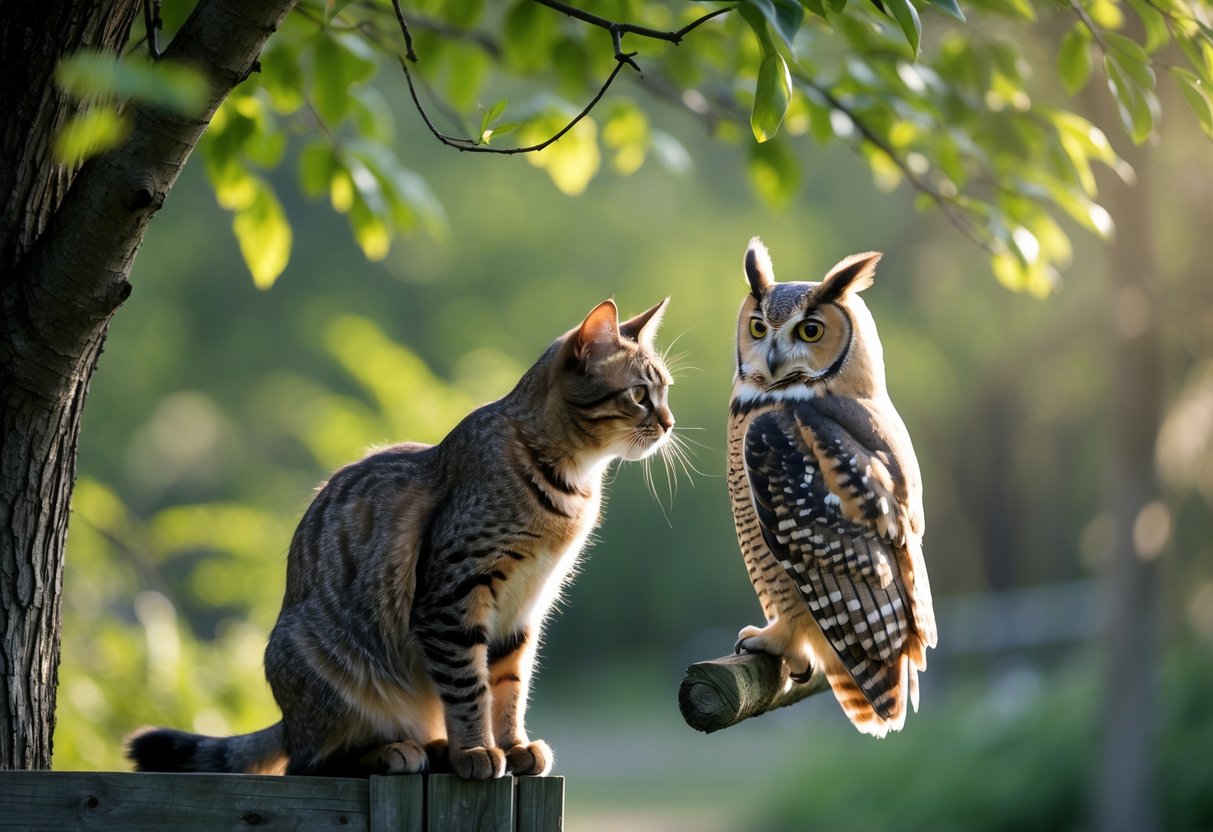
Introducing cats and owls takes a lot of caution because both can be unpredictable, especially in tight spaces.
You’ve got to keep safety in mind and know that wild and captive owls act very differently around cats.
The right setup can help keep both your cat and the owl safe.
Safety and Supervision Tips
Always stay close when your cat and an owl meet. Some owls, like Great Horned Owls, have powerful talons and could really hurt a small or young cat.
Even little owls might lash out if they feel threatened.
Try to set up meetings in a neutral, open space. Avoid cramped spots where either animal could feel cornered.
Keep your cat calm and don’t let anyone make sudden moves that could scare the owl or start a scuffle.
If you can, use barriers like a big cage or a screen to keep them apart. Watch both animals closely and be ready to step in if things get tense.
Paying attention to their body language can help you spot trouble before it starts.
Wild Vs. Captive Owls in Close Encounters
Wild owls act on instinct, and honestly, you never quite know what they’ll do around cats. They usually see cats as threats—or sometimes even as prey, especially if the cat’s on the smaller side or it’s late at night when owls get hungry.
Mixing wild owls and cats? That’s just asking for trouble. The risks shoot up fast.
Captive owls have spent more time around people, so they might handle cats a bit better. Still, even a trained owl can get spooked if a cat darts across the room.
Don’t ever leave your cat unsupervised with a captive owl. That’s just not worth the gamble.
If you pay attention to how each owl behaves, you can dodge a lot of problems. Sure, captive owls seem calmer, but those hunting instincts don’t just disappear.
Wild owls, on the other hand, might act way more aggressive or get stressed out if there’s a cat nearby.


