
So, you’ve spotted an owl hanging around your yard. That can feel pretty mysterious, right? Usually, when an owl visits your yard, it’s found a good spot for hunting or nesting—most likely because there are plenty of rodents nearby. Owls love quiet places with easy meals, so if one stops by, your yard is probably a healthy environment for them.
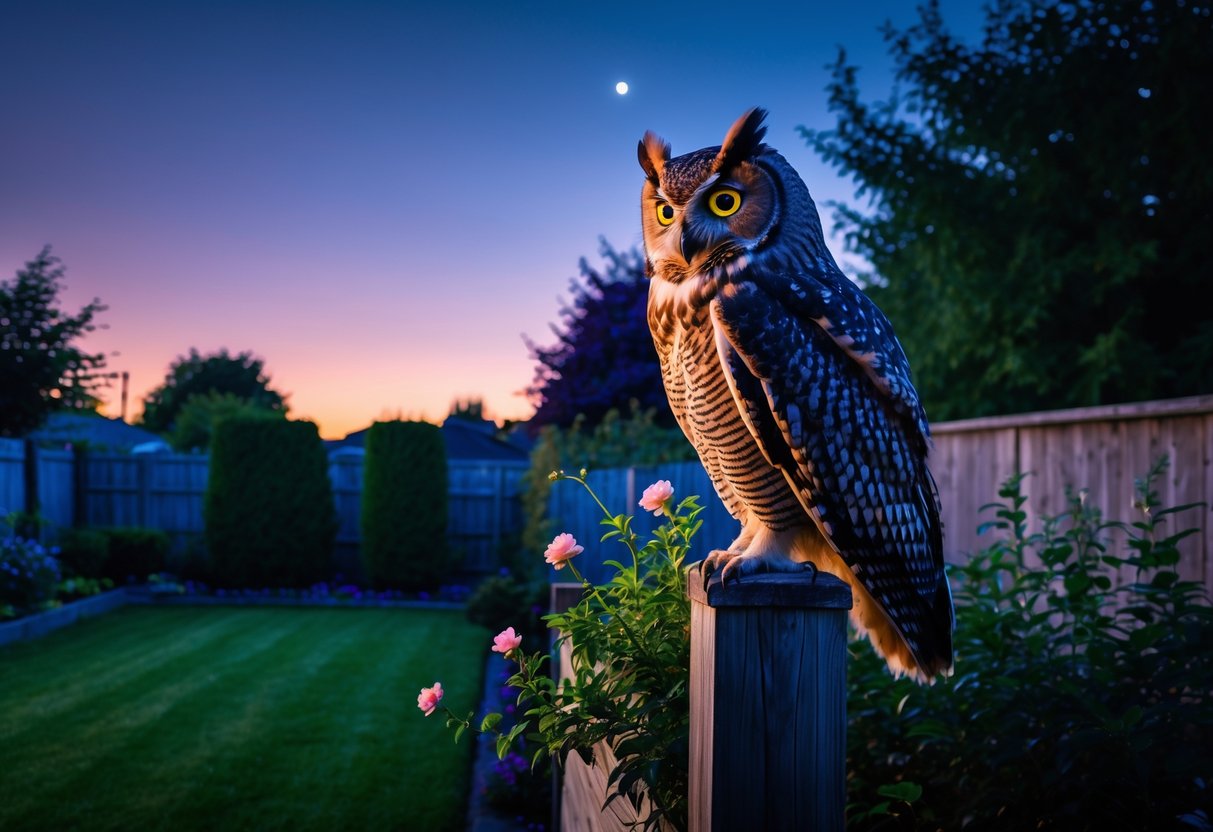
But there’s more to it than just food and shelter. Lots of people see owls as symbols of wisdom, protection, or even spiritual guidance. Whether you buy into those meanings or not, having an owl around feels special and adds a little magic to your outdoor space.
When you know why owls visit, it’s easier to appreciate these quiet, watchful guests.
What It Means When an Owl Visits Your Yard

An owl’s visit can mean a lot of things, depending on your perspective. Some people tie these birds to wisdom, change, or even spiritual messages. Owls have deep roots in traditions and stories all over the world.
Of course, owls also come for practical reasons that affect you directly.
Symbolic and Spiritual Meanings of an Owl Sighting
People often see owls as symbols of wisdom or deep knowledge. When you spot one near your home, maybe it means you’re gaining insight or facing a change in your life. Some folks think owls deliver spiritual guidance or keep a watchful eye on you.
In some cultures, an owl’s visit signals protection or blessings ahead. Others say it’s a nudge to trust your gut or look out for hidden truths. Sometimes, an owl shows up right when you’re reaching a personal milestone or starting something new.
Cultural Beliefs and Superstitions About Owls
All around the world, people have attached different meanings to owls. Native American tribes like the Apache linked owls to death or the afterlife, but other tribes saw them as brave spirits or protectors.
Ancient Greeks saw owls as signs of victory and wisdom—they even connected them to Athena, the goddess. Meanwhile, Romans usually thought an owl’s call meant bad luck or danger. In parts of Europe, people respected owls for helping with love or fresh starts.
Of course, these are just cultural stories. Owls don’t actually bring luck or harm.
Why Owls Are Attracted to Yards
Owls show up in yards because they find food and shelter there. If you’ve got trees, gardens, or quiet corners, owls might come by to hunt rodents or other small creatures. Some species even prefer swampy or wet spots near homes.
Barred owls—pretty common in backyards—sometimes hoot during the day, especially when it’s cloudy. They look for safe nesting spots. When an owl sticks around your place, it’s usually because your yard feels like a good home or hunting ground.
If you keep your yard a bit wild and natural, you’ll probably see more owls and other wildlife.
Understanding Owls and Their Behavior

Owls are fascinating. They might show up in your yard for all sorts of reasons. Each species acts differently, and they play big roles in the environment.
You can welcome them safely, or, if you’d rather not have them around, you can gently discourage them.
Types of Owls Commonly Found in Backyards
Depending on where you live, you might spot a few different owl species near your home. Some of the usual backyard visitors include:
- Barred Owl: Medium-sized, with dark bars across its chest. You’ll usually find them in wooded spots near homes.
- Barn Owl: Pale, heart-shaped face and light coloring. They often nest in barns or sheds.
- Great Horned Owl: These are bigger and have those “ear” tufts. They hunt all kinds of prey, from small mammals to birds.
Each owl brings its own habits and sounds. Barred owls hoot softly, while barn owls might screech. If you know which owl you’re seeing, you can figure out why it’s there and what it might need.
The Role of Owls in Local Ecosystems
Owls work as natural pest controllers in your neighborhood. Since they eat mostly rodents and small animals, they help keep those populations in check.
This benefits your yard by reducing plant damage and cutting down on diseases that rodents carry.
They’re also part of the food chain, acting as both predator and prey. Owls help keep the local ecosystem balanced.
Honestly, you could think of them as quiet wildlife helpers, keeping nature in check right outside your door.
How to Encourage or Deter Owls in Your Yard
If you want owls to visit, focus on providing food and shelter.
Owls love yards with:
- Plenty of rodents to hunt.
- Safe nesting spots—think trees, old nests, or even a quiet shed.
- Easy water access from ponds or a birdbath.
Try leaving some wood piles, or maybe set up an owl box nearby. That can make your yard more inviting.
But what if you’d rather not have owls hanging around?
Start by controlling rodent populations—secure your trash and get rid of leftover food.
Trim back branches where owls like to roost. You could also try visual deterrents like scarecrows or those motion-activated lights. Sometimes, even a shiny object works.
Just keep in mind, owls are protected by law. Stick with humane methods if you need to manage their presence.
Curious about more ways to handle owls near your home? Check out how to manage owls in your yard.


