
If you’re hoping to hear owls, you’ll have the best luck in late winter—think January or February.
Owls get especially vocal then, calling out to find mates and stake their territory. On cold, clear nights, you might notice their hoots carrying farther through the still air.
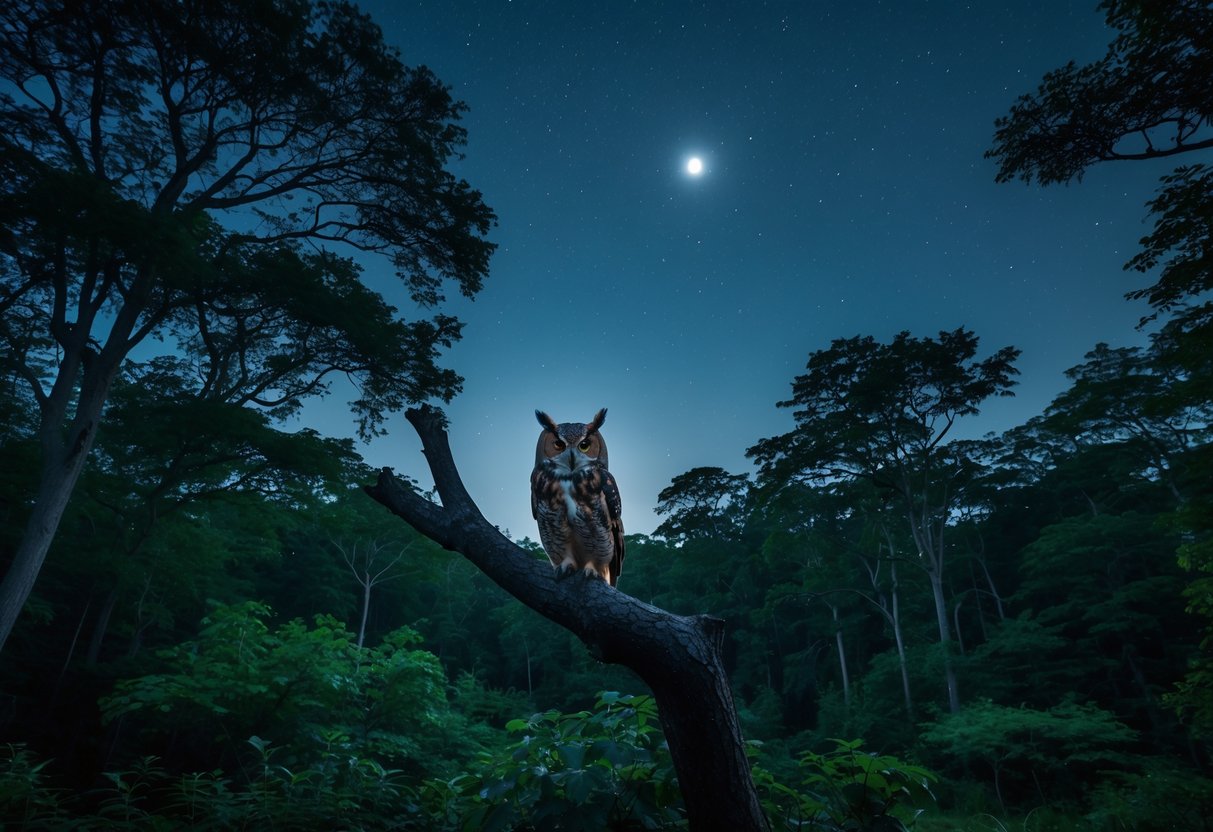
Owls also tend to sing just before sunset and again before sunrise.
In autumn, you’ll hear some species as they start picking out their winter spots.
Knowing when owls get active helps you catch those mysterious calls on your nighttime walks.
If you’re curious about owl sounds or their habits, you’re in for a treat—there’s a lot to discover about the best times and spots to listen.
You might be surprised by how much you can pick up once you know when to tune in.
Best Times to Hear Owls Calling

Owls call at different times of night, depending on their species and the season.
Some get loud right after sunset, while others start up in the early morning hours.
The time of year really changes how much you’ll hear them hoot.
Dusk and Early Evening Activity
Owls often get busy just after sunset.
Species like the great horned owl and barn owl start calling around then.
Their hoots help them mark territory or find a mate.
You might also catch barred owls and screech owls calling between dusk and early evening.
The air is usually calm, so their sounds travel well.
If you want a good shot at hearing owls early in the night, pick a quiet spot with little wind.
You’ll probably hear a nice mix of calls at this time.
Midnight to Pre-Dawn Owl Hooting
Owls don’t quiet down after evening.
Actually, a lot of species get even more vocal from midnight to dawn.
Long-eared owls and great horned owls call a lot during these hours.
They hoot before dawn to claim roosts or check on their territory.
The quiet night makes their calls stand out.
You might hear deep hoots or sharp screeches from great horned owls.
If you’re out late, listen for those isolated calls—still nights work best for picking up owl sounds before sunrise.
Seasonal Variations in Owl Vocalizations
Owls change how much they hoot with the seasons.
You’ll hear the most calls in late winter and early spring.
That’s when they’re finding mates or picking out territories.
Great horned owls start calling a lot from November through March.
Barred owls and screech owls also get chatty in autumn and winter.
In summer, they quiet down while caring for their young.
Late winter is known as “hooting season” because so many owls call to attract mates.
If you’re hoping to hear lots of owl hoots, this is the time to go owling.
Want to know more about why owls hoot more in winter? Check out this guide to owling in late winter.
Notable Owl Species and Their Nighttime Habits

When you’re out listening for owls, you’ll notice each species has its own quirks.
Some, like the Great Horned Owl, use deep hoots to claim their space.
Barred Owls? They’re more talkative and keep the conversation going all night.
Screech and Barn Owls have their own distinct sounds that really stand out once evening hits.
Great Horned Owls: Powerful Voices in the Night
Great Horned Owls show up just about everywhere in North America.
You’ll recognize their deep, rolling hoots from mid-September through early spring.
Their calls are loud and clear, making them pretty easy to pick out in the darkness.
They use those booming voices to claim territory and attract mates.
Listen for their classic “hoo-hoo hoohoo hoo hoo” pattern.
Even though most people think they’re only active at night, you might hear them during the day in winter.
If you’re near a forest or open fields, try listening around dusk or just after sunset.
Great Horned Owls are raptors, so they hunt other animals for food.
Their sharp hearing helps them track down prey in the dark.
Barred Owls: The Most Talkative Regulars
Barred Owls are easy to spot by ear thanks to their famous call.
You might hear something like, “Who cooks for you? Who cooks for you all?”
Their voices are softer and more varied than Great Horned Owls.
These owls stay active at night but often call during the day too.
They prefer dense forests but seem happy enough in suburban spots.
Barred Owls don’t just hoot—they cackle, gurgle, and make a noisy mix that almost sounds like they’re chatting.
If you want to find Barred Owls, listen in wooded areas near water.
Their busy nighttime chatter usually gives them away, even if you can’t spot them.
Screech and Barn Owls: Unique Evening Calls
Screech Owls call out in two main ways. The Eastern Screech Owl makes a descending “whinny” or sometimes a fast trill.
They use these sounds to mark their territory or try to attract a mate. You’ll probably catch their calls in suburban neighborhoods or forests east of the Rocky Mountains.
Barn Owls, on the other hand, sound nothing like that. Instead of hooting, they let out a sharp, eerie screech—honestly, it might startle you the first time you hear it.
This shriek warns other animals to keep their distance. Barn Owls also use it to communicate with each other.
When they hunt, Barn Owls fly low over fields or around old barns. If you’re nearby, listen closely in those spots—they might be nesting there.
Both types of owls mostly get active after sunset. Still, you might hear their strange calls at any hour of the night.
If you ever catch those sounds, it’s a reminder of just how many different kinds of owls might be nearby.


