
So, you want to see more owls in your UK garden? The trick is to make your space feel safe and tempting, with plenty of food and shelter.
Put up owl nest boxes in quiet corners, encourage rough grassland to boost natural prey like mice and voles, and skip the rat poison—it’s bad news for these beautiful birds. When you think about what owls need for roosting, hunting, and nesting, you’ll naturally make your garden more inviting.
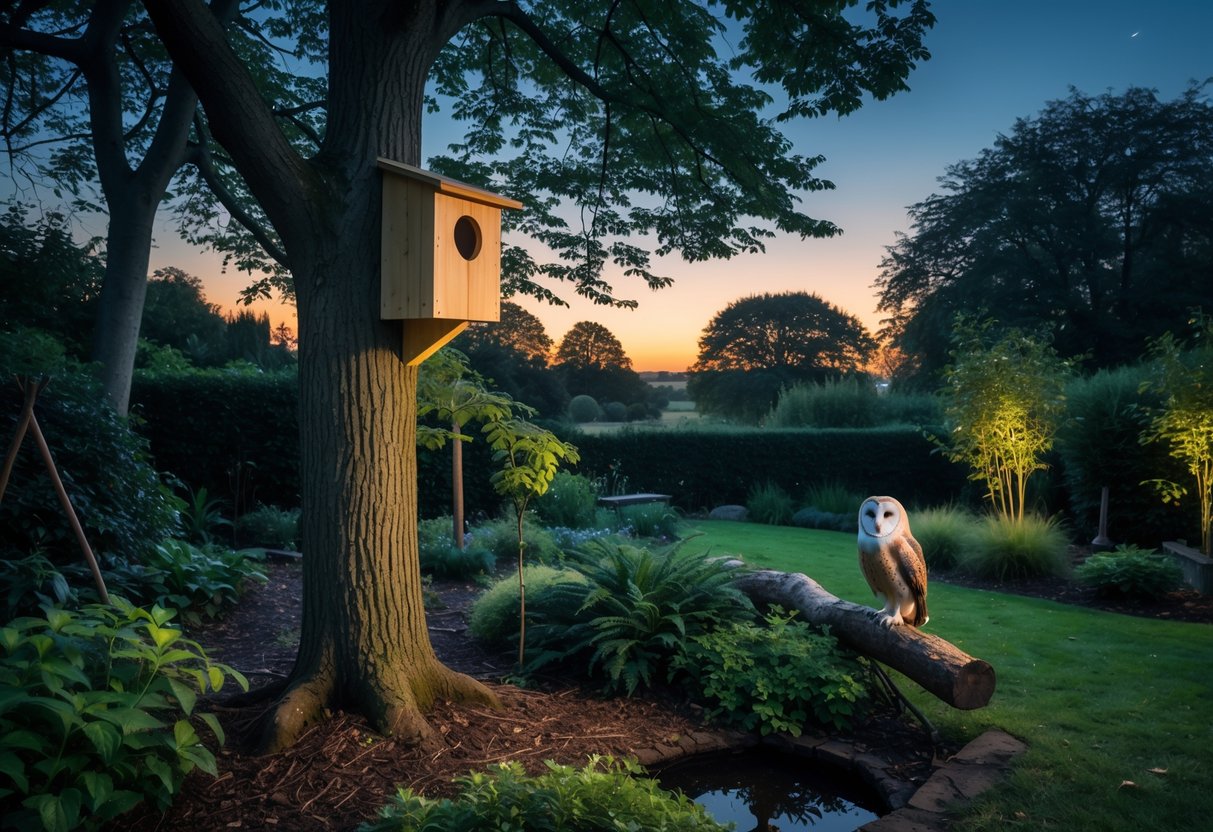
You might want to add things like birdbaths, perches, or thick shrubs for cover. Choosing a good spot for owl boxes—maybe open countryside or a lone tree with a clear flight path—helps owls feel safe.
Even small changes, like turning off bright lights at night, can make a big difference. Owls might stick around longer if you do.
You’ll help other wildlife too, and you might get to watch these amazing birds up close. Want more advice? Keep reading, or check out more on nest boxes and wild Barn Owls here.
Essential Steps to Attract Owls to Your Garden
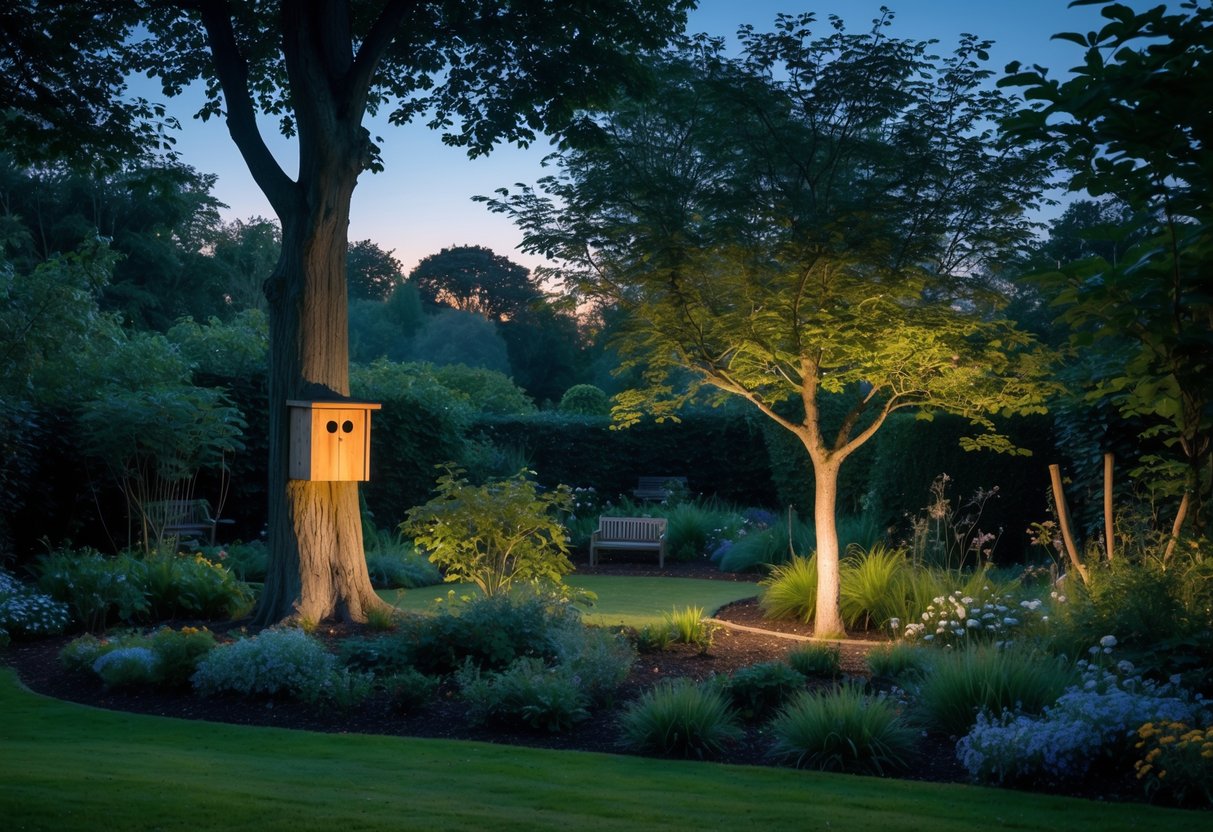
Focus on making your garden a place where owls can hunt, find shelter, and raise their young.
Support a healthy food supply by encouraging mice and voles, and keep things calm and dark for these mostly nocturnal birds.
Creating Ideal Foraging and Hunting Areas
Owls hunt best in open spaces. Let some grass grow long, or plant a mini meadow so mice and voles have somewhere to live.
Ditch the pesticides—they’ll just reduce the small mammals owls rely on.
You can mow paths through the grass or add low shrubs where owls can swoop down for prey. Try to keep these hunting spots free from too much foot traffic.
This makes your garden a natural hunting ground, and owls might return often.
Setting Up Nesting Boxes and Natural Shelters
Old hollow trees aren’t common anymore, so put up a nest box designed for barn or tawny owls.
Mount the box high up, maybe 3 to 5 meters, on a solid tree or post.
Face the entrance away from strong winds and direct sun. That keeps it comfy inside.
Pick a quiet spot—owls need peace to roost and raise chicks. If you have tree hollows nearby, those can help too.
Supporting a Rodent-Friendly Environment
Owls rely on small mammals like mice and voles for food. Help these creatures thrive by letting natural food and hiding spots build up.
Leave piles of leaves or logs where mice can hide and forage.
Skip the rodenticides—owls can get poisoned if they eat affected rodents.
Encourage a healthy rodent population, and you’ll keep the food chain going for any visiting owls.
Reducing Light and Noise Disturbance
Owls love the dark and quiet. Use motion-activated lights instead of leaving bright ones on all night.
Keep lights away from nest boxes and hunting areas, or owls might avoid the spot.
Try to cut down on loud noises near those areas.
A calm, dim garden feels safer for owls and ups your chances of seeing them.
You can find more about owl-friendly gardens and nest box tips here.
Encouraging a Healthy, Owl-Friendly Ecosystem

Attracting owls isn’t just about putting up a box. You’ve got to think about what they eat, where they hunt, and how to keep everything in balance.
A few smart choices can support owls and all kinds of wildlife in your garden.
Avoiding Rodenticides and Harmful Chemicals
Rat poison or rodenticides might seem like a quick fix, but they’re dangerous for owls. These chemicals build up in rodents and end up hurting or killing the birds that eat them.
It’s sad, but many barn owls struggle to survive because of this.
Try safer options, like traps, or let natural predators (like owls!) handle pests.
Skip insecticides and herbicides too. They wipe out insects and small animals that owls need.
A chemical-free garden protects the whole food chain.
Promoting Natural Pest Control
Support natural pest control by making your garden a haven for owls. They’ll eat mice, voles, and other small rodents if you keep a steady supply around.
Leave rough grass patches and avoid mowing everywhere. These spots give small mammals a place to live.
Let some leaves and dead wood stay put—these attract insects and little creatures, which in turn feed the owls.
Enhancing Local Wildlife Diversity
Owls really do best when there’s a wide mix of animals and plants around. If you want to boost local wildlife, try planting native trees and shrubs.
These plants offer up shelter and food for all sorts of critters. When you add plants with berries and flowers, you’ll see even more insects, birds, and small mammals showing up.
More animals hanging around means more food for owls, and you’ll end up with a pretty lively ecosystem right in your own garden. Supporting local wildlife doesn’t just help owls—it keeps your garden buzzing with life, no matter the season.
Curious about more ways to bring owls to your garden? Check out How to attract Owls to your garden. And if you’re wondering about avoiding rat poison, there’s good info at the Barn Owl Trust.


