
Owls have grabbed our attention for centuries. Their mysterious looks and silent ways just draw people in. Ever wonder why folks call them magical?
Owls seem magical because so many cultures believe they have special powers—wisdom, prophecy, and even links to the spirit world. That sets them apart from other birds in stories and legends.
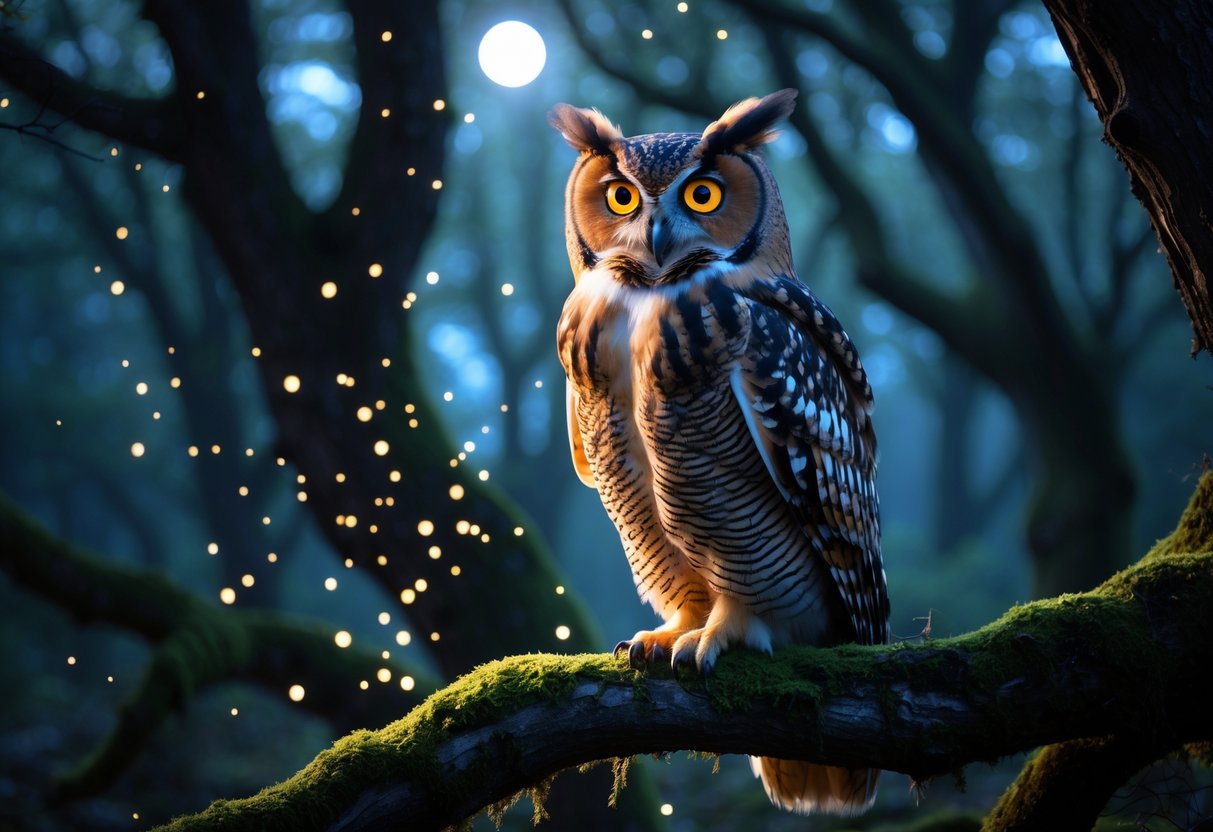
When you start digging into how different cultures see owls, you’ll notice they pop up in all sorts of roles. Some people think of them as wise guides. Others say owls bring warnings or even messages from the other side.
Their silent flight at night and those big, watchful eyes just add to the magic. It’s no wonder they’ve earned such a reputation.
If you’re curious about why owls keep popping up in our imaginations, stick around. Let’s look at what makes them feel so magical to people everywhere.
You’ll see how owls became powerful symbols and why they still hold a special place in our hearts.
The Magical Allure of Owls in Myth and Legend

Owls have always fascinated people. Their silent flight, glowing eyes, and strange habits just make them stand out.
They show up in stories as wise creatures, messengers, or protectors. Their odd traits turn them into symbols of secrets, magic, and sometimes even omens that make you shiver.
Owls as Symbols of Wisdom and Secrets
It’s hard to miss how often people link owls to wisdom. That goes way back to the Little Owl (Athene noctua), the bird that hung out with the Greek goddess Athena.
Ancient Greek coins actually showed Athena’s face beside an owl. Because of that, folks started seeing owls as smart and insightful.
Owls stay active at night and see in the dark, so people think of them as keepers of secrets. Their quiet flight just adds to that mysterious vibe, as if they know something you don’t.
So next time you spot an owl, you might remember it stands for hidden knowledge and sharp perception.
Owls in Folklore and Superstitions
Owls carry strong magical meanings in lots of cultures, but not always in a good way. In Indian folklore, people see owls as helpful and even prophetic.
The Inuit tell playful stories about the Snowy Owl. But in some parts of Africa, folks tie owls to sorcery or bad luck.
Maybe you’ve heard the old belief that an owl hooting near your house means bad news or even death. That shows up in European and Appalachian stories.
Some people put owl feathers in their homes for protection against evil or sickness. These mixed beliefs make owls powerful magical symbols with meanings that change from place to place.
The Owl’s Place in Popular Magical Fiction
Owls show up all over books and movies with magic. Think about it—barn owls or snowy owls often deliver secret messages or help out characters in sneaky ways.
Their reputation for wisdom just fits right in with magical stories. And their ability to turn their heads almost all the way around or fly without a sound? That just adds to their mystique in fiction.
If you’ve read or watched anything with magical creatures, you’ve probably noticed owls always get that role—magic, knowledge, and a bit of mystery.
For more about owls in magic and myth, check out Owl Folklore and Legends.
Enigmatic Traits and Unique Species That Inspire Wonder

Owls have traits that really make them stand out. Their silent flight, sharp senses, and all those different species—there’s just nothing quite like them.
You’ll find their skills and variety pretty wild compared to other animals.
Silent Flight and Mysterious Night Hunts
Owls fly in almost total silence. Their feathers are soft and have these fringed edges that muffle sound.
That lets birds like the barn owl and great horned owl sneak up on prey without a peep.
At night, they hunt with serious skill. Their silent flight means they can swoop in on mice or insects before the prey even knows what’s happening.
Barred owls and snowy owls pull off these stealthy attacks in forests or open fields.
Silent flight isn’t just cool—it’s what makes them such good hunters in the dark. You’ll see owls like the eagle owl and great gray owl mostly out at night, relying on that stealth.
Special Senses and Adaptations
Owls have senses built for the night. Their big eyes point forward, which gives them great depth perception.
This helps owls like the little owl and Tyto alba spot prey from far away, even when it’s barely light out.
Their ears are wild, too. They can pick up the tiniest sounds, thanks to facial shapes that funnel noise right to them.
Barn owls have ears at different heights, so they can tell exactly where a sound comes from. That makes nighttime hunting way more precise.
Owls can turn their heads nearly all the way around. This lets them scan their surroundings without moving their bodies much—pretty handy if you ask me.
Notable Owls Across the World
Owls live all over the world. Honestly, you might be surprised by just how different they can be.
The great horned owl stands out in North America. People notice its strength and big size right away.
Meanwhile, the burrowing owl digs homes underground in open fields. That just shows how flexible owls really are.
The snowy owl, with its striking white feathers, braves the cold Arctic regions. It’s hard not to admire how it handles such harsh weather.
Europe has the little owl, which looks small but acts surprisingly fierce. Then there’s the great gray owl—its huge facial disk is something you don’t forget.
Every species brings something unique to the table. That’s a big part of what makes owls so magical.
Curious about why owls fascinate so many people? Check out their enigmatic traits and unique species.


