
Ever wondered if owls actually catch rats? You’re definitely not the only one. Owls make impressive hunters with their silent flight and sharp eyesight. Yes, owls catch rats—and some nights, they’ll eat several rodents. This natural instinct helps control rodent numbers.
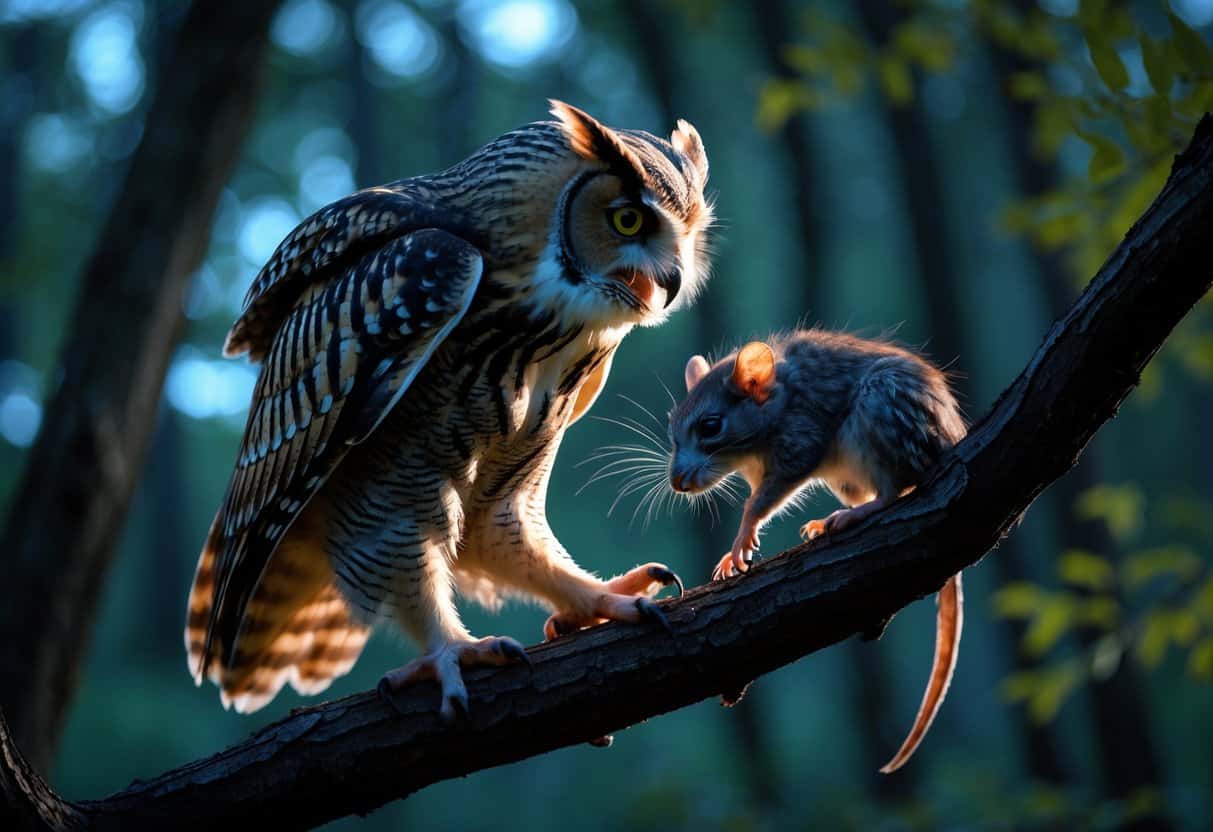
You might assume owls only go after small animals like mice. But plenty of species, like barn owls and tawny owls, hunt rats as well.
They usually hunt in open areas where rats are easier to spot and catch. Watching an owl swoop down and grab a rat is honestly pretty fascinating.
If you attract owls to your area, they can help reduce rat problems without poison. Curious about how owls catch rats or how to encourage these silent hunters to stick around? Let’s dig in.
How Owls Hunt and Catch Rats
Owls use some wild skills to hunt rats, mostly at night. They depend on sharp hearing and that nearly noiseless flight to sneak up on prey.
Different owl species have their own hunting styles. This lets them catch rats in all sorts of places, from open fields to dense woods.
Nocturnal Hunting Habits
Most owls hunt at night, so you’ll spot them moving under darkness. Their huge eyes pick up even the slightest movement in low light.
Owls start hunting just after sunset and often keep going until dawn. This schedule helps them avoid daytime predators and competition.
Their wings barely make a sound, letting them glide close to rats without giving themselves away. Rats usually count on their ears to stay safe, so this stealthy approach gives owls a real edge.
Prey Detection and Capture Techniques
Owls rely on several senses to find rats. Their hearing, though, is next-level. They can pick up tiny sounds—like footsteps or chewing—even if a rat hides under leaves or snow.
Their vision helps them spot movement in the dark. Once they lock onto a rat, owls swoop down fast and snatch it with their talons.
Barn owls often swallow rats whole right after catching them. Great horned owls, being bigger, sometimes tear their prey apart first.
Owls can spot rats from a good distance and adjust their flight to match the rat’s every move. That kind of precision makes them really effective hunters.
Differences Between Barn Owls and Great Horned Owls
Barn owls and great horned owls both eat rats, but they hunt in pretty different ways.
Barn Owls
- Prefer open fields and grasslands.
- Use amazing hearing to find rats hidden in thick grass.
- Usually swallow rats whole, thanks to their smaller size.
- Hunt mostly in the evening and early night.
Great Horned Owls
- Larger and stronger birds.
- Hunt in forests and even cities where rats sneak into buildings.
- Use powerful talons and often tear prey apart.
- Sometimes hunt late at night or even during the day if food runs low.
Understanding these differences gives you a better idea of how each owl adapts to different places. For more about barn owls and rodent control, check out this Barn Owl rodent control page.
Owls’ Role in Controlling Rats and Other Rodents
Owls act as expert night hunters, helping keep rats and mice in check. Their hunting makes a difference for your garden, farm, or property by cutting down on pests naturally.
They work quietly and efficiently, balancing the ecosystem without needing poison or traps.
Predator-Prey Relationships in the Food Chain
Owls play a big role as rodent predators in the food chain. They hunt at night, eating rats, mice, voles, and other small critters.
A family of barn owls can eat around 1,000 rodents in just one season. When owls live nearby, you’ll notice fewer rats and mice around.
They use sharp hearing and silent wings to catch prey. Since owls get most of their water from what they eat, they rarely need to look for extra water. Their natural hunting keeps pests under control and leaves other wildlife alone.
Benefits to Agriculture and Natural Pest Control
Owls help out in fields and gardens by hunting rodents, saving you money and protecting your crops. Barn owls work especially well in vineyards, farms, and grassy spots.
They catch pests like pocket gophers and voles, which can cause a lot of crop damage.
Attracting owls costs less than traps or poison and keeps the environment safer. You can help by putting up nest boxes or leaving trees and open areas they like.
That way, owls might stick around and help keep rodent problems in check—naturally.
Comparison With Hawks and Other Predators
Owls and hawks both eat rodents, but their hunting styles couldn’t be more different. Owls prefer the night, gliding silently and listening for the tiniest sounds.
Hawks, on the other hand, hunt in broad daylight. They depend on their razor-sharp eyesight to spot prey from above.
Owls usually go after smaller rodents like rats and mice. Hawks sometimes chase larger animals, like rabbits or even squirrels.
Both birds do a great job controlling pests. Still, owls seem better suited for quiet, nighttime rodent patrol.
Having both birds nearby? That actually covers more ground, since they hunt at different times and target different prey.
If you want to dive deeper into how owls help with rodent control, check out this article: Owls Contribute to an Integrated Pest Management Program. Or, see how barn owls help combat rats in plantations.


