
Owls are pretty secretive, aren’t they? You might wonder where they actually rest during the day.
Most owls sleep in quiet, sheltered places—think trees, rocky ledges, or sometimes even underground, depending on the species. These spots help them stay hidden from predators and out of sight while they recharge.
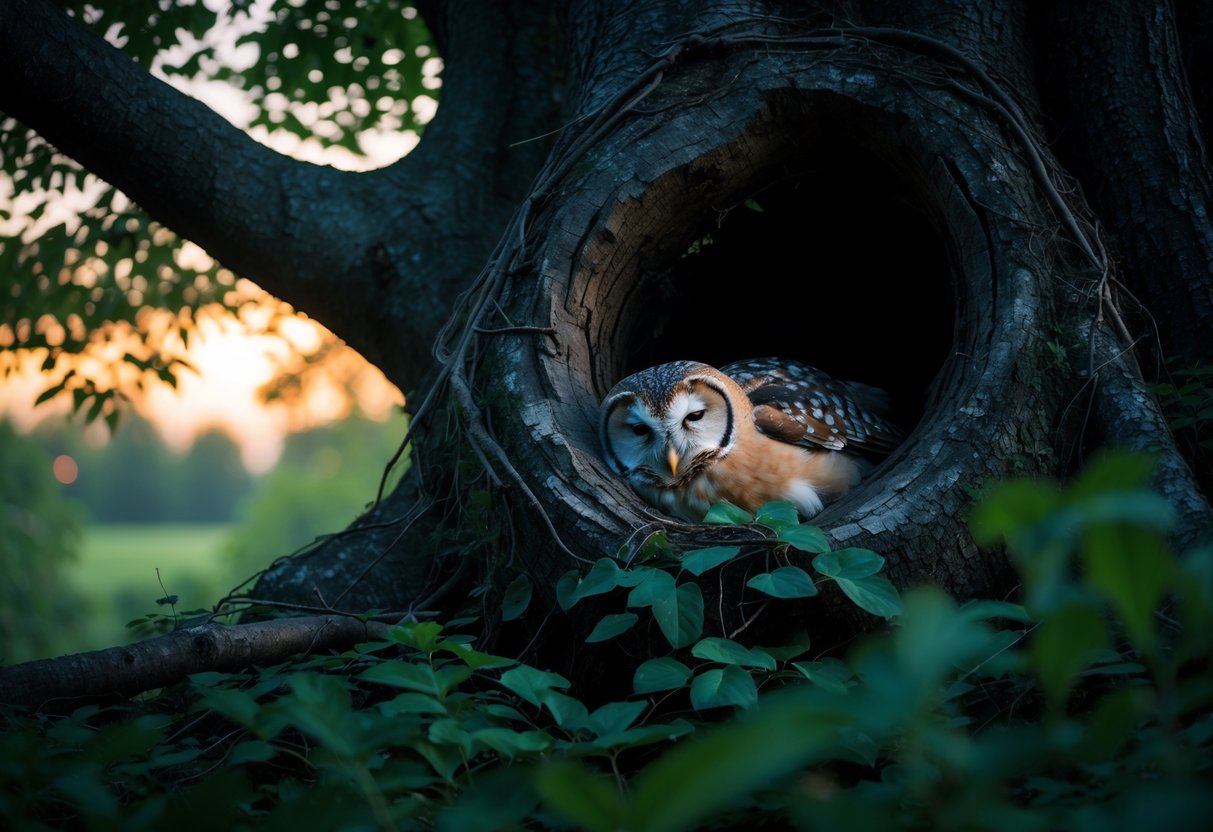
It’s tough to spot a sleeping owl because they pick places that shield them from noise and danger. Some smaller owls curl up in tree cavities or birdhouses.
Bigger owls usually go for high branches. The burrowing owl? That one’s a bit odd—it sleeps underground in tunnels other animals have dug out.
Getting to know where owls sleep really opens up a window into their mysterious lives. Different species have their own preferences for napping spots, and each choice has a reason behind it.
Where Do Owls Sleep in the Wild?

Owls pick sleep spots that keep them safe and out of sight during daylight. Their choices change based on their species and age.
Some sleep high in trees, others tuck away in caves, and a few even nap underground. Their sleeping posture also shifts as they grow up.
Roosting Sites and Typical Locations
Most owls rest in trees during the day. They like hollow trunks, thick branches, or leafy cover that hides them from predators.
The Eurasian eagle owl often chooses rocky ledges, while the barred owl prefers dense forests.
Some species go for unusual places. Burrowing owls nap underground in tunnels. The snowy owl might just plop down on the ground or sit on a low branch, since the Arctic doesn’t have many trees.
Owls don’t usually use nests for sleeping unless they’re raising chicks. They pick a roost instead—a hollow, a quiet branch, or a rocky nook. This helps them stay cool and safe from the midday heat.
Sleeping Posture and Perching Behavior
Adult owls usually sleep standing on one leg or both, gripping a branch with sharp claws. Sometimes they tilt or tuck their heads back to rest their necks.
They stay upright so they can react fast if something startles them.
Baby owls can’t stand well yet. They nap on their stomachs, heads often turned to the side, because their necks are still weak and their heads are heavy.
Owls have a special back claw called the hallux. It grips the perch tight, so they don’t fall while sleeping. This claw’s especially helpful for young owls learning to balance in trees.
Differences Between Adult and Juvenile Sleep
Baby owls sleep lying down, kind of like human babies. This helps their brains and bodies develop.
They sleep in short bursts, wake up to eat, then drift off again.
Adults sleep longer—sometimes for 10 to 12 hours, mostly during the day. You’ll find them perched up high, often in thick leaves or inside hollow trees for added safety.
When it gets cold, some smaller owls huddle together to stay warm. Babies usually nap close to their siblings, but adults mostly sleep alone.
If you’re curious, check out this guide on owl sleeping behavior for more details.
What Influences Owl Sleeping Patterns?
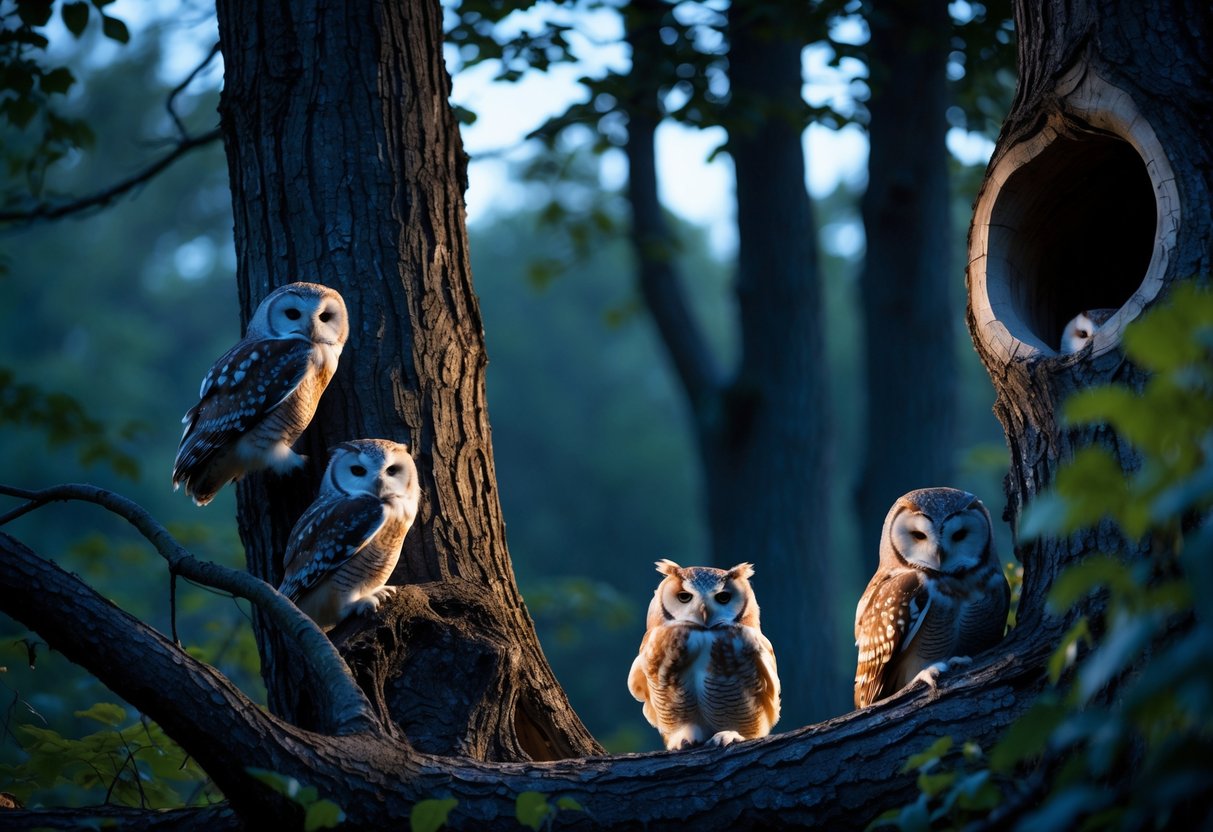
Owls’ sleeping habits depend on their habitat, what they eat, and their species. Their behavior changes based on when they hunt, how they stay safe, and when they need to rest.
Different owls have their own sleep schedules and favorite spots.
Nocturnal vs Diurnal Species
Most owls are nocturnal—they sleep during the day and hunt at night. The barn owl, for example, gets active after dark.
These night owls have big eyes for seeing in low light.
Some, like the snowy owl, are diurnal. They sleep at night and move around during the day.
There are also owls with mixed habits, called crepuscular or cathemeral. They’re active at dawn, dusk, or whenever prey is around. The barred owl sometimes follows this flexible routine.
Sleep Cycle and Adaptations
Owls experience REM sleep, just like humans, but their eyes don’t move inside their heads. Since their eyes are fixed, they turn their heads to look around—sometimes up to 270 degrees!
Their sleep cycles include short REM periods that get longer over time. Young owls sleep lying down to rest their growing muscles, while adults usually perch upright.
During REM sleep, their bodies relax, but they stay alert enough to wake up quickly if danger is near. This lets them rest but still react if something sneaks up.
How Do Owls Sleep Safely?
Owls usually pick quiet, hidden spots to sleep, tucking themselves away from predators. Small species like screech owls squeeze into tree cavities or birdhouses for extra protection.
Larger owls—think great horned owls—tend to rest high up in tree canopies. They seem to prefer the height, maybe for the view or just to stay out of reach.
Burrowing owls do things differently. They dig their own burrows or take over empty ones left by other animals, then sleep safely underground.
When owls perch, they grip branches tightly with their sharp talons. Even if they’re deeply asleep, they don’t just fall off.
Sometimes, especially in colder months, you’ll spot owls sleeping in groups. It’s a smart move—group sleeping helps them stay warm and look out for each other. Long-eared and great horned owls are known for this.
Curious for more? Check out this article about where owls sleep.


