
When you hear an owl cry at night, you’re catching a mix of hoots, whistles, or trills. Owls use these sounds to claim territory, attract a mate, or warn others about danger.
Every owl species has its own signature call. So, what you hear depends a lot on which owl happens to be nearby.
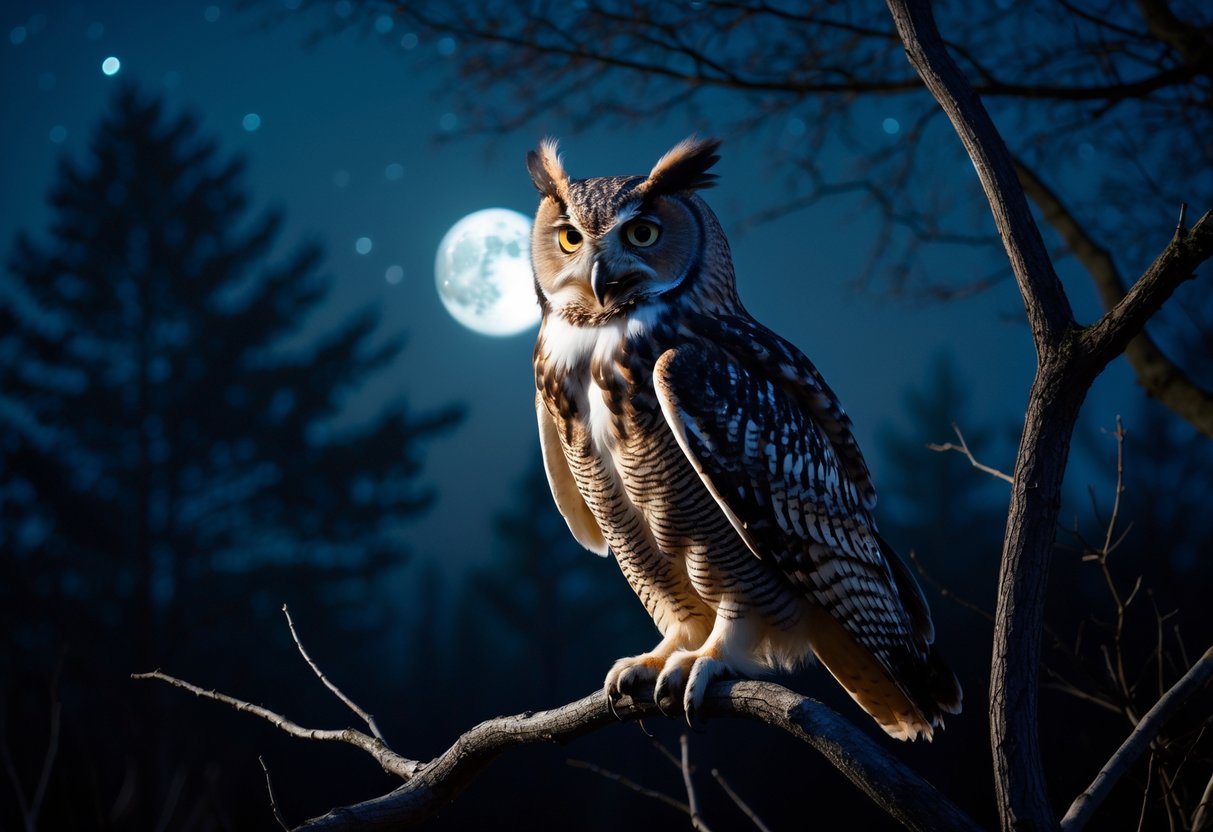
These nighttime sounds can feel mysterious, mostly because owls stay hidden after dark. But once you start picking up on what the calls mean, they’re honestly pretty fascinating.
Whether it’s a gentle hoot or a piercing trill, every cry gives you a peek into what’s going on in the owl’s world.
If you’ve ever wondered why an owl calls at night, or what all those different cries mean, you’re not alone. Let’s dig into how these birds chat with each other in the dark—and why their voices matter.
The Sounds Owls Make at Night

When you listen to owls at night, you’ll notice their calls are all over the place. You might hear hoots, screeches, trills, or even some downright spooky shrieks.
Each type of call means something different. Owls use them to communicate, protect their turf, or send a warning.
Types of Owl Cries and Calls
Owls don’t just go “hoo.” The Great Horned Owl, for example, lets out a deep hoot that echoes through the night.
Eastern Screech Owls make a high-pitched trill or a quick, horse-like whinny. Barn Owls? They’ll surprise you with a long, harsh shriek that sounds almost unreal.
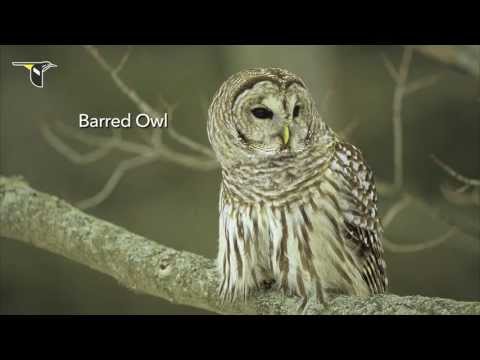
Barred Owls have a call that’s famous for sounding like, “Who cooks for you?” Their repertoire mixes hoots, cackles, and even a few gurgles.
Some calls are quick and sharp, while others repeat to grab attention. The variety makes it fun to try and guess which owl is around just by listening.
Differences Between Species’ Night Calls
Every owl brings its own voice to the night. The Barred Owl’s call stands out as a string of clear hoots, totally different from the Great Horned Owl’s steady, deep hooting.
Eastern Screech Owls go for trills and whinnies, which come across as softer and higher. Barn Owls don’t hoot at all—they scream.
If you know what to listen for, you can usually tell which owl is in the neighborhood. For example:
| Owl Type | Common Night Call |
|---|---|
| Great Horned Owl | Deep, steady hoots |
| Barred Owl | Repeated hoots like “Who cooks for you?” |
| Eastern Screech Owl | Trills and whinny-like calls |
| Barn Owl | Long, harsh shrieks |
Each call matches the owl’s size and habitat, so you can pick them out by ear if you pay attention.
Reasons Owls Cry at Night
Owls mostly cry out at night to claim territory or call to a mate. Night is when they’re busy, so their voices help them stay in touch.
They also use calls to warn others. Barn Owls shriek to scare off threats or other owls. Eastern Screech Owls trill to keep their families close.
You might even hear two owls going back and forth, almost like they’re having a heated conversation. These duets help mark their territory and keep rivals away.
So, those night cries can mean anything from flirting to laying down the law. If you’re curious about what a Barred Owl sounds like, check out their distinctive calls.
What Influences Owl Night Cries?
Owls shape their night cries using clever sounds and techniques that fit their needs and wild homes. These calls let them talk, mark territory, and find mates.
Let’s look at how owls make these sounds, why their calls travel so well at night, and what they’re really saying with each hoot or cry.
How Owls Create Sounds in the Dark
Owls use their syrinx, which sits at the base of their windpipe, to create those signature sounds. It’s a bit like our vocal cords, but built for birds.
They tweak pitch, rhythm, and volume by flexing muscles around the syrinx. That’s how they get such a range of calls.
The Great Horned Owl can boom out a deep “hoo-hoo,” while the Barn Owl goes for a sharp screech. Eastern Screech Owls keep it lighter, with soft toots or a high trill.
Since owls fly almost silently, their calls are sometimes the only way you’ll know they’re nearby. Their voices become their main way to communicate in the dark.
Acoustic Adaptations and Sound Waves
Owls figured out how to use sound waves to send their calls far through the night. Their facial disks act like built-in satellite dishes, focusing sound for both hearing and projecting calls.
This design helps their hoots cut through the night air, even in thick woods or out in the open. Barred Owls, for instance, have a call with just the right rhythm and pitch to really carry.
Owls adjust the pitch based on how far they want the call to go. Deep, low hoots—like those from a Great Horned Owl—travel farther, while soft, high-pitched calls are for chatting with neighbors.
At night, sound waves go farther since there’s less wind and heat to mess things up. That’s why owl calls can seem so loud and clear, even from a distance.
Role of Territory, Mating, and Communication
Your owl cries say a lot about who you are and what you want. Owls use their calls to claim territory, letting others know the spot’s already taken.
Males often hoot pretty loudly to chase off rivals and, honestly, to catch the attention of females. During mating season, you’ll probably notice more calls as owls look for partners.
Some owls, like Great Horned Owls, even duet. These duets help them keep their bond strong. If there’s a threat or a predator nearby, you might hear sharp warning calls.
Young owls—chicks—make different sounds. They screech or beg when they’re hungry, calling out to their parents.
It’s wild how many different cries owls use, depending on the situation and their age. Curious for more? Here’s a detailed guide on owl sounds.


