
Owls across the UK pick all sorts of places to nest, depending on their species. Barn owls usually go for old barns, buildings, or tree hollows, while others stick to dense woods or open farmland. If you know where owls like to settle in, you’ve got a much better shot at spotting them—or even making a safe spot for them yourself.
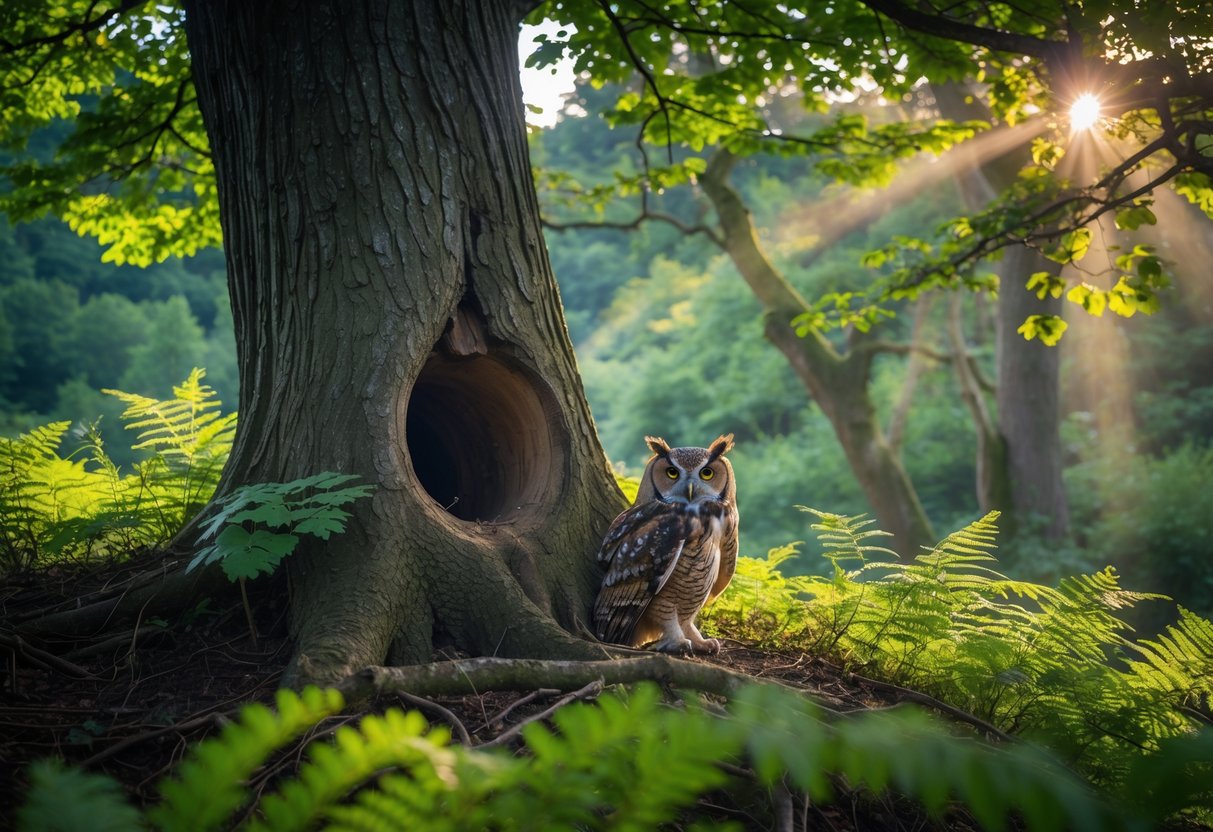
If you want to attract barn owls, it helps to put a nestbox inside a building or in the right kind of tree. Other owls, like tawny or long-eared owls, usually take over tree holes or old nests left by other birds.
Figuring out these favorite spots makes watching or helping owls way more rewarding.
Typical Nesting Sites for Owls in the UK
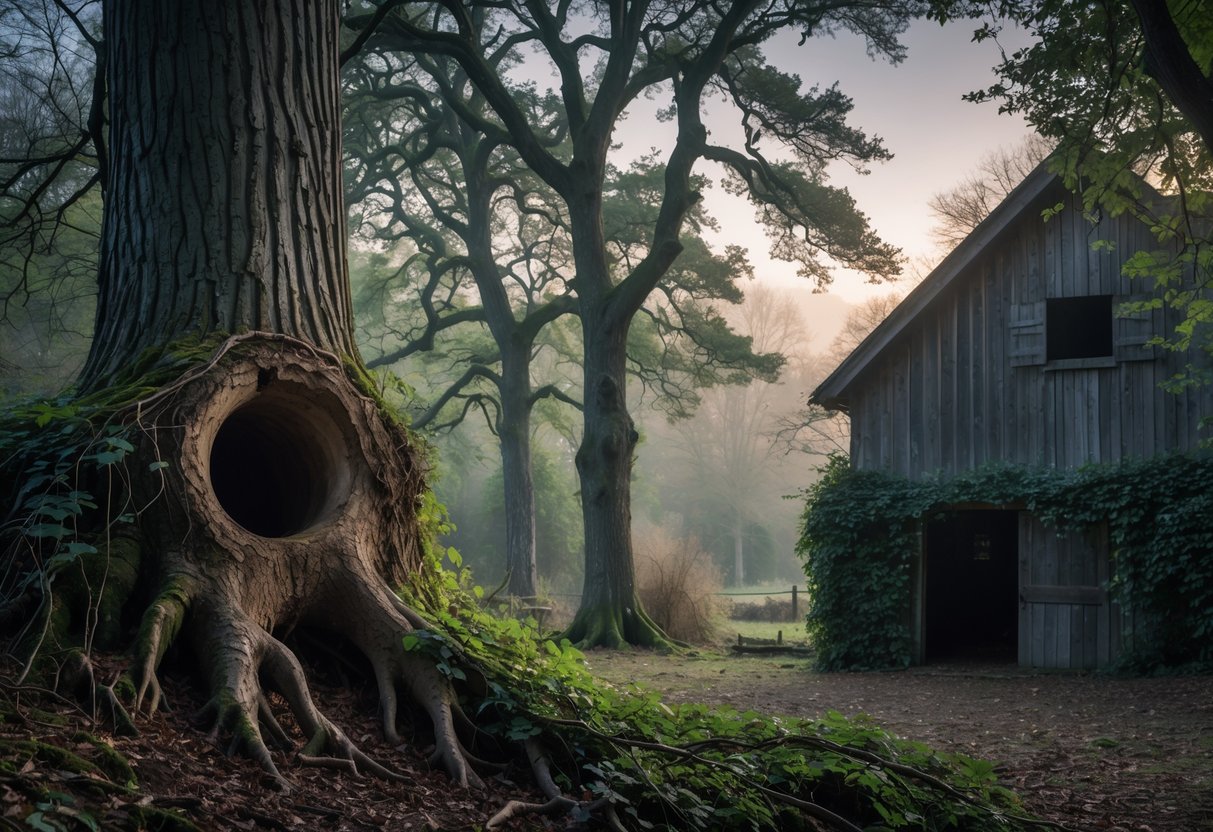
Owls in the UK look for quiet, safe spots to nest. Their choices depend a lot on their species and what’s around them.
You’ll spot them in old trees, run-down buildings, and sometimes nest boxes made just for them.
Tree Cavities and Woodland Habitats
Many owls raise their chicks in tree cavities—big hollows in old or dead trees. You’ll find these in woodlands, hedgerows, or parkland where old trees haven’t been cleared away.
Tree cavities protect owls from bad weather and predators. Owls don’t bother building nests themselves; they just move into empty holes or abandoned nests.
For example, if there aren’t any barns nearby, a barn owl might settle for a deep hole in a tree. Trees with big, hollow trunks or stumps are especially handy for them.
Leaving old trees standing in the countryside really helps keep these habitats around.
Barns, Outbuildings, and Urban Structures
Barn owls love quiet barns or old rural buildings for nesting. These spots are dark and undisturbed—just what they’re after.
You’re much more likely to find barn owls out in the countryside than in busy towns or cities. When farms get updated or old barns disappear, barn owls sometimes switch to hollow trees or other quiet rural structures.
Buildings with open spaces and a good view across fields are ideal, since barn owls hunt over open land. They avoid noisy or busy places, which makes sense if you think about it.
Use of Purpose-Built Nest Boxes
You can help owls by putting up barn owl nest boxes. These give owls a safe place to lay eggs and raise chicks, and you’ll usually see them inside barns or on poles near farmland.
Nest boxes mimic tree holes or barns, keeping owls warm and dry. Conservation groups really push for nest boxes to boost barn owl numbers.
If you want owls nearby, setting up a nest box is honestly one of the easiest and best things you can do.
You can find more info about barn owl nest boxes at the Barn Owl Trust.
Barn Owl Nesting: Preferences, Breeding, and Conservation

Barn owls—Tyto alba—pick all sorts of nesting places, but they really need good habitat and plenty of food. If you understand where they live and what they need, it’s much easier to support them.
Preferred Habitats and Distribution
Barn owls mostly nest in old barns, farm sheds, or special nestboxes. In western Britain, they use buildings more, but in eastern areas, they often choose tree hollows.
These owls like nesting sites at least 3 meters off the ground to dodge predators.
You’ll find them close to rough grasslands, where small mammals like voles, mice, and shrews are everywhere. That’s the kind of habitat that really helps them raise their young.
Sometimes, barn owls pick odd spots—church towers, old castles, even abandoned factories—if they’re sheltered from the weather.
Breeding Season and Nesting Behavior
Barn owls can start breeding in their first year. They lay eggs mostly in spring, but sometimes at other times too.
They don’t build nests; instead, they lay their eggs in cavities with flat or slightly curved surfaces. These could be tree hollows, nestboxes, or ledges in buildings.
Owls like to keep their nests hidden and quiet. They often come back to the same nesting spot year after year.
A small entrance hole—about 70 x 70 mm—is enough, but the nest space should be at least 300 x 300 mm so the owls are comfortable.
Barn Owl Diet and Prey Around Nest Sites
Barn owls eat mostly small mammals—voles, mice, rats, and shrews.
They hunt near their nests, sticking to fields and grasslands with plenty of rodents around.
Keeping these areas free from pesticides and letting rough grassland grow gives barn owls a steady food supply.
Sometimes, they eat birds or other prey, but not as often. In some places, though, it matters more.
If you look after the right kind of habitat near nests, barn owls will have a better chance of raising their chicks.
Conservation Efforts and Status
Barn owls sit on the Least Concern list of the IUCN Red List, but honestly, they still need a hand in the UK because habitat loss keeps chipping away at their numbers.
Groups like the Barn Owl Trust team up with farmers. They save old barn sites, put up nestboxes, and look out for hunting grounds.
Modern farming has wiped out a lot of their old homes. Nestboxes now play a big role in helping these birds stick around.
If you want to help, try putting up a nestbox near a hunting area. Keeping rough grasslands wild and healthy makes a big difference too.
All these little actions add up—maybe more than you’d think.
For more details on barn owl nesting, check out the Barn Owl Trust’s page on barn owl roosting and nesting places.


