
Ever been out at night and heard an owl hooting three times in a row? It’s a pretty unforgettable sound. The Great Horned Owl gives a series of three deep hoots, repeating them every few minutes. That three-hoot pattern is a dead giveaway if you’re trying to figure out which owl is calling.
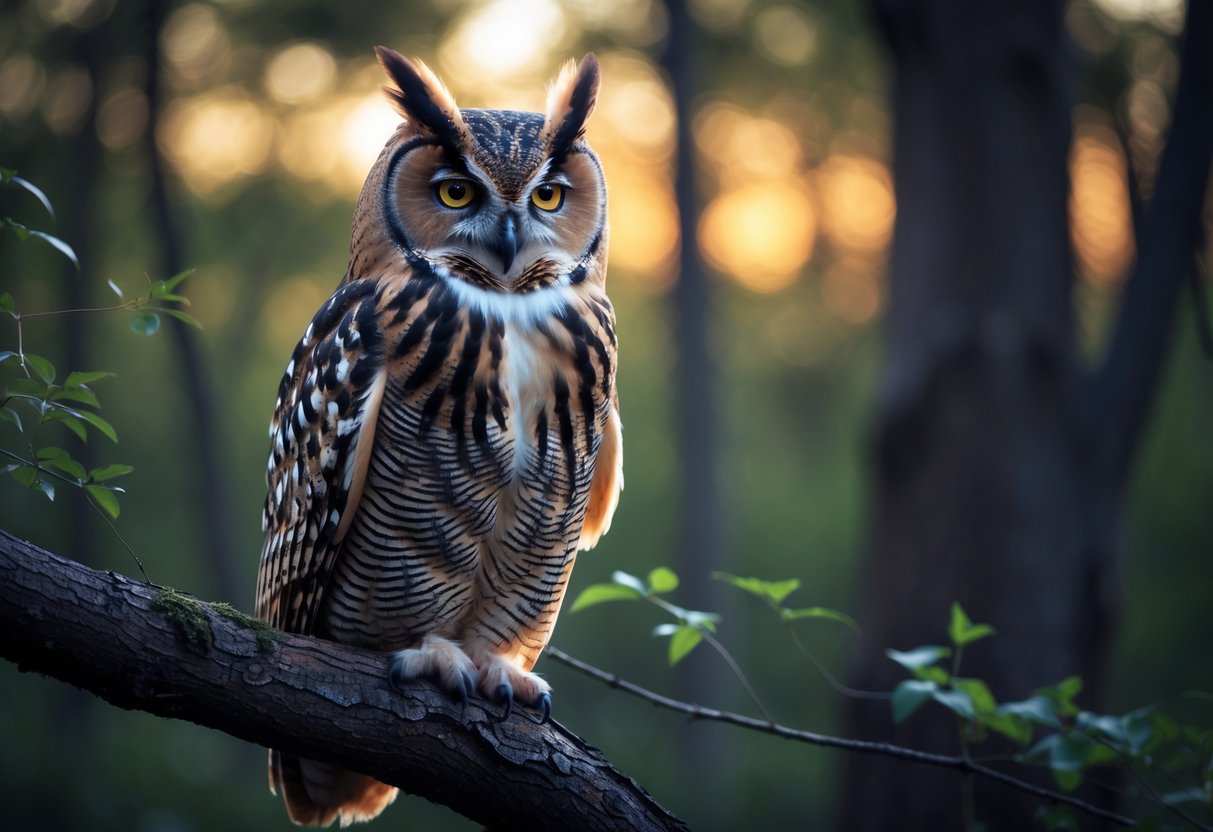
You might recognize this hoot from movies or maybe just from your own backyard at night. The Great Horned Owl hoots like this to claim its territory and let other owls know it’s around.
Once you know what to listen for, hearing these calls makes nighttime a lot more interesting. It feels like you’re in on a secret.
Curious about why owls hoot like this, or how to tell different owl calls apart? Let’s dig into some of these amazing sounds and what they mean.
Which Owl Hoots Three Times?

When you hear an owl hooting three times in a row, you’re hearing a message sent out into the night. That pattern isn’t just random noise.
Owls use it to say, “Hey, this is my spot,” or maybe, “I’m here, where are you?” Picking up on this hoot helps you figure out which owl you’re listening to.
Identifying the Classic Hooting Pattern
That classic three-hoot usually sounds like a gentle “hoo-hoo-hoo.” It’s slow, not rushed, and stands out from other nighttime sounds.
You might notice the middle hoot is a touch louder or maybe a bit higher than the first and last. It’s a small detail, but it gives the call its rhythm.
If you listen carefully, you’ll start to tell it apart from other birds or background noises. It’s honestly kind of fun once you get the hang of it.
Great Horned Owl: The Three-Hoot Hooter
The great horned owl is the main “three-hoot” owl. You’ll find this big bird all over North and South America.
It hoots to claim territory and warn off rivals. The call is deep, a little haunting, but not really scary—almost calm.
Sometimes, a pair will call back and forth. The female usually hoots higher, and the male’s call sounds deeper.
If you’re anywhere in North America, especially near woods or parks, you’re probably hearing a great horned owl when you catch that three-hoot pattern.
How to Differentiate From Other Owl Calls
Not every owl sticks to three hoots. Some, like the barred owl, go for more complicated calls—think “who-cooks-for-you”—while the saw-whet owl just toots sharply and quickly.
To tell the great horned owl apart, focus on the hoot’s timing and tone. It’s slow, steady, and has a rhythm you can almost tap your foot to.
Other owls might rush their hoots or throw in weird sounds like barks, hisses, or whistles.
Here’s a quick cheat sheet:
| Owl Species | Hoot Pattern | Call Description |
|---|---|---|
| Great Horned Owl | 3 hoots, slow rhythm | Deep, low-pitched, calm |
| Barred Owl | 8-9 hoots, phrases | Sounds like “who cooks for you” |
| Saw-whet Owl | Rapid toots | Sharp, repetitive toot-toot noises |
Once you know these differences, you’ll start picking out who’s calling in the dark. It just takes a bit of practice and maybe a few late nights.
Want to dive deeper? Learn to Identify Five Owls by Their Calls is a great place to start.
Great Horned Owl Natural History

You can learn a lot about the great horned owl just by looking at its body and where it lives. Its features make it a master of blending in and hunting quietly.
Its calls and hoots have a pattern that’s hard to mistake for anything else.
Physical Features and Camouflage
The great horned owl has those famous ear-like tufts on its head. They don’t actually help it hear, but they break up its outline and help it blend into the trees.
Its yellow eyes are huge and perfect for seeing in the dark. That round facial disk acts like a satellite dish, funneling sounds right to its ears.
Soft feathers in grays, browns, and whites help it disappear against tree bark or in shadows.
And those sharp talons? They let the owl grab prey quickly and quietly.
Nesting, Range, and Habitat
Great horned owls start nesting early, sometimes even in the middle of winter. You’ll find them all over the Americas, from thick forests to open deserts.
They don’t bother building their own nests. Instead, they take over abandoned nests from hawks, squirrels, or even other owls.
These owls adapt easily. Cities, forests, grasslands—it doesn’t matter much as long as there are tall perches and a few quiet spots.
Listen for their deep hoots echoing at night, especially during nesting season. That’s when they’re marking territory and looking for mates.
Feeding Habits and Prey
Great horned owls eat just about anything they can catch. Rabbits, rodents, and hares make up a big part of their diet.
They also hunt skunks, raccoons, bats, and sometimes even bigger birds like turkeys or geese.
If other food is scarce, they’ll go for reptiles, frogs, or insects.
They swallow prey whole, then cough up pellets full of bones and fur later. Those pellets can tell you a lot about what they’ve been eating.
Other Singing Owls and Their Calls
The great horned owl stands out with its hooting pattern. Males usually hoot four to six times, and honestly, you’ll hear five hoots most often.
Sometimes, a male hoots and a female jumps in with a deeper reply. These back-and-forth calls mark territory or signal courtship.
Other owls don’t sound quite the same. Barred owls go for that “who cooks for you” rhythm, which is kind of catchy, while barn owls just screech instead.
Red-tailed hawks? They skip the hooting entirely and throw out sharp, high whistles. If you spend a little time listening, you’ll start picking out which bird is which.
For more on great horned owl vocalizations, check out the Great Horned Owl Vocalizations.


