
Ever spotted a tawny owl and wondered if it’s friendly? Tawny owls don’t act like pets, and honestly, they can get pretty aggressive if you wander too close—especially near their nests. Most of the time, these owls avoid people and won’t show you any warm, fuzzy affection like a dog or cat would.
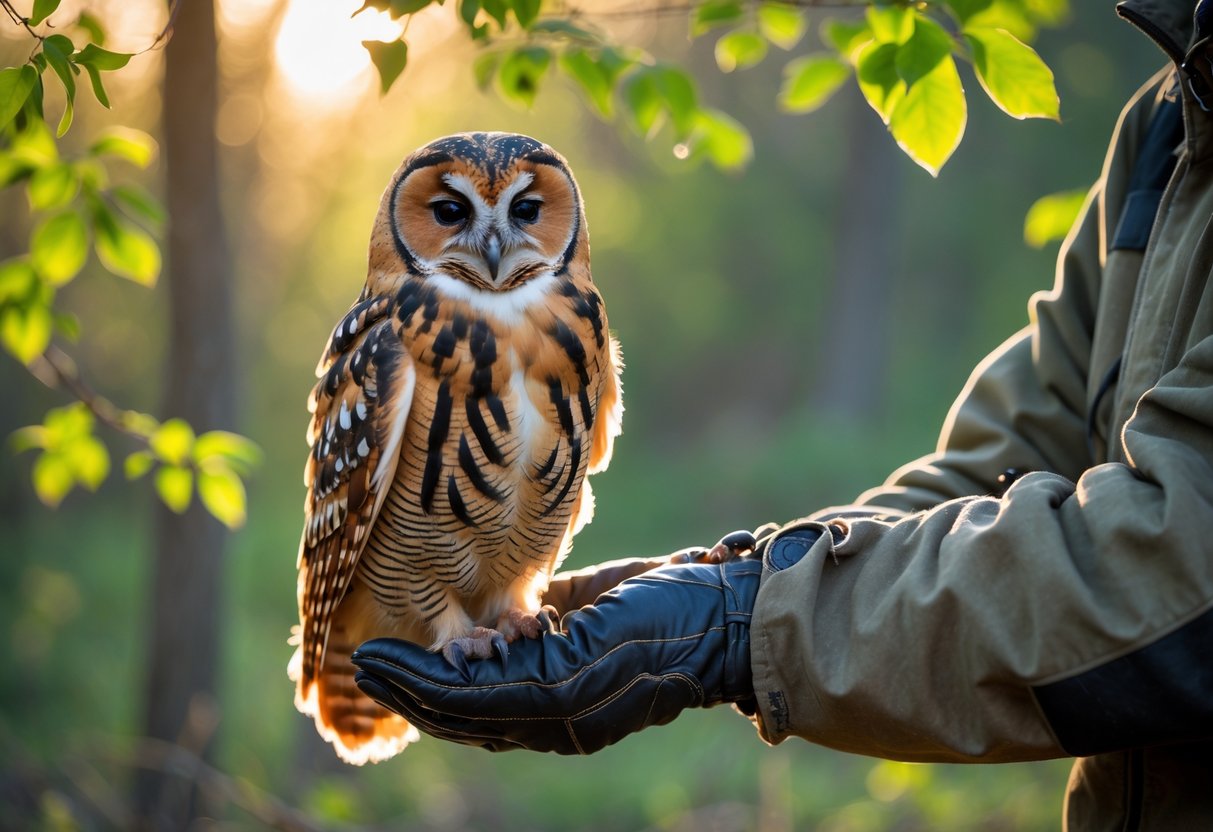
Their calls might sound lovely at night, but make no mistake—they’re wild animals. They fiercely defend their territory and sometimes even injure people who get too close.
If you want to enjoy tawny owls, it’s smarter to keep your distance. Watch them from afar to stay safe and avoid stressing them out.
Understanding how tawny owls behave helps you appreciate them without risking your safety or theirs. If you’re curious about what makes them tick, you’ll find plenty to learn about why they act so wary around humans.
For a deeper dive into their habits and how they deal with people, check out this detailed look at tawny owls.
Tawny Owl Behavior Towards Humans

Tawny owls usually avoid people, but their reactions can shift depending on what’s happening. Sometimes, you’ll notice they’re just curious, but they can also get defensive in a heartbeat.
Typical Interactions in the Wild
If you walk near a tawny owl in the wild, it’ll probably slip away quietly. These birds stick to the night, so you’ll often just hear their classic “twit twoo” calls after dark.
They shy away from bright lights and loud sounds, preferring to stay tucked out of sight.
If you stumble upon their nest or spot their chicks, be careful. Tawny owl parents get super protective and may swoop or hiss to drive you off.
They do this to keep their young safe from anything they see as a threat—including people.
Handling Orphaned or Injured Tawny Owls
If you find a baby tawny owl on the ground, don’t try to keep it. The best move is to gently place it somewhere safe nearby, like on a low branch, so it’s out of harm’s way.
Dealing with adult or injured tawny owls isn’t simple. These birds resist handling and can get stressed or lash out.
If you spot an injured owl, reach out to wildlife experts who know what they’re doing.
Approaches to Human Habitats
Tawny owls sometimes set up near homes and farms, where small animals are easy to catch. If your garden backs onto woods or fields, you might get a nocturnal visitor or two.
They mark and defend their territory with gusto. When you hear their calls near your house, it’s a sign they’ve claimed the area and plan to keep it.
They won’t act friendly, but if you leave them alone, they’ll usually do the same for you.
For more info on how tawny owls react to humans, you can check this Tawny Owl facts page.
Comparing Friendliness Among Owl Species

When you meet different species of owls, you’ll spot some big differences in how they react to people. Some seem almost unfazed, while others keep their distance or get defensive fast.
Getting to know the habits of barn owls, great horned owls, and tawny owls can help you figure out what to expect if you ever cross paths with one.
Barn Owls and Human Interaction
Barn owls act shy around people, but sometimes, if they’re raised around humans, they get used to it. They won’t act cuddly, but a hand-raised barn owl might tolerate you being close.
Still, they don’t like being handled and need calm, quiet spaces.
If you find a baby barn owl, it’s best to leave it where you found it or move it gently to a safer spot nearby. They depend on their parents and get stressed if people fuss over them.
Barn owls stick to hunting at night and don’t seek out people.
Great Horned Owls in Urban Areas
Great horned owls have figured out how to live in cities. You might hear their deep hoots echoing at night, even in busy neighborhoods.
They’re more aggressive and territorial than some other owls. If you get too close to their nest, they might hiss or dive at you to protect their young.
Unlike barn owls, great horned owls seem less scared of people. Still, they keep their distance and won’t ever act like a pet.
You won’t see them looking for attention, but they do put up with a bit more noise and activity than shyer owl species.
Differences in Personality Traits
Tawny owls just aren’t as friendly to humans as some other owls. They act territorial and often chase away intruders, even if those intruders are bigger birds or animals.
Young tawny owls might seem approachable at first. Still, adult tawny owls almost never let people get close.
Barn owls? They’re usually shy and tend to avoid people whenever possible.
Great horned owls, on the other hand, act bold and will aggressively defend their space. Want to watch owls safely? It’s best to respect their natural behaviors—and their boundaries.
| Owl Species | Friendliness Level | Human Interaction Tips |
|---|---|---|
| Barn Owl | Shy but tolerant | Avoid handling; observe quietly |
| Great Horned Owl | Bold and aggressive | Keep distance; watch for defense |
| Tawny Owl | Territorial | Do not approach; appreciate from afar |
Honestly, your safest bet is to admire owls from afar and do what you can to protect their habitats. That’s how you’ll have the best encounters.


