
Ever wondered when you’re most likely to hear owls in the UK? Honestly, autumn and early spring are your best bets. Owls get pretty vocal then, usually because they’re courting or staking out their territories. Their calls float through the air from dusk all through the night, especially if it’s a crisp, clear evening.
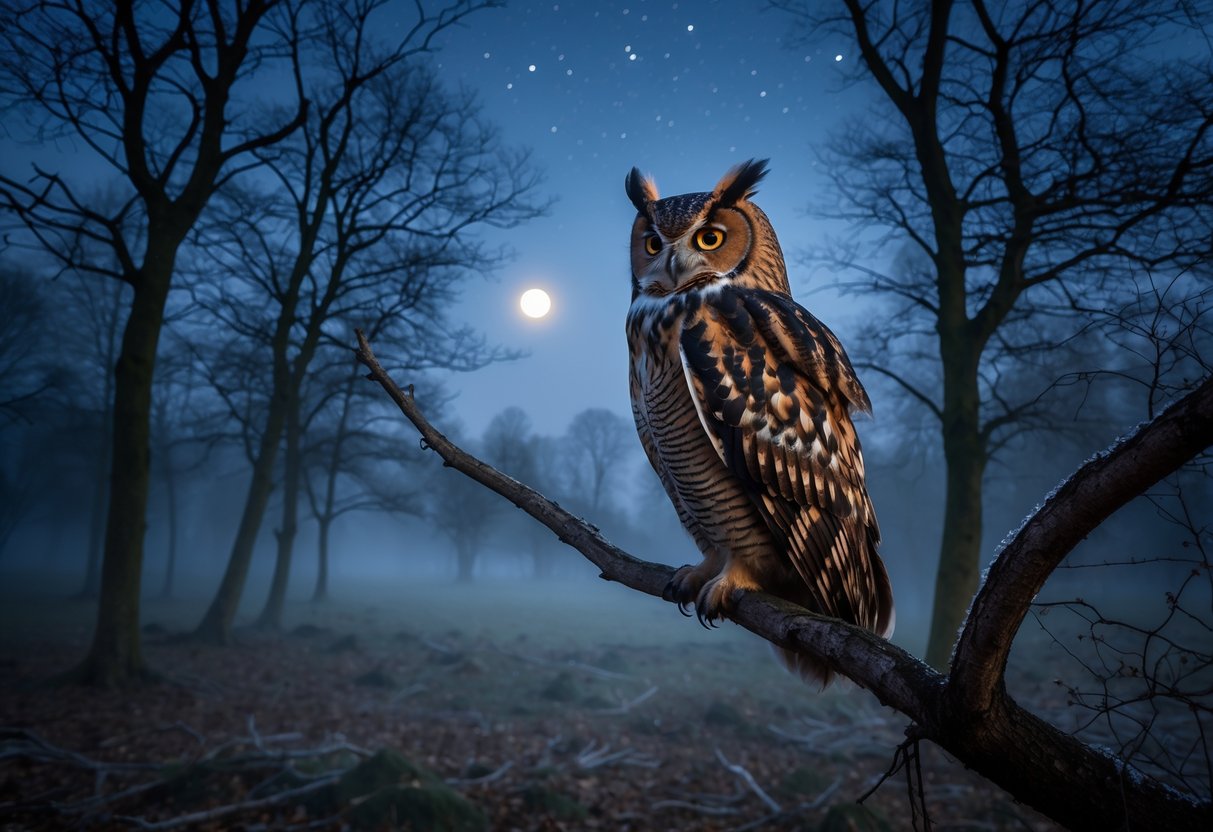
Different species have their own quirks. Tawny owls, for example, really let loose in autumn and winter. Barn owls, though, start calling more in early spring when they’re searching for mates.
If you know this, you can guess which owl you’re hearing when those mysterious hoots echo through the night.
Listening for owls is honestly a fun way to connect with the outdoors. If you find yourself in quiet woods or near farmland during these times, keep your ears open. You might catch one of these secretive birds calling to its mate or warning off a rival.
If you want to dig deeper into owl sounds and the best times to hear them, check out this guide on what time of year owls are most active.
Best Times To Hear Owls In The UK

You’ll hear owls more often at certain times of year, when they’re extra active and chatty. Some call mostly during breeding season. Others, especially migrants from Scandinavia, show up in winter.
Knowing when and where to listen really helps if you’re hoping to catch their hoots.
Seasonal Owl Activity and Calling
Owls in the UK call out to mark territory or attract mates. You’ll notice more hooting in late winter and early spring. That’s when a lot of owls start breeding and get noisy defending their patch.
In summer, young owls beg for food, so that’s another great time to listen for calls. Autumn quiets things down a bit as owls get ready for winter.
Tawny Owls, in particular, ramp up their calls in the cooler months, especially late autumn into winter.
Peak Months for Tawny Owl Calls
If you’re hoping to hear Tawny Owls, aim for October through February. Their hooting picks up, and honestly, it’s hard to miss them during these months. They’re everywhere—woodlands in Yorkshire, for example, give them plenty of cover.
Their classic hoots sound like a deep “hoo-hoo,” often in a repeating rhythm. Sometimes you’ll even hear pairs duetting, with the female tossing in soft calls between the male’s hoots.
Learning this call really helps you tell them apart from other owls.
Winter and Migrant Owls from Scandinavia
Winter isn’t just about cold weather—it’s owl season for some species. Short-eared and Long-eared Owls migrate to the UK from Scandinavia when it gets chilly.
You can spot these visitors in open fields or nature reserves. In winter, these migrants mix things up and bring new calls to listen for.
Try listening at dusk or dawn in rural or lowland spots, away from town noise. You might get lucky and hear something special.
Notable Owl Species and Their Sounds
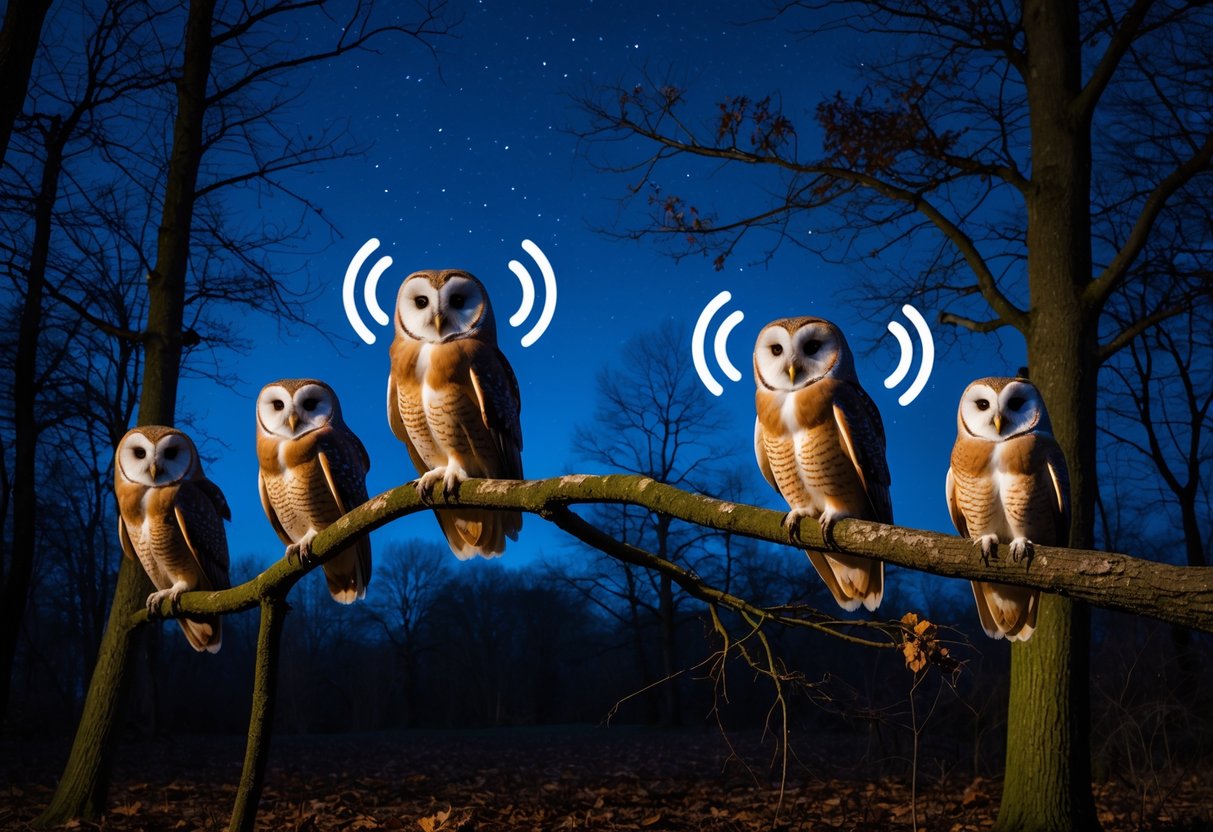
The UK has several owl species, and each one has its own signature call. Their sounds help them claim territory, find mates, or talk to their young.
If you pay attention, you can learn a lot about what they’re up to and where they’re hiding.
Tawny Owl Vocal Behaviour
Tawny owls are probably the most famous for their hooting. That classic “twit twoo” is actually a duet—a little owl love song, if you will. The female calls out a sharp “ke-wick” (that’s the “twit”), and the male answers with a softer, wavering “hoo-hoo” or “twoo.”
You’ll hear them most on autumn evenings, when pairs start flirting and sorting out their territories. The male hoots to claim his space, and the female calls back to keep in touch with her mate or chicks.
Tawny owls love broadleaved woodlands, but you’ll also find them in parks and towns with old, tall trees.
Barn Owl Screeches and Nest Calls
Barn owls don’t hoot—they screech, and it’s pretty unmistakable. That loud, shrill call is why some folks call them “screech owls.” You’ll mostly hear these screeches at the start of spring, when males are wooing females for nesting.
Females use softer calls to beg for food from their mates. Barn owls usually hunt in open farmland and grassy fields at dawn and dusk.
If you hear a sharp screech in those areas, chances are a barn owl is nearby.
Long-Eared Owl Hoots and Breeding Displays
Long-eared owls (Asio otus) keep it quieter than tawny or barn owls. The male’s call is a soft, low “hoo”—kind of like blowing over a bottle top. Females call with a higher pitch.
They’re secretive birds, so honestly, you might not hear them often. Early spring is your best chance, during breeding time.
Males sometimes show off with special flight displays, softly clapping their wings as they go. Long-eared owls prefer dense woods, especially conifers and tangled thickets.
During the day, they roost hidden away, and if you spot them, those long ear tufts really stand out.
Short-Eared Owl Daytime Calls
Short-eared owls (Asio flammeus) stand out because they often call in broad daylight. You’ll hear the male’s song as a series of fast, repeated hoots—sometimes he’ll let out more than ten in a row.
He usually keeps this up during long, showy flights. Both males and females throw in some harsh screeches and sharp barks too.
These owls breed on moorlands and rough grasslands. When winter rolls around, they move closer to the coast.
You’ve got your best shot at spotting or hearing them at dawn or dusk. They like to hunt in open places where small mammals are everywhere.
Curious about their calls or habits? The Woodland Trust’s guide to UK owl calls is worth a look.


