
It might surprise you, but people often link owls to sin in the Bible. If you’re wondering what sin owls stand for, it’s usually about loneliness, desolation, and being unclean.
Owls show up as symbols of mourning and judgment, and folks connect them with places of ruin or where God’s judgment falls.
When you spot owls in biblical stories, they aren’t just birds. They’re signs of something deeper, kind of a reminder of what happens when people turn away from God.
That makes owls a strong symbol for the dark side of sin and its impact on life and spirit.
Once you get this, it changes how you see owls—they’re more than just nighttime animals. Their presence in Scripture nudges you to think about judgment and what sin really costs.
Curious about the story behind owls and sin? Stick around and let’s dig in.
Biblical Sin and Symbolism Represented by Owls
In the Bible, people saw owls as more than birds—they tied them to ideas about sin and what follows. Owls stand for isolation, judgment, and deep sadness.
If you look at these symbols, you start to see how owls fit into spiritual themes in Scripture.
Owls in the Old Testament
Writers in the Old Testament called owls unclean animals and said not to eat them under the Mosaic Law. This linked owls to impurity and spiritual wrongness.
You’ll spot owls in Leviticus and Deuteronomy. In these books, owls show up as symbols of sin, since they live in lonely places and eat dead things.
People saw their presence as a sign that a place or group had lost God’s blessing.
Their habits—being up at night and eating what’s dead—made them stand for impurity and separation from holiness in that mindset.
Images of Desolation and Judgment
Writers often described owls in scenes of judgment and ruin. Isaiah paints a picture of empty lands after God’s punishment, and owls show up there.
When you read Isaiah or Jeremiah, you’ll notice owls living in places turned to wastelands.
That’s a sign of God’s judgment in action. Owls stand for destruction after sin, and that includes losing community and safety.
The image of owls in ruined cities warns about the spiritual emptiness that follows persistent sin and rebellion.
Owls as Symbols of Mourning and Loneliness
Owls also stand for loneliness and mourning. Psalm 102 compares the psalmist’s sadness to an owl living alone among ruins.
You can almost hear the owl’s hoot as a cry of sorrow.
Micah connects the owl’s call to grief and lamenting too. So, in scripture, owls often show the deep sadness people feel when they’re separated from God or suffering because of sin.
These meanings remind you that sin brings not just punishment, but heartbreak and isolation too.
If you want to dive deeper, check out the Bible symbolism of owls.
Owls in Early Christian Art and Symbolism
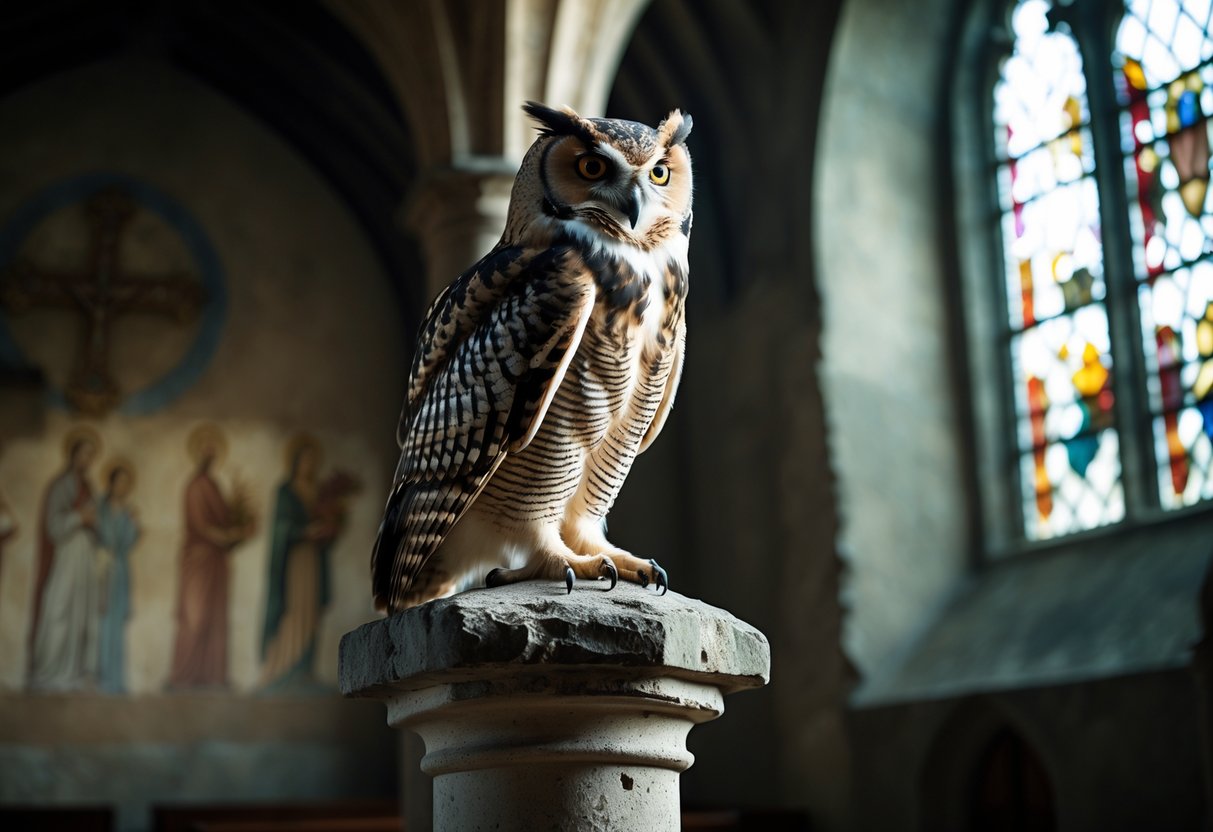
You won’t find owls often in early Christian art, but when they do show up, they pack a punch. They carry meanings tied to sin, darkness, and spiritual struggle.
Unlike hopeful symbols, owls offer a warning—a sense of loneliness in a world of faith.
Representation of Sin in Catacombs and Mosaics
If you look at old catacombs and mosaics, you’ll notice owls often stand for sin and darkness. Since owls are creatures of the night, early Christians used them to represent those living in spiritual darkness or sin.
Saint Augustine even wrote about people fleeing the light, and artists used owls to show that.
In sacred places, owls sometimes warn against turning away from faith and baptism, which wipes away sin. They also show the loneliness and desolation that comes from a life apart from God.
That’s a sharp contrast with symbols like the palm, which stands for victory over sin and martyrdom.
Contrast With Other Early Christian Symbols
Early Christian art features a bunch of symbols that point to hope and new life. You’ll spot the butterfly for resurrection, the unicorn for chastity, and the rose for beauty and eternal life.
These symbols really celebrate purity and rebirth. They also show a deep connection with God.
Owls, though, feel different from symbols like the ermine, which stands for innocence and purity. The butterfly and baptism symbols pull you toward a new life.
But owls? They warn you about the dangers of sin and being cut off from the church community. That sharp contrast kind of highlights the choices a believer faces—light or darkness, sin or redemption.


