
Ever wondered if owls actually like people? Honestly, no—they really don’t. Owls are wild birds with strong instincts, and making friends with humans just isn’t part of their nature.
Most of the time, they avoid us and definitely don’t want to be petted or cuddled like a dog or cat.
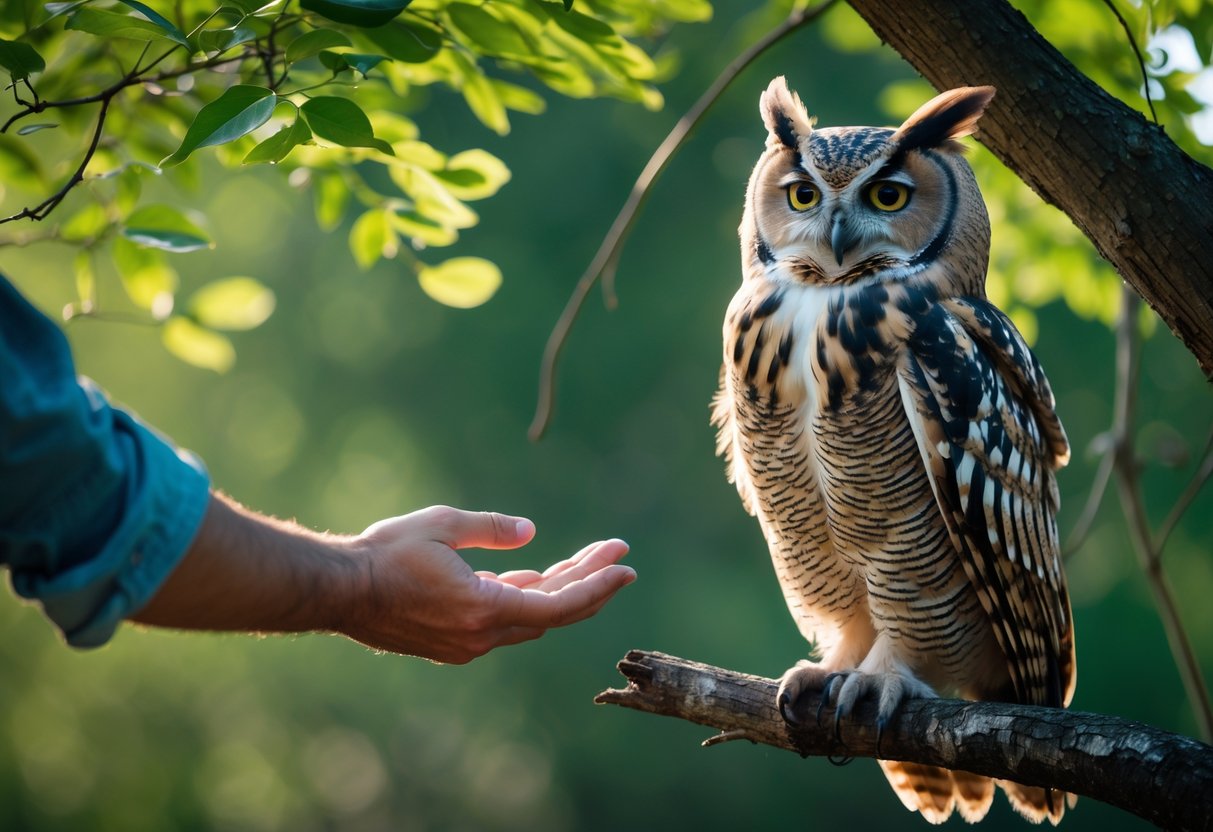
You might catch a video of an owl looking calm around someone, but that’s pretty rare. Usually, those owls have been trained or imprinted by people.
Wild owls tend to keep their distance since they see us as big, unpredictable animals—definitely not pals. Once you realize this, it’s easier to appreciate owls for what they are: fascinating, wild creatures living life their own way.
Curious about how owls behave around people and why they don’t act like typical pets? Let’s dig into what’s really going on.
Understanding Owl and Human Interactions

Owls usually keep their distance from humans. Their behavior shifts depending on their species and what they’ve experienced.
Some owls get used to people and learn to tolerate us. Others avoid humans completely or get defensive if we get too close.
How an owl sees you and how it changes its behavior can affect your interactions with it.
How Owls Perceive Humans
Owls generally see humans as large, unfamiliar animals. They don’t naturally consider us friends, but they also don’t always see us as threats unless we provoke them.
Most of the time, an owl will just fly away when it notices you coming. They rely on stealth and surprise to hunt, so they’d rather not stick around.
Still, barn owls and some other species living in cities sometimes get used to people being nearby. If an owl sees people often and nothing bad happens, it might just ignore you, blending you into the background of its world.
But if you corner an owl or get near its nest, it can see you as a threat. That’s when you might see defensive behavior.
Owls are cautious, maybe even a little curious, but they don’t hand out trust easily.
Examples of Owl Learning and Adaptation
Owls pick up clues from their environment, including how humans behave. Some city owls get used to people, especially if food is easy to find.
Occasionally, an owl might even seem to recognize a particular person and follow them around. Imprinted owls—those raised from chicks by people—sometimes act like they want human company, calling out or sticking close.
But that’s rare and usually only happens after lots of close contact when the owl is young.
Wild owls adapt by changing when they hunt or where they nest to avoid busy human spots. Barn owls, for example, often shift their habits to survive near farms or towns.
This flexibility helps owls live near people without much conflict.
Owl Behavior Around People
Most owls keep away from humans and hide out during the day. If you spot one nearby, it’s probably just resting or hunting.
Owls use their sharp night vision and silent flight to stay hidden, so seeing one up close is uncommon.
If an owl feels threatened, especially if you get near its chicks or nest, it might attack to defend itself. These attacks are pretty rare and usually just a warning.
If you want to watch owls, the best thing you can do is give them space. Respect their quiet, and try not to get too close.
Some urban owls put up with people being nearby, but they almost never want affection or to be touched.
Want to know more about how owls react when threatened? Check out owls that attack only when threatened.
Owl Intelligence, Perception, and Adaptability
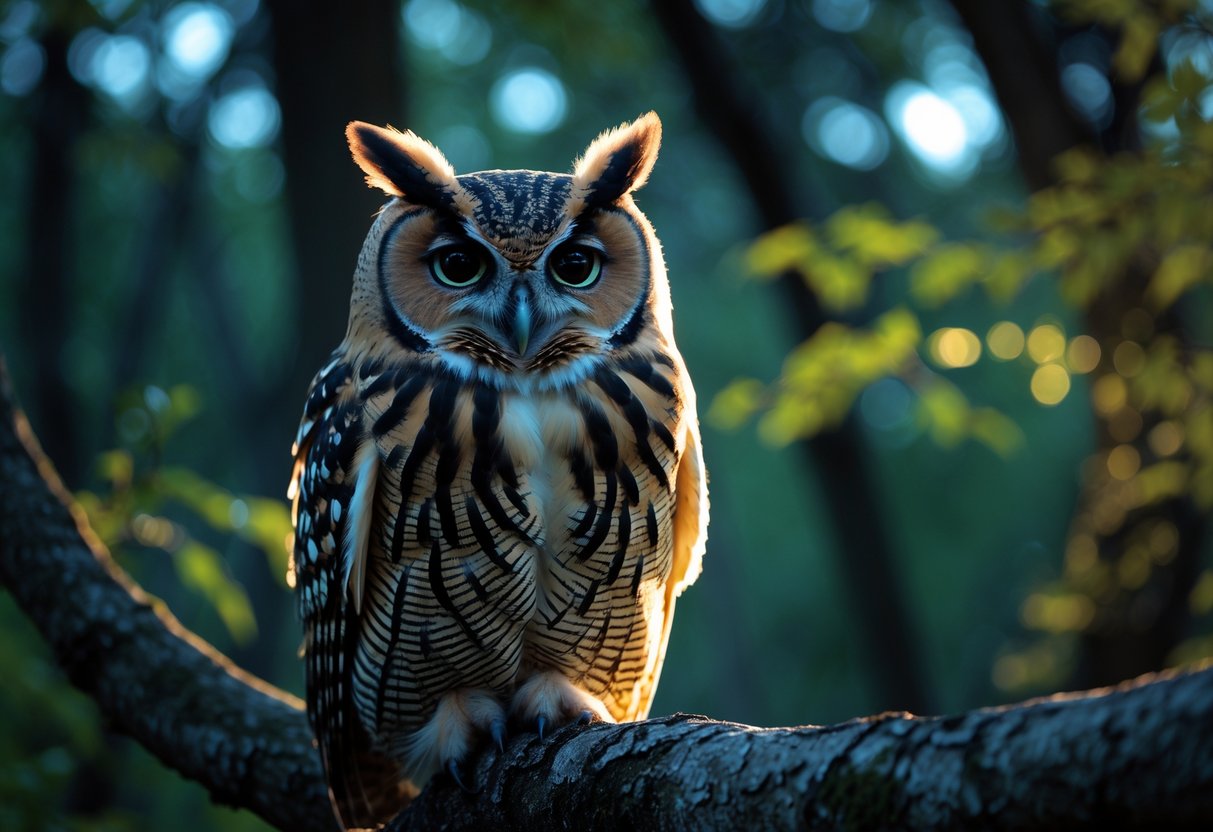
Owls use their sharp senses and clever tricks to survive and make sense of their world. Their sight and hearing are incredibly tuned, letting them react fast to changes.
Different owl species handle humans and their surroundings in their own unique ways.
Owl Vision and Binocular Vision
Owls have huge eyes, which gives them amazing night vision. Their eyes face forward, so they get binocular vision—kind of like we do—which helps them judge distances.
That’s a real advantage for hunting in the dark.
Some, like barn owls, have eyes packed with special cells that let them see even in very low light. Eagle owls can even see ultraviolet markings that we just can’t spot.
Their vision helps them pick out prey from the background and stay alert for danger.
Roles of Different Owl Species in Human Encounters
When you run into owls, you’ll notice their reactions really depend on the species and how much they’ve dealt with people before.
Take little owls, for example. They can actually tell different groups of people apart. They’ll stick around when farmers are nearby, but as soon as they spot ornithologists—maybe because those folks sometimes try to catch them—they’re gone in a flash.
Barn owls and eagle owls? They’re even jumpier. They usually just take off the moment they spot a person.
Some owls, though, have gotten used to living close to us. You might see them hanging around city squares or farms, probably because food is easier to find there.
Plenty of other owls would rather keep their distance. They seem to think it’s safer that way.
Owls can adapt in surprising ways, which helps them survive even as their habitats change or fill up with people.
Sometimes, though, their curiosity gets the better of them. You might hear about an owl getting trapped while poking around something new.


