
A begging call of an owl is a special sound young owlets make when they’re hungry and want food from their parents.
You’ll hear a high-pitched, repeated cry—it’s their way of saying, “Hey, feed me!” The parents listen for these calls and figure out which chick needs food the most.
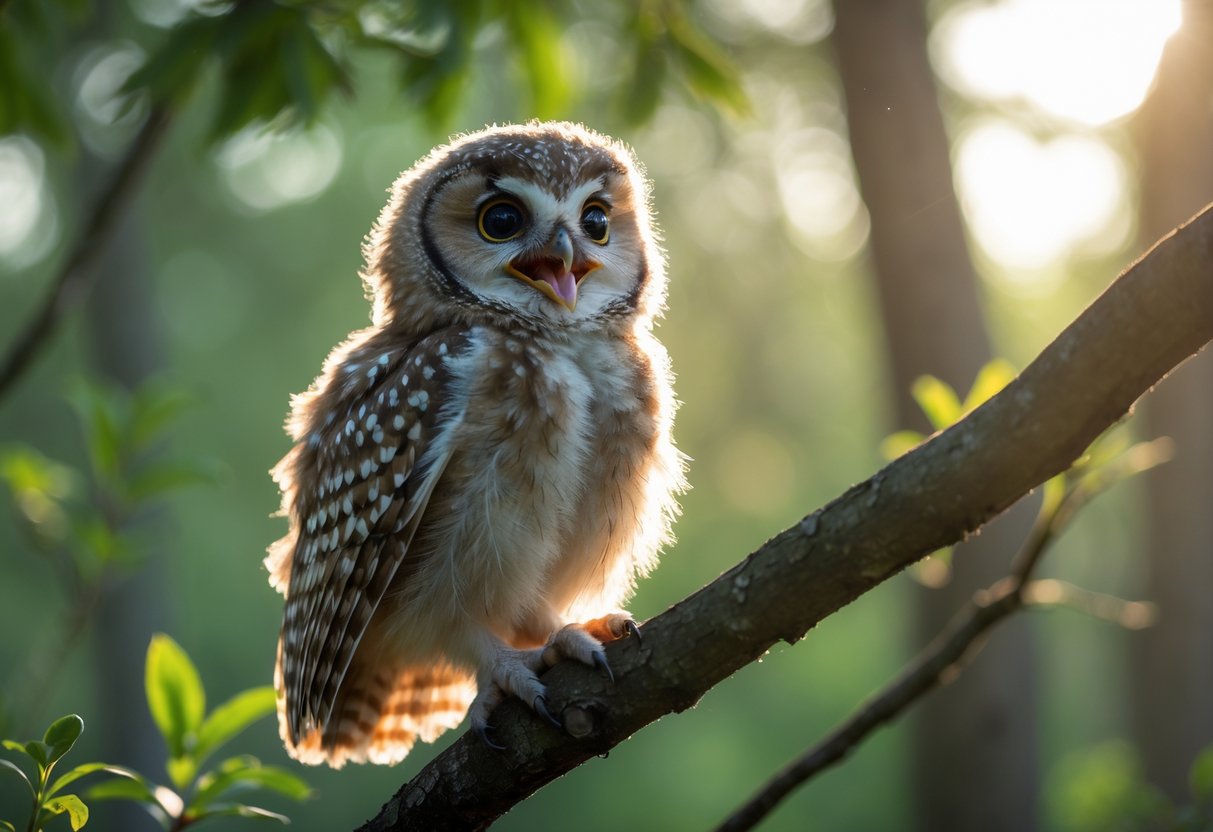
If you’ve ever been near a nest in spring or early summer, you might’ve caught these odd sounds.
Begging calls don’t sound like the deep hoots adults make. They can remind you of a squeaky toy or even a rusty hinge—kind of funny, honestly.
Listening to these calls gives you a glimpse into how owls raise their young.
It’s wild how much communication matters in nature, even for birds of prey.
What Is a Begging Call of an Owl?

Owls make all sorts of sounds for different reasons.
One sound you might notice is the begging call, which stands out from their usual hoots and has a special meaning, especially for young ones.
The way these calls work, who makes them, and why—well, it tells you a lot about how owls behave.
How Begging Calls Differ From Other Owl Vocalizations
Begging calls usually come out high-pitched, raspy, or screechy.
They don’t sound anything like those deep, steady hoots adult owls make.
Take the great horned owl, for example. Its normal hoot is low and rhythmic, but the begging call? It’s urgent and sharp.
Young owls make these calls, and it really sounds like they’re asking for something.
They’ll repeat the call every few seconds.
Unlike hunting or warning calls, begging calls aren’t about defending territory or attracting a mate.
Functions and Purposes of Begging Calls
When a juvenile owl makes a begging call, it’s asking for food.
Even after leaving the nest, young owls often need help hunting, so they use this call to let parents know they’re hungry.
Parents listen for these calls, especially at night, and it helps them keep track of where their youngster is.
It’s a pretty clever survival trick.
As the young owl learns to hunt, it keeps using these calls to score extra meals until it figures things out on its own.
Age and Developmental Stages Associated With Begging Calls
Juvenile owls mostly make these begging calls.
This happens right after they leave the nest, but before they’ve got hunting down.
You’ll hear these sounds from owls that are just a few weeks to a couple of months old.
At this stage, they still rely on adults for food but start gaining a bit of independence.
As they get better at hunting, the begging calls happen less often and eventually stop.
That’s when you know the owl’s ready to take care of itself.
If you’re curious, you can listen to begging calls from juvenile great horned owls on this YouTube video.
Owl Species and Their Unique Begging Calls

Different owl species make different begging calls, and even age plays a role.
Some calls sound like shrieks, others like whistles or whining.
A few owls keep making these noises after they leave the nest, especially if they’re still figuring out how to hunt or want a snack from their parents.
Great Horned Owl and Its Shriek
Great Horned Owl begging calls don’t sound anything like their deep adult hoots.
Instead of a calm “hoo,” you’ll hear a sharp, screechy shriek.
Juvenile owls that have left the nest but still want food usually make this noise.
If you’re outside at night and listen closely, you might hear these shrieks every 15 to 20 seconds.
That’s a young owl saying it’s hungry while learning to hunt mice and other small critters.
You can read more about the Great Horned Owl’s begging call in this detailed article.
Barred Owl Juvenile Sounds
Barred Owl juveniles have a softer begging call, more like a gentle whistle than a shriek.
They use this quiet whistle to get attention from their parents.
You’ll usually hear it when young barred owls are nearby but hidden up in the trees.
It’s a sign they still need help from mom and dad, even if they look all grown up.
Birdwatchers love tracking these calls to find where the young owls are hiding.
Northern Saw-whet Owl and Whining Calls
Northern Saw-whet Owls have a begging call that sounds like a high-pitched whine or even a “meow.”
It’s nothing like the hoots or shrieks you’d hear from bigger owls.
They repeat this whining call a lot, which really shows how much they want food.
Because these little owls mostly hunt at night, their calls can help you spot them in the dark.
A lot of birders use these sounds during night walks to find the owls, even if they can’t see them.
Eastern Screech-Owl Versus Screech-Owl Wails
Eastern Screech-Owls make two main begging sounds.
One is a soft trill or whinny that young owls use when they’re hungry and want food.
The other is a longer, wailing call that can sound pretty eerie and carries far at night.
You can usually tell if you’re hearing a juvenile or an adult by these calls.
A whinny almost always means a young owl is asking for food.
Adults use the wailing call to communicate or sound an alarm.
Honestly, once you notice these differences, listening for screech-owls on a night walk gets a lot more interesting.
If you want more help figuring out these calls, check out guides from places like the National Audubon Society.


