
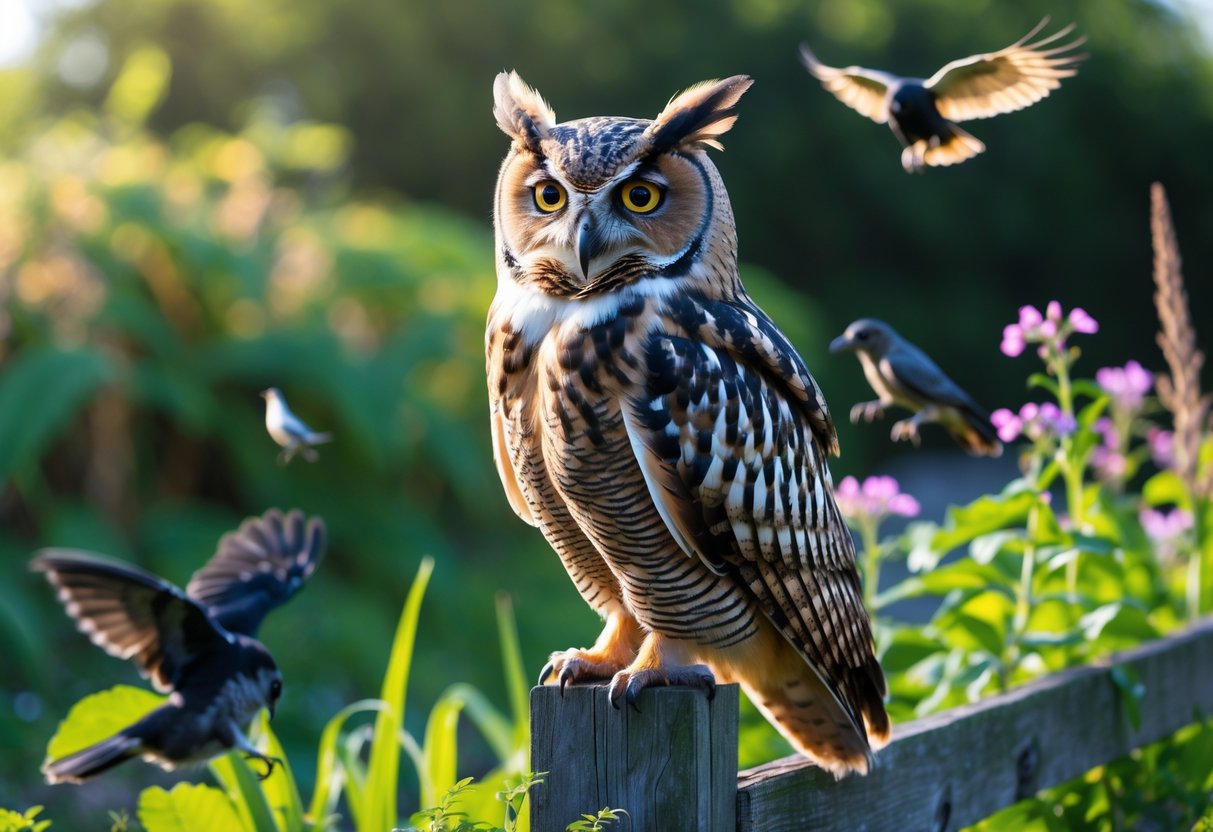
Ever notice how the sky just goes strangely quiet when an owl shows up? You’re definitely not the only one. Owls, as natural hunters, put smaller birds on edge and often send them flying for cover.
Owls scare off smaller birds like songbirds and pests. Their silent flight and watchful presence basically scream danger. Gardeners and farmers often count on them to keep bird problems in check.
Maybe you’ve wondered if fake owls or recorded owl sounds can do the trick. Real owls work best, but sometimes decoys or calls help—though not forever.
Knowing which birds owls scare and why can make it easier to protect your space or just watch nature do its thing. Curious which birds owls chase off or how they shake up local wildlife? Let’s get into it.
What Do Owls Scare Off in Nature?

Owls hunt quietly, making a lot of animals nervous. When owls show up, other birds and animals often change their behavior.
Some bird species keep their distance from owls. Other animals also steer clear for safety. Even owls have to look out for a few threats.
Types of Birds Afraid of Owls
Most smaller birds stay away from owls. Owls hunt at night and move so quietly, it’s spooky for birds like sparrows, finches, and songbirds.
These birds sense danger from the owl’s silent flight and sharp hunting moves. Even birds that aren’t on the menu often keep their distance just in case.
You might see fewer little birds in your yard if a barn owl or great horned owl is hanging around. Sometimes even bigger birds that compete for food or shelter get spooked.
Owls can disrupt what these birds do simply by being nearby. If you want to dig deeper, check out what birds owls scare away.
Why Other Animals Avoid Owls
Besides birds, small animals like squirrels, rabbits, and rodents also avoid owls. Since owls hunt them, these animals see owls as a serious threat.
Owls use loud calls and sudden moves to warn animals off. Their strong claws and sharp beaks are more than enough reason for small mammals to keep away.
If you spot an owl roost nearby, you’ll probably see fewer rodents or little animals around. Some folks even use owl decoys or sounds to keep pests like squirrels out of gardens.
This works because so many small animals just have an instinctive fear of owls. You can read more about what pests owls keep away here.
Natural Enemies and Predators of Owls
Owls aren’t always the top predator. Bigger birds of prey like eagles or hawks sometimes attack owls, especially the young or smaller species.
Humans also threaten owls by disturbing their homes or hunting them. Some owls get pretty territorial and fight back hard if they feel threatened.
Every now and then, animals like foxes or raccoons might attack an owl if they catch one off guard. Still, owls rely on their quiet moves, camouflage, and some scary sounds to protect themselves.
How Do Owls and Owl Decoys Deter Unwanted Visitors?

Owls use their hunting skills and just their presence to keep animals away. Fake owls try to mimic this, relying on their look to startle other creatures.
How well these methods work really depends on the animal and where you put the decoy.
Effectiveness of Fake Owls Against Birds
Fake owls can scare some birds at first. Birds spot the shape and those big eyes and think “predator!” But if the owl never moves, birds catch on pretty fast.
Fake owls work best when you move them around now and then. Some birds, like pigeons and sparrows, seem easier to fool.
Crows and other clever birds might ignore the decoy after a while. If you want better results, set your fake owl near spots where birds gather—feeders, rooftops, that sort of thing.
Change its spot every few days to keep birds guessing. For tips on where to put fake owls, check where to place fake owls.
Do Owls Scare Off Rodents and Small Mammals?
Owls hunt small mammals like mice and rats, so their presence really does keep these pests on edge. Real owls flying or calling nearby work best.
Fake owls might help a little, but they’re not as effective for rodents. Mice and rats pay more attention to scent and movement than to a statue.
Some people get better results by using fake owls along with traps or sound devices. Real owls still do the best job since their hunting keeps pests nervous and on the move.
Best Practices for Using Owl Decoys
If you want your fake owl to actually work, try moving it around often. Birds start ignoring it if it stays in one place for too long, so shifting its location every few days really helps.
Pick decoys that actually look like owls—big eyes, colors that blend in with nature, that sort of thing. I usually set them up high, maybe on a tree branch or the roof, since that feels more convincing.
Mix things up by adding other deterrents. Reflective tape or even a noise maker can make a difference. Keep an eye on your yard and figure out which animals keep showing up, then adjust your strategy.
If you want more tips on where to put these decoys, check out Vet Explains Pets.


