
So, you’ve spotted an owl hanging around your place. Chances are, your yard offers something it wants—maybe a buffet of rodents or a cozy spot for nesting and shelter.
Owls usually stick close when there’s plenty of food like mice or chipmunks, or if your property has good nesting spots. Sometimes they’re after water, or maybe your feeders bring in small birds that catch their eye.
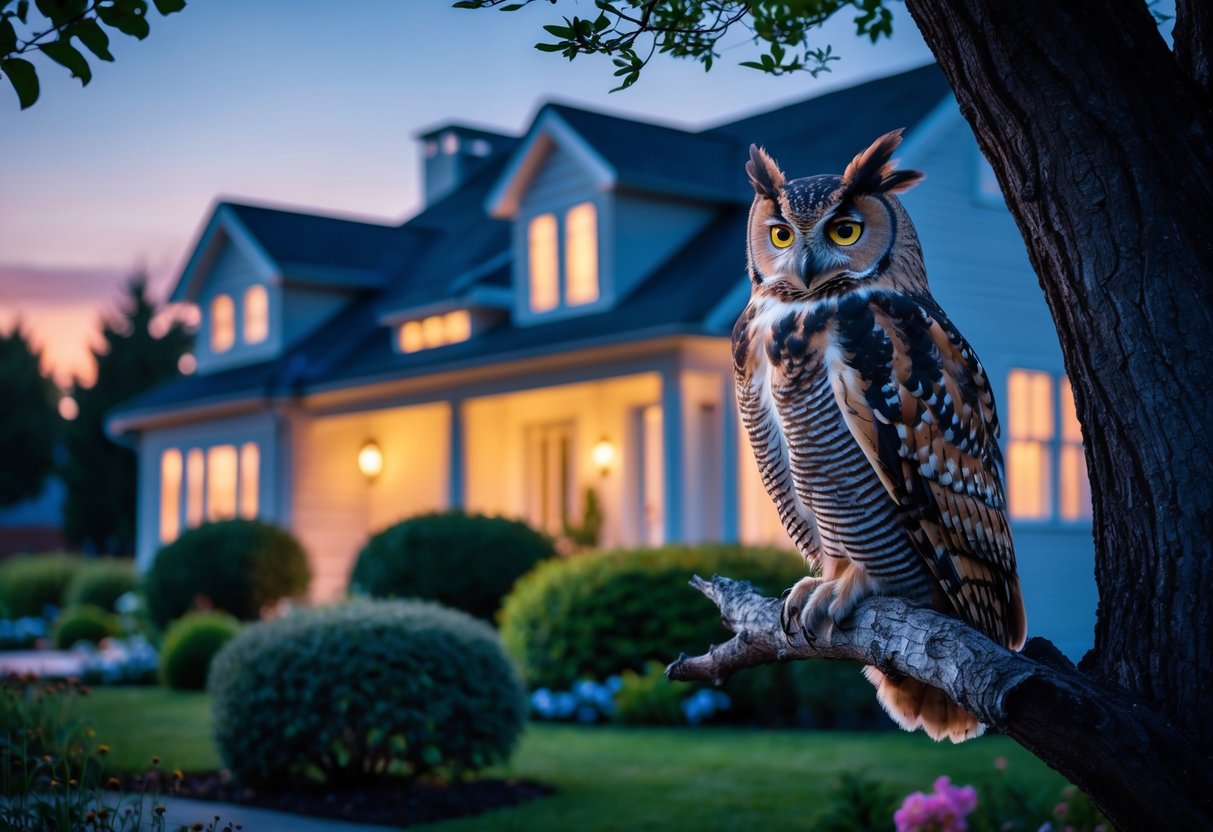
Owls hunt well in quiet, open spaces where prey stands out. If your yard fits that description, it’s basically a hunting ground for them.
If you’ve got trees or old sheds nearby, owls might see those as safe places to nap or even raise their chicks.
Understanding why owls come by can help you decide if you want to share your space with them or gently encourage them to move on. Knowing what they like is the first step.
For a deeper dive into what it means when owls show up at your house, check out this article on what it means when owls appear around your house.
Main Reasons Owls Are Attracted to Your House

Owls show up at homes because they find what they need nearby. Usually, that means food, shelter, or maybe some changes in the local trees and lights that either attract or repel them.
If you get a sense of what’s drawing them, you’ll have a better idea why they’re hanging around.
Abundant Rodent or Small Animal Populations
Honestly, one of the main reasons owls come close is because there’s plenty to eat. Owls love small animals—think mice, voles, chipmunks.
If you’ve got a lot of these critters around, your yard becomes an all-you-can-eat buffet.
Brush piles or natural debris bring in rodents by giving them shelter. That, in turn, makes your place more appealing to owls.
It’s smart to skip rodent poison and pesticides, though. If an owl eats a poisoned mouse, it can get hurt too.
Suitable Nesting Sites and Shelter
Owls need safe places to rest and nest, so your trees and even old stumps matter to them. Some owls, like Barn Owls or Western Screech Owls, nest in holes inside old or dead trees—those are called snags.
If you have these in your yard, you might spot a cavity-nesting owl moving in.
Bigger owls, like Great Horned Owls, skip the little nest boxes. They go for large open nests made by other birds or just sturdy tree branches.
Leaving dead trees standing and letting natural branches stay put can turn your yard into prime owl real estate.
Changes in Local Forest Habitat
When people cut down nearby forests or disturb them, owls sometimes move closer to homes to find better spots. Old forests usually have plenty of food and safe places, so owls that lose those areas might check out your yard if you have trees or cover.
Urban sprawl and new construction push owls to adapt. Some end up in parks or wooded backyards.
But if your place isn’t safe—maybe too much traffic, chemicals, or not enough food—owls won’t stick around for long.
Artificial Lights and Human Activity
Owls like the dark. They hunt at night and use shadows to spot prey.
If you’ve got bright outdoor lights, you might scare them off. Too many lights can really throw them off their game.
But owls are clever. If your yard feels quiet and safe, with lights off and not much noise, they might decide to hunt nearby.
Turning off outdoor lights at night can actually boost your chances of seeing owls close to home.
If you want to attract owls safely, check out this guide from the Owl Research Institute.
Common Owl Species Found Near Homes
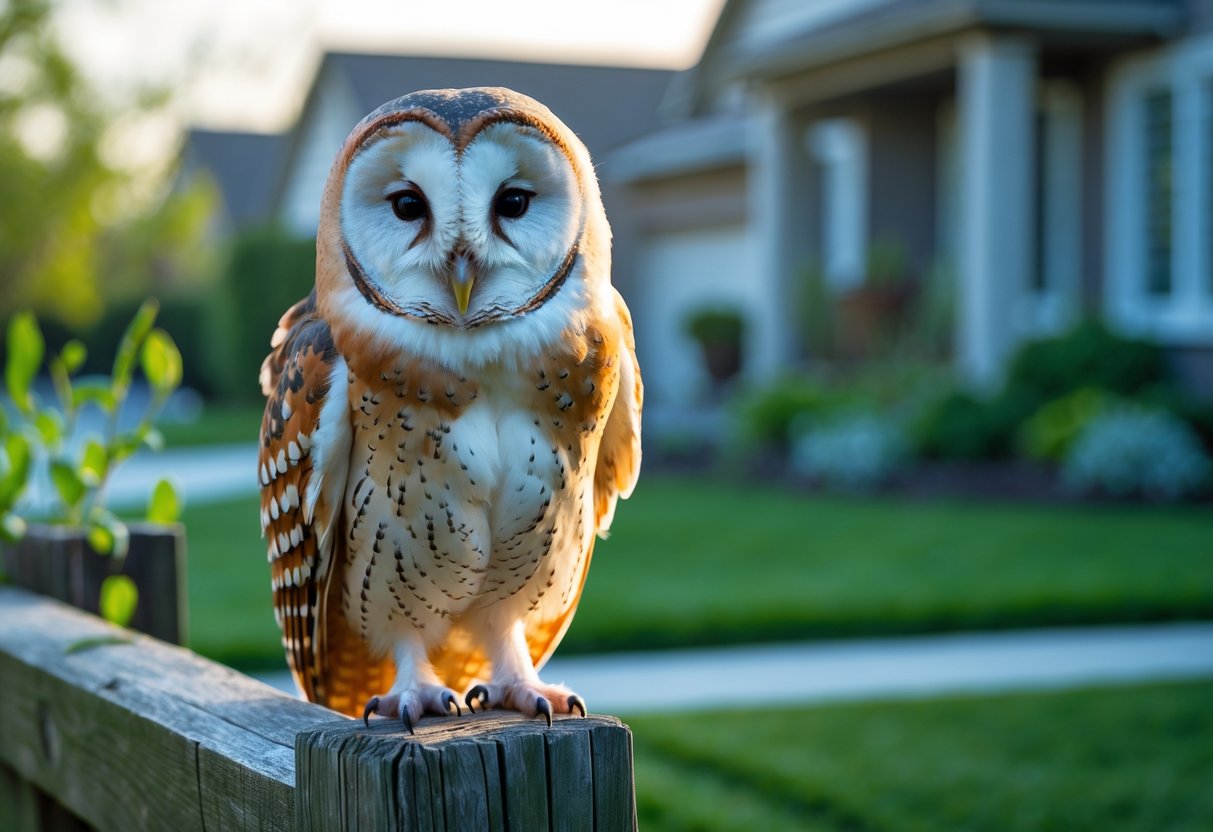
Most owls you see near homes belong to a handful of common species. Each one comes with its own quirks and preferences.
Knowing which types hang around helps you figure out what they’re after and what kind of place they like best.
Barred Owls and Their Expanding Range
Barred Owls have started popping up in new places, even neighborhoods. They’re big, with round heads and dark eyes.
You might hear their loud, almost haunting calls at dusk or dawn.
They prefer mixed forests but can adapt to suburbs with enough trees. Barred Owls hunt small mammals and birds, so if rodents hang out in your yard, these owls might too.
Their range keeps expanding, so don’t be shocked if you see them where you haven’t before.
If your place has older trees and stays pretty quiet, a Barred Owl might decide it’s a good spot to roost or hunt.
Great Horned Owls Around Suburban Areas
Great Horned Owls show up near homes pretty often. They’re large, fierce, and have those famous “ear” tufts.
They can even hunt animals as big as skunks—seriously, they’re top of the food chain.
These owls handle suburbs well and often nest in old stick nests left by other birds.
If you’ve got big trees or tall dead branches, Great Horned Owls might use them to set up shop.
They hunt mostly at night and stay in places where food is steady, like spots with lots of rodents.
It’s a good idea to keep small pets indoors at night to keep everyone safe.
Screech Owl Adaptability to Neighborhoods
Screech Owls are smaller and pretty adaptable. They’ll settle into many neighborhoods if they find the right spot.
If you put up a nest box, you might just get a Screech Owl visitor.
They hunt insects and small mammals, so a brush pile or some natural cover makes your yard more inviting.
Because they’re small, they can live closer to people without much fuss.
Screech Owls handle a bit of noise and light better than most other owls. They’re usually active at twilight and into the night, so keep an eye (and ear) out during those hours.
Northern Spotted Owl Habitat Preferences
Northern Spotted Owls really love dense, old-growth forests, especially in the Pacific Northwest. You probably won’t spot one hanging out in a neighborhood—they steer clear of open spaces and busy urban areas.
They pick large, mature trees for nesting and hunting. If you happen to live close to protected forest land, you might catch a glimpse of one or hear its call late at night.
These owls stick to hunting after dark and usually go after small mammals. If people protect the forests near their homes, Northern Spotted Owls—and honestly, a lot of other wildlife—have a better shot at thriving. Their presence? It’s a pretty good sign the environment’s doing well.


