
Ever wondered just how far an owl can twist its head? You’re not alone. Unlike us humans, who can only turn our necks about 90 degrees to either side, owls take it to a whole new level. Owls can rotate their heads up to 270 degrees in one direction—which is three-quarters of a full circle.
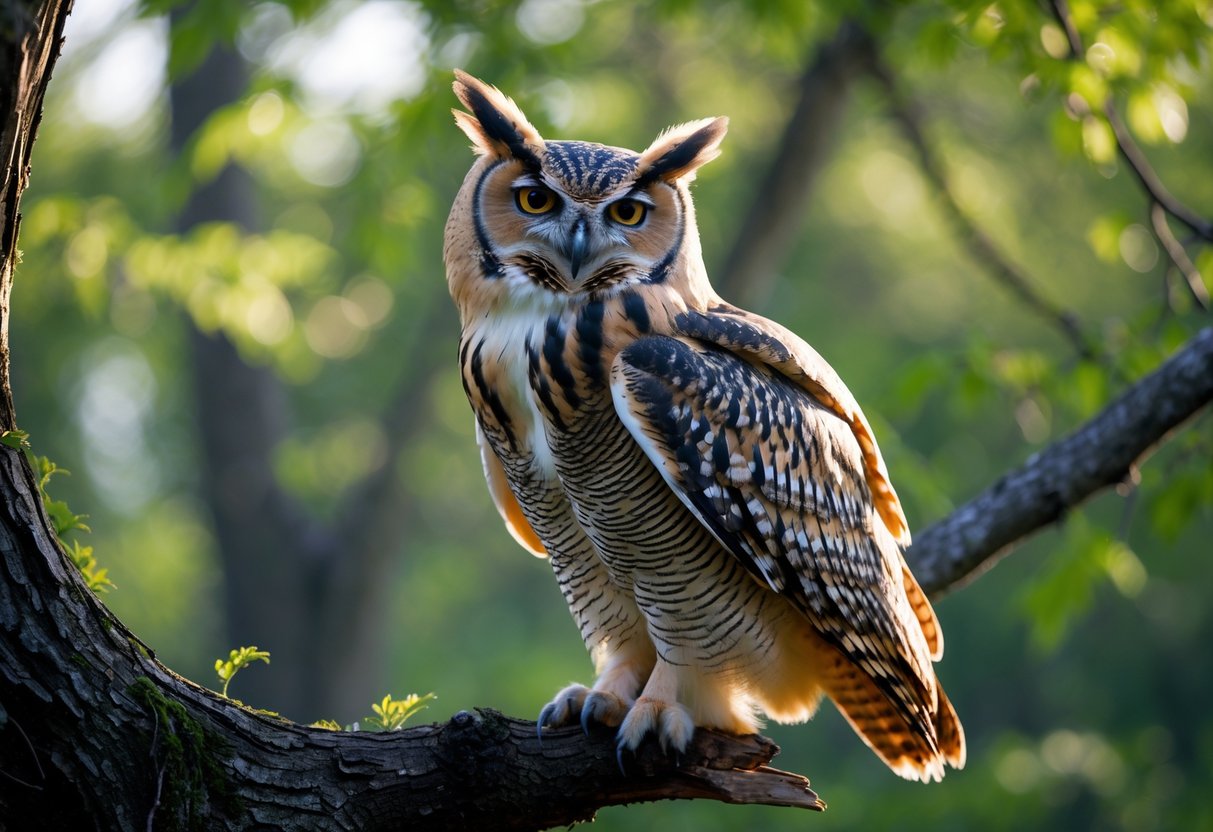
This wild ability lets owls peek behind them without shifting their bodies. You probably won’t spot an owl spinning its head in a full loop, but they get pretty close. Their necks have some fascinating adaptations.
It’s honestly one of nature’s coolest tricks, if you ask me.
Curious why owls need to turn their heads so far? Or how this actually helps them out in the wild? There’s a whole mix of biology and behavior at play here. Let’s dig in.
How Far and How Often Can Owls Turn Their Heads?

Owls outdo most birds and humans when it comes to head-turning. They can check out their surroundings without budging an inch. Different owl species have slightly different abilities, but the basics are pretty similar.
Barred owls, Eurasian eagle owls, and great horned owls all show off this skill in their own ways.
Understanding Head Rotation Limits in Owls
Owls twist their heads about 270 degrees in either direction. That’s almost all the way behind them, no body movement needed.
They’ve got extra neck bones—about 14 vertebrae—while humans only have seven. That’s a big reason for their flexibility.
Their blood vessels don’t get pinched off during those wild turns. Owls have special arteries and backup channels to keep the blood flowing, even when their necks twist. So, you won’t see an owl hurt itself turning its head.
Why Do Owls Need Such Flexible Necks?
Owls have eyes that don’t move in their sockets, unlike ours. To check out what’s going on around them, they have to move their whole heads.
This comes in handy when they’re hunting. Being able to look almost everywhere without flapping around helps them spot dinner or danger quietly.
They scan for prey or threats without making a sound. Their neck trick is a huge survival advantage.
Comparing Barred Owl, Eurasian Eagle Owl, and Great Horned Owls
These three owl types all pull off impressive head turns, but with some small differences:
| Owl Type | Head Rotation Range | Notable Feature |
|---|---|---|
| Barred Owl | About 270 degrees | Known for steady, smooth head turns |
| Eurasian Eagle Owl | Close to 270 degrees | Very large with strong neck muscles for wide rotation |
| Great Horned Owl | Around 270 degrees | Can rotate head well, special blood vessels protect it |
All three use this move to check their surroundings and listen for sounds. They don’t need to shift their bodies at all.
No owl can turn its head a full 360 degrees, though. That’s just not how it works.
Common Myths About Owl Neck Rotation
A lot of people think owls can spin their heads in a full circle. Nope. They max out at 270 degrees, which is still wild, but not a total spin.
Some folks worry that owls might break their necks or blood vessels turning like that. But their bodies are built to handle it. Their arteries and extra neck space keep them safe.
If you watch videos where it looks like an owl’s neck is doing a crazy spin, some of that movement is just their body shifting a bit—not just the head.
Owls are flexible, but they’re not magic.
You can check out more details in this detailed explanation.
The Science Behind Owl Neck Flexibility

Ever wonder how owls manage those crazy head turns without getting hurt? It’s not magic—just some pretty amazing anatomy.
Their neck bones and blood vessels work together to let them rotate their heads up to 270 degrees, and they do it safely.
Unique Anatomy of the Owl’s Neck and Arteries
Owls have 14 neck vertebrae—twice as many as we do. That lets them move their necks smoothly and further than most animals.
The bones fit together tightly, but they still allow a huge range of motion. The barred owl, for instance, uses this to check out its surroundings without making a sound.
Unlike our necks, an owl’s vertebrae give them strength and freedom to twist without strain.
How Owls Protect Their Blood Flow During Rotation
When an owl turns its head, you might think its blood vessels would get pinched or even cut off.
But owls have arteries that are wider than usual, with little sections acting like reservoirs.
These spots hold some extra blood, so the brain keeps getting oxygen—even if the neck twists a lot.
Owls have flexible arteries that stretch and move around without breaking.
Because of this, an owl can swing its head up to 270 degrees and not cut off its blood flow.
This clever system lets the owl stay safe while it checks out everything around it.
If you want to dive deeper into how owls manage this trick, take a look at this article on Barn owls’ neck rotation.


