
Ever heard an owl hoot three times in a row and wondered what’s going on? Owls often hoot three times to claim their territory, warn off rivals, or attract a mate. That steady rhythm isn’t random—it’s how they keep in touch in the quiet darkness.
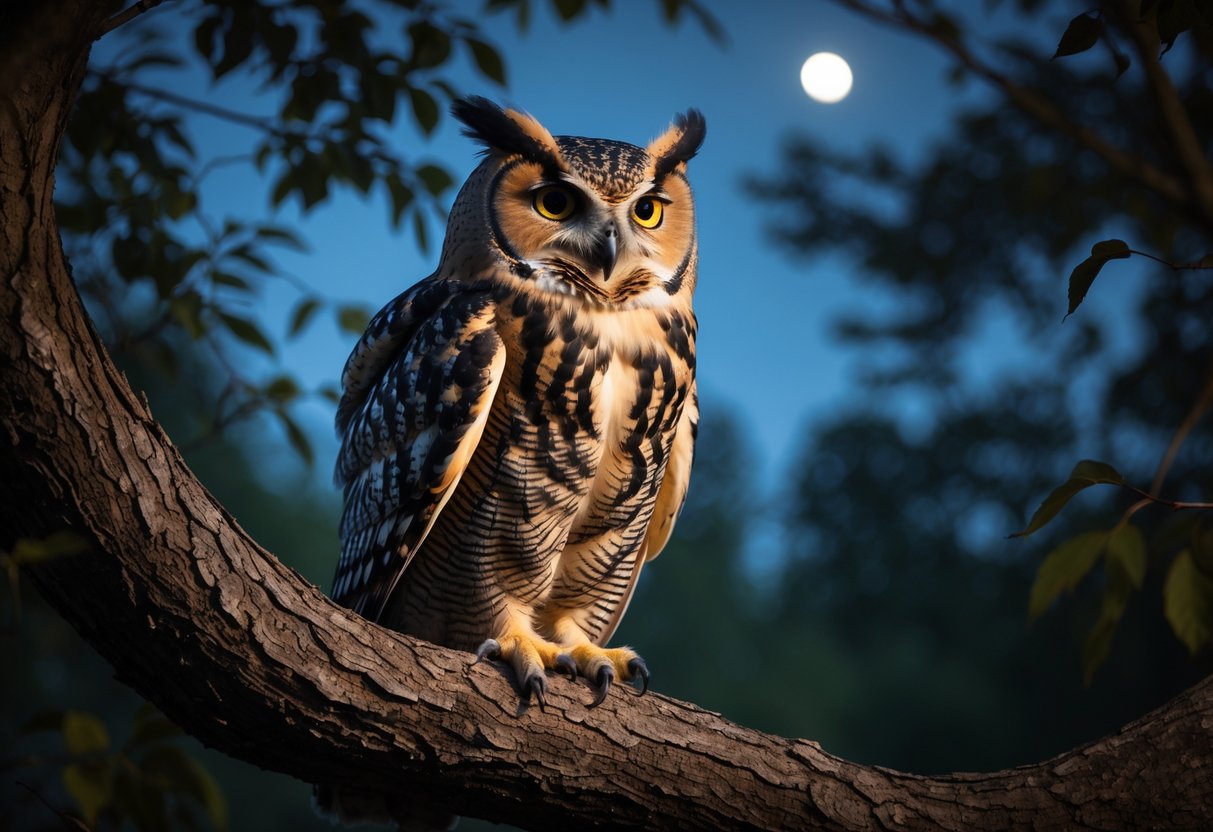
Owls use these hoots to announce themselves, keeping other owls at bay and making their presence clear. When it’s breeding season, these calls help them find each other.
So, if you catch a three-hoot call on a nighttime walk, you’re witnessing a bit of wild communication in action.
Understanding why owls hoot this way might make your next evening stroll a little more interesting. Those sounds aren’t just background noise—they’re part of a system that’s helped owls get by for ages.
The Science Behind Owl Hoots

Owls hoot for all sorts of reasons. They use these sounds to talk to other owls, claim their turf, and get the attention of a mate.
When owls hoot three times, they’re sending a message that other owls seem to understand pretty well.
Communication Purposes of Owl Hoots
When you hear an owl hoot, it’s not just making noise for fun. Hooting helps owls send strong signals.
Maybe that owl is saying, “This spot’s taken.” That keeps competitors away.
Owls also use hoots as warnings. If there’s a threat nearby, hooting can scare it off or let other owls know to be careful.
And when it’s dark and quiet, hoots help them find each other out there.
These calls are almost like conversations. Each hoot has its purpose—sometimes it’s a warning, sometimes it’s a greeting, or maybe it’s just a way to say, “I’m here.”
Reasons for Three Hoots
Three hoots in a row? That’s pretty common, but it means something specific.
If you hear three hoots, the owl might be marking its territory. That’s its way of telling others to keep their distance.
Owls also use this pattern to attract a mate. The rhythm of three hoots can make an owl stand out to a potential partner.
This pattern helps family members or groups stay connected. It’s almost like a check-in or a quick “all good here.”
Distinguishing Different Owl Hoot Patterns
Owl hoots aren’t all the same. Every species has its own style.
You might hear slow, deep hoots from a great horned owl. Smaller owls tend to call faster and higher.
Try counting the hoots—it can help you figure out which owl you’re listening to.
| Owl Species | Typical Hoot Pattern |
|---|---|
| Great Horned Owl | 3 to 5 low, muffled hoots |
| Barred Owl | Rhythmic “who cooks for you” calls |
| Barn Owl | Long, rising hoot |
Once you get the hang of these patterns, listening to owls gets a lot more interesting. You’ll start to pick out their unique voices.
Curious for more? Check out Why Do Owls Hoot 3 Times? (REVEALED).
Owl Species Known for Three Hoot Calls

Some owls are pretty famous for their three-hoot patterns. These calls help them mark their spot, find a mate, or just check in with neighbors.
You’ll notice each species has its own twist on the three-hoot call.
Barred Owl’s Signature Hoots
Barred owls are known for their classic call: “Who-cooks-for-you, who-cooks-for-you-all.” Sometimes you can break it down into three clear hoots.
These hoots come in a rhythmic pattern and often repeat. When you hear a barred owl, it’s usually marking its turf or looking for a mate.
Their hoots sound softer and more musical compared to some other owls. That makes them pretty easy to pick out.
Barred owls mostly call at night, but they’ll sometimes chime in during early mornings or late evenings.
Great Horned Owl Vocalizations
Great horned owls have deep, low hoots—usually in a series of three or four.
You might catch a pattern like “hoo-hoo, hoo-hoo-hoo” when they’re active. Their calls are loud and travel far, which helps them claim territory or call out to a mate.
Both males and females hoot, and sometimes they even “duet” together to strengthen their pair bond.
You’ll probably hear great horned owls making those three-hoot patterns most often, especially out in the wild.
Comparing Other Owls with Three Hoot Patterns
Barred owls and great horned owls both have those classic hoots with three or more notes. Most other owl species don’t really stick to a strict three-hoot routine.
Some owls make calls that might seem like three hoots, but they’re actually using different sounds—maybe screeches or even whistles. Screech owls, for instance, go for those short, descending sounds instead of the usual hoots.
Honestly, with so much variety among owls, it’s tough to pin down exactly which one always hoots three times. You’ll probably have better luck figuring out the species by listening to the tone and pitch, not just counting hoots.
Curious to dive deeper into owl calls? There’s more info at which owl hoots three times.


